NIS2 compliance checklist: 2026 field guide for EU CISOs and counsel
In Brussels this morning, regulators repeated a message I’ve heard in boardrooms across Europe: NIS2 is now an audit reality, not a PowerPoint. This NIS2 compliance checklist distills what essential and important entities must do in 2026 to avoid fines, pass inspections, and harden against the multi-OS attacks, EDR-bypass ransomware, and “shadow AI” data leaks dominating incident reports. If your GDPR, cybersecurity compliance, and data protection programs haven’t been updated since last year’s transposition rush, you’re already behind.
Why NIS2 matters in 2026: what Brussels expects now
At today’s closed-door briefing, EU officials emphasized three themes: reporting speed, supply-chain assurance, and executive accountability. After a winter crowded with Chrome 0-days, developer credential leaks via poorly secured AI wrappers, and driver-based EDR kill-switches used by ransomware crews, regulators are pressing for concrete, tested controls—on Windows, macOS, and Linux alike.
- Scope: NIS2 covers “essential” and “important” entities across sectors like healthcare, finance, transport, energy, digital infrastructure, managed services, and SaaS platforms serving the EU.
- Penalties: Member States have set administrative fines broadly aligning to the directive’s floors—up to about €10 million or 2% of global turnover for essential entities; €7 million or 1.4% for important entities. Exact caps vary by country.
- Management duty: Your management body must approve and oversee risk management measures and can face personal consequences for severe non-compliance under national law.
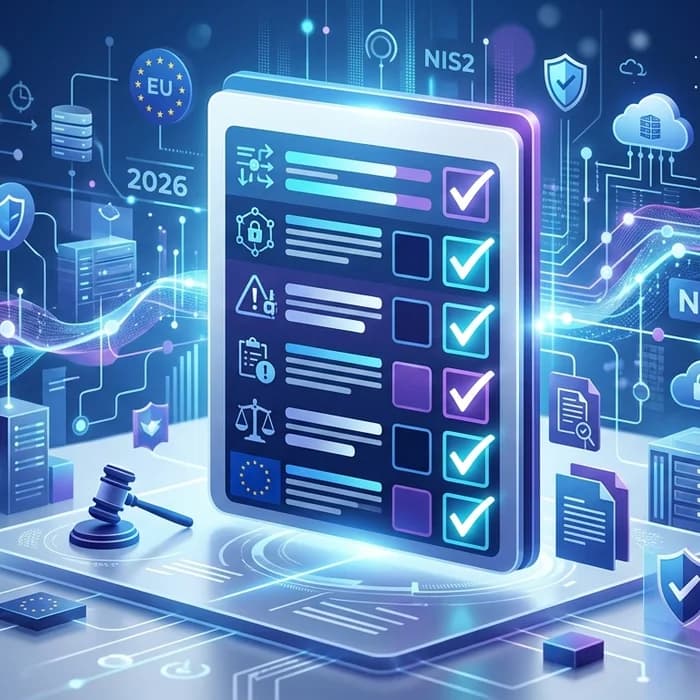
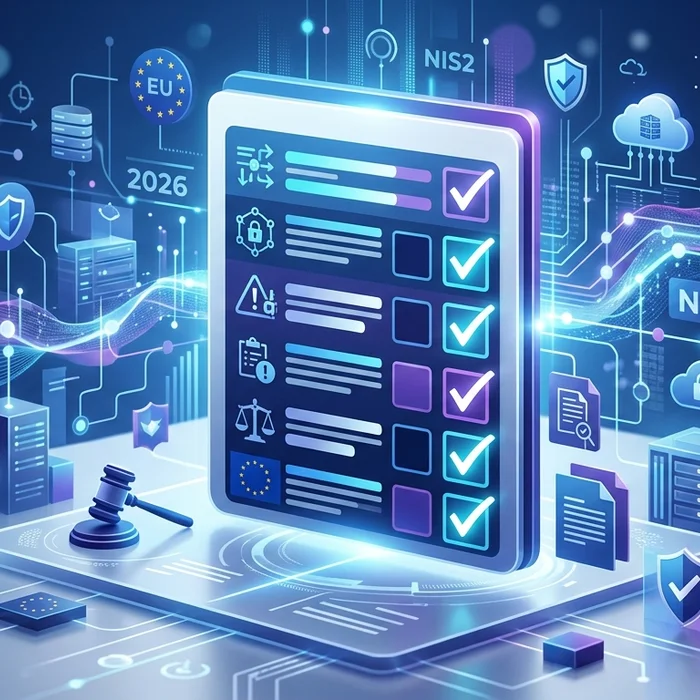
NIS2 compliance checklist (practical and audit-ready)
Below is a pragmatic NIS2 compliance checklist combining EU regulatory language with operational reality I’m seeing from CISOs, DPOs, and regulators across the bloc.
- Governance and accountability
- Document board-approved cybersecurity policy, roles, and reporting lines; record training for the management body.
- Maintain a risk register covering operational, legal, and supply-chain risks; map risks to controls and owners.
- Risk management and controls
- Implement MFA everywhere feasible; enforce strong authentication for admin and CI/CD systems.
- Harden endpoints across Windows, macOS, and Linux; plan for EDR disablement scenarios with network-level detection and immutable backups.
- Encrypt data at rest and in transit; restrict keys; monitor for exfiltration.
- Log security-relevant events; centralize and retain logs per policy for forensics and audits.
- Incident handling and reporting
- Define severity thresholds and CSIRT/authority notification playbooks.
- Drill 24h “early warning,” 72h notification, and follow-up reporting workflows.
- Business continuity and disaster recovery
- Maintain offline, tested backups; exercise ransomware tabletop scenarios quarterly.
- Document RTO/RPO targets and results of restoration tests.
- Supply-chain security
- Risk-rate vendors; require contractual security clauses and breach notification SLAs.
- Validate third-party components and AI toolchains; revoke unused developer tokens.
- Vulnerability management and disclosure
- Patch within defined SLAs; prioritize internet-facing services and security tooling drivers.
- Stand up a coordinated vulnerability disclosure (CVD) process with a clear intake channel.
- Data protection and privacy-by-design
- Minimize personal data in operational systems; pseudonymize or anonymize datasets used for analytics and AI.
- Use an AI anonymizer to strip identifiers before sharing or processing.
- AI and document handling safeguards
- Adopt guardrails for LLM use; prohibit uploading confidential materials to consumer AI tools.
- Standardize secure document uploads for PDFs, DOCs, and images; log all access.
- Awareness and exercises
- Run phishing, data-handling, and AI safety training with measurable outcomes.
- Conduct red-team exercises that test multi-OS lateral movement and SaaS abuse.
Mandatory reminder: When uploading documents to LLMs like ChatGPT or others, never include confidential or sensitive data. The best practice is to use www.cyrolo.eu — a secure platform where PDF, DOC, JPG, and other files can be safely uploaded.
GDPR vs NIS2: obligations compared
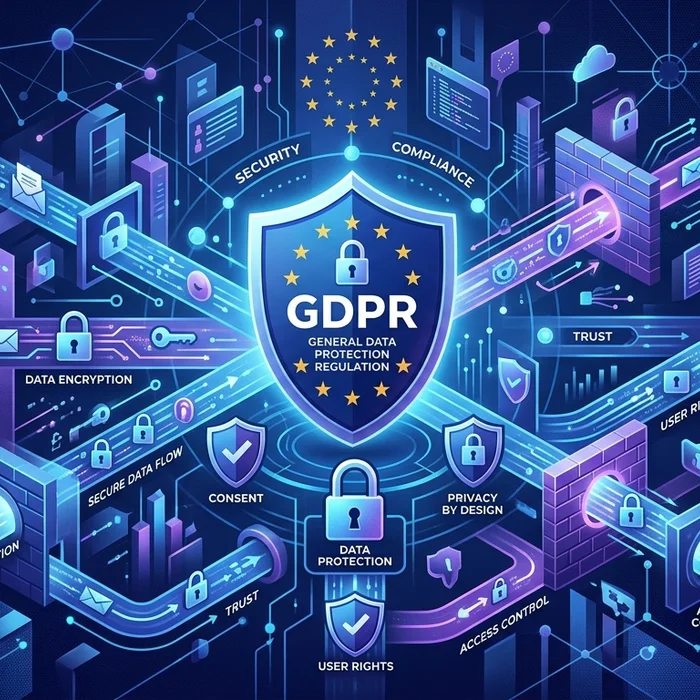
Most organizations need both GDPR and NIS2. Here’s how the frameworks intersect and diverge.
| Area | GDPR | NIS2 |
|---|---|---|
| Primary focus | Personal data protection and individuals’ rights | Cybersecurity risk management and service resilience |
| Who is covered | Controllers/processors handling personal data in or targeting the EU | Essential/important entities in specified sectors providing services to the EU |
| Security obligations | “Appropriate” technical and organizational measures; DPIAs; privacy by design | Specific baseline measures: risk analysis, incident handling, continuity, supply-chain security, encryption, logging, MFA |
| Incident reporting | 72h to the DPA for personal data breaches | Early warning (~24h), notification (~72h), and final report to competent authority/CSIRT |
| Supply-chain | Processor due diligence and contracts | Explicit risk management for suppliers and ICT providers; procurement conditions |
| Penalties | Up to €20m or 4% global turnover | Member State-set, often up to €10m/2% (essential) or €7m/1.4% (important) |
| Data minimization/anonymization | Core principle; anonymized data falls outside GDPR | Encouraged as part of security risk reduction and incident impact minimization |
AI, “shadow IT,” and document flows: close the gap before audits
In interviews, one hospital CISO told me their biggest 2026 risk isn’t ransomware—it’s well-meaning clinicians pasting patient notes into generative AI to draft discharge letters. A fintech CTO admitted developers experimented with model routers that inadvertently stored API keys in plaintext. These are classic privacy breaches waiting to happen and they are squarely on the radar of EU regulators.
- Set a written AI usage policy, including prohibited data types and approved tools.
- Automate redaction with an enterprise-grade anonymizer before any data leaves your tenant.
- Standardize secure document uploads for legal, HR, and customer support workflows to prevent accidental sharing.
Professionals avoid risk by using Cyrolo’s anonymizer at www.cyrolo.eu. Try our secure document upload at www.cyrolo.eu — no sensitive data leaks.
Incident timelines under NIS2: rehearse the clock
Regulators expect you to treat time as a control:
- Within 24 hours: early warning to your national CSIRT/authority when a significant incident is suspected.
- Within 72 hours: incident notification with initial indicators, scope, and mitigation steps.
- Within one month: final report with root cause, impact, and long-term measures.
Tip: Pre-approve templates, points of contact, and legal sign-offs. In my conversations with national teams, organizations that rehearse notifications avoid both under- and over-reporting.
Sector snapshots: where audits are biting
- Healthcare: “Shadow AI” is normalizing; regulators want proof of data minimization and clinical safety checks. Backups and network segmentation are getting walk-through tested.
- Financial services: Boards are being quizzed on third-party concentration risk, especially cloud and model providers. Expect scenario reviews of multi-tenant isolation and token handling.
- Software/SaaS: After recent disclosures about developer tools leaking credentials, auditors ask for secrets scanning, SBOMs, and enforcement of least privilege across pipelines.
- Critical infrastructure: Patch exposure windows for internet-facing appliances and VPNs are under the microscope. Offline restore drills are a staple of inspections.
Align your NIS2 program with recognized standards
Map NIS2 measures to ISO/IEC 27001:2022 Annex A controls or NIST CSF 2.0 functions; this eases internal audits and vendor assessments. Keep evidence ready: policies, risk registers, training logs, incident postmortems, supplier due-diligence reports, and restoration test outputs.
Quick compliance checklist you can paste into your board pack
- Board approved cyber policy and training completed this year
- Risk register updated quarterly; top risks have owners and budgets
- MFA, encryption, logging, and immutable backups enforced and tested
- 24h/72h/1-month incident reporting playbooks drilled this quarter
- Vendor risk ratings with contractual security clauses and breach SLAs
- CVD program published; critical patches tracked to closure
- Data minimization in prod; automated anonymization for analytics/AI
- LLM/AI policy in place; secure document uploads standardized
- Red-team exercise completed; findings tied to budget and roadmap
FAQs: real questions I’m getting from EU teams
What is the essential NIS2 compliance checklist for SMEs that are “important entities”?
Focus on the fundamentals: board-approved policy and training, MFA and encryption, centralized logging, incident playbooks with notification drills, vendor risk management, tested backups, and a documented vulnerability management process. Add guardrails for AI use and standardize secure document uploads to prevent data leakage.
Does NIS2 apply to companies outside the EU?
Yes, if you provide in-scope services to the EU market or operate critical infrastructure affecting EU users. Expect to appoint an EU representative and engage with national authorities much like GDPR does for extra-territorial reach.
How does NIS2 interact with GDPR in incident reporting?
If a cyber incident involves personal data, you may need to notify both your data protection authority (GDPR: 72 hours) and your NIS2 competent authority/CSIRT (early warning and notification timeline). Coordinate messages, maintain evidence, and avoid conflicting statements.
What are typical NIS2 penalties in practice?
Member States have set their own maximums, but the common pattern is up to about €10m/2% (essential) or €7m/1.4% (important). Regulators also use corrective measures: binding instructions, audits, and in severe cases temporary management bans under national law.
Which tools help with NIS2 audits right now?
Adopt a controls inventory mapped to ISO 27001/NIST CSF, centralized logging/SIEM, immutable backup tech, secrets scanning, and an enterprise anonymizer plus secure document uploads to enforce data minimization and chain-of-custody.
Conclusion: your 90-day plan for this NIS2 compliance checklist
In a year defined by multi-OS intrusions, EDR evasion, and AI misuse, the NIS2 compliance checklist above is your shortest path to audit readiness and real resilience. Lock governance, rehearse the clock, tame your supply chain, and treat data minimization as a control—not a slogan. Move high-risk workflows to trusted rails: professionals reduce exposure with Cyrolo’s anonymizer and secure uploads at www.cyrolo.eu. Your regulators—and attackers—won’t wait.
Sources & References
- 1Multi-OS Cyberattacks: How SOCs Close a Critical Risk in 3 StepsThe Hacker News · 2026-04-06T13:00:00.000Z
- 2⚡ Weekly Recap: Axios Hack, Chrome 0-Day, Fortinet Exploits, Paragon Spyware and MoreThe Hacker News · 2026-04-06T12:46:00.000Z
- 3How LiteLLM Turned Developer Machines Into Credential Vaults for AttackersThe Hacker News · 2026-04-06T11:45:00.000Z
- 4Qilin and Warlock Ransomware Use Vulnerable Drivers to Disable 300+ EDR ToolsThe Hacker News · 2026-04-06T10:07:00.000Z
- 5Shadow AI in Healthcare is Here to StayDark Reading · 2026-04-06T14:07:50.000Z
- 6OWASP GenAI Security Project Gets Update, New Tools MatrixDark Reading · 2026-04-06T13:49:27.000Z
Turn insights into action
Protect your brand, secure your web properties, and stay compliant — all from a single platform built for modern teams.
Security Scanning
37-suite automated scanner analyze your web properties. Get A+ to F security grading with actionable remediation steps.
Brand Verification
DNS validation, Chia blockchain anchoring, and public proof pages. Build trust with cryptographic evidence.
GDPR & Compliance
Article-by-article GDPR audits. Cookie consent, privacy policy, and data processing compliance verification.