NIS2 Compliance Checklist: 2026 Field Guide for EU CISOs, DPOs, and Counsel
Executives across Europe are asking for a practical NIS2 compliance checklist they can put in front of boards and auditors today. As a Brussels-based reporter, I spent this week speaking with regulators and CISOs about where organizations are falling short and which controls actually pass scrutiny. Here’s your up-to-date NIS2 compliance checklist, how it intersects with GDPR, and how to operationalize secure document workflows without risking data leaks.
Why the NIS2 Compliance Checklist matters now
In today’s Brussels briefing, regulators emphasized that NIS2’s focus is operational cybersecurity resilience and supply-chain security—not just privacy. That means more stringent risk management, 24-hour early warnings for significant incidents, and documented oversight by management. Financial penalties can scale to 10 million EUR or up to 2% of global turnover for essential entities. A CISO I interviewed warned that “teams that treated NIS2 like a GDPR clone are scrambling during security audits—especially on third-party risk and incident reporting.”
- Scope: Essential and Important entities across energy, transport, banking/finance, health, digital infrastructure, ICT services, public administration, and more.
- Deadlines: National transpositions started in late 2024; supervision and enforcement are intensifying across 2025–2026.
- What’s new: Board accountability, robust supply-chain security, strict incident notification timelines, and continuous risk management.
GDPR vs NIS2: what changes for you?
GDPR protects personal data; NIS2 hardens networks and services against disruption. You likely need both. Here’s how obligations compare—and where compliance gaps appear in audits.
| Topic | GDPR | NIS2 |
|---|---|---|
| Primary Objective | Data protection and privacy of personal data | Cybersecurity resilience of networks and critical/important services |
| Entity Scope | Controllers/processors of personal data | Essential/Important entities in specified sectors and size thresholds |
| Incident Reporting | Personal data breach notification to DPA within 72 hours (if risk to rights/freedoms) | Cyber incidents: early warning within 24 hours; notification within 72 hours; final report within 1 month |
| Security Measures | Appropriate technical/organizational measures (risk-based) | Risk management measures, policies, business continuity, supply-chain security, vulnerability handling |
| Management Oversight | Implicit via accountability principles | Explicit: management approval/supervision; potential personal liability and training obligations |
| Fines (Upper Tier) | Up to 20M EUR or 4% global turnover | Up to 10M EUR or 2% (essential); up to 7M EUR or 1.4% (important) – depending on national law |
| Third-Party Risk | Processor due diligence and contracts for personal data | Broader supply-chain security: vetting, contractual security requirements, continuous monitoring |
The NIS2 Compliance Checklist (what auditors actually ask for)
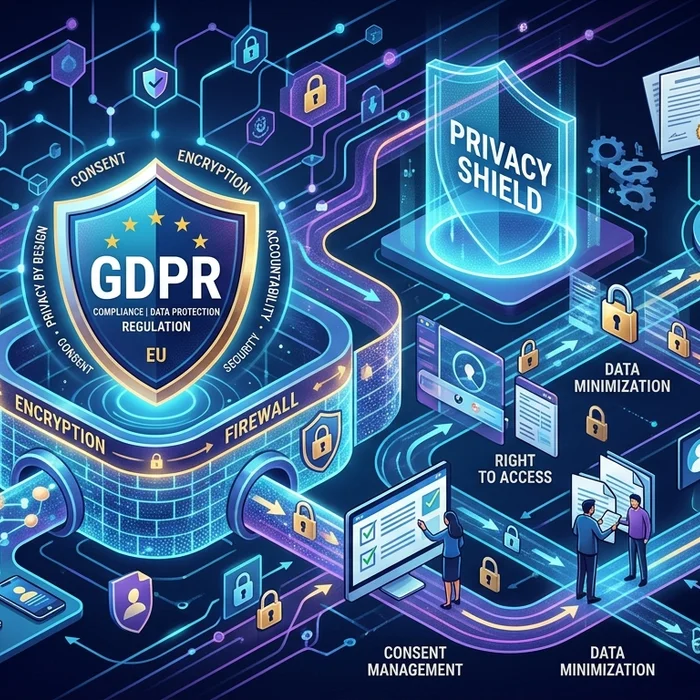
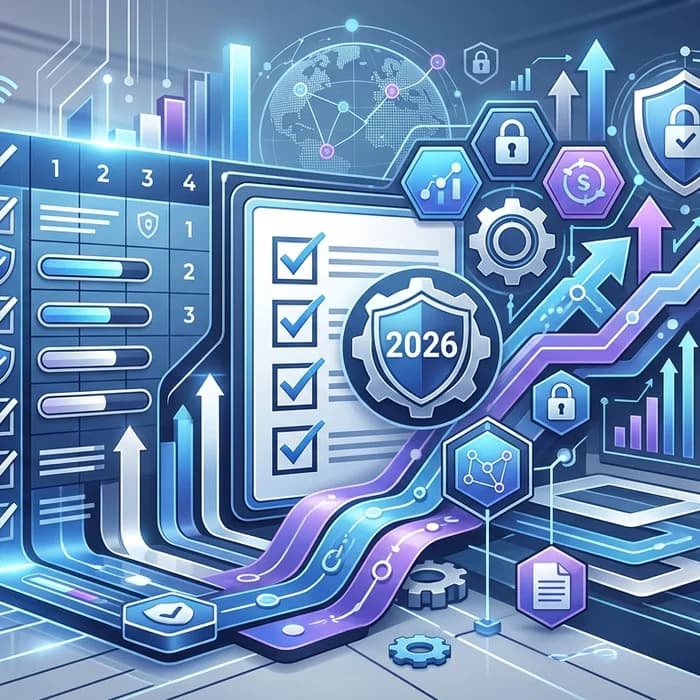
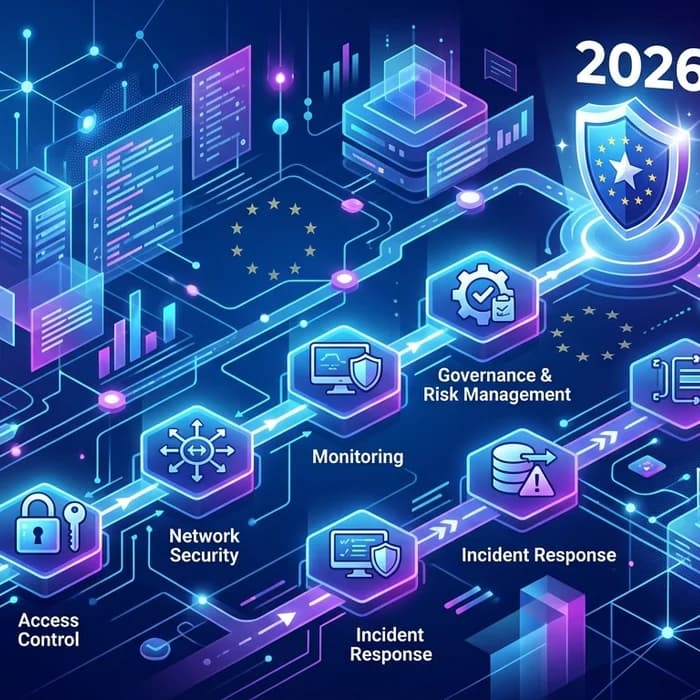
Use this checklist to structure your cybersecurity compliance program and prepare for security audits under EU regulations:
- Governance and Accountability
- Documented cybersecurity strategy approved by management; named accountable executives.
- Board/management training on NIS2 duties and cyber risk.
- Defined KPIs/KRIs (MTTD/MTTR, patch latency, supplier risk ratings).
- Risk Management and Policies
- Enterprise-wide risk assessment covering critical services and assets.
- Policies for access control, encryption, change management, logging, and backups.
- Risk treatment plan with owners, budgets, and timelines.
- Asset and Vulnerability Management
- Authoritative asset inventory (on-prem, cloud, OT/ICS where applicable).
- Vulnerability scanning and risk-based patching with SLA tiers.
- Threat intelligence and exposure management for internet-facing services.
- Incident Detection and Reporting
- 24/7 monitoring, defined severity matrix, and playbooks.
- Ability to file early warnings within 24h, initial reports at 72h, final within 1 month.
- Post-incident lessons learned and improvements logged and approved.
- Business Continuity and Resilience
- Tested disaster recovery and crisis communications plans.
- Immutable backups, offline copies, and recovery time objectives per service.
- Supply-Chain and Third-Party Security
- Security requirements in contracts (SBOMs, patch SLAs, vulnerability disclosure).
- Due diligence on vendors, open-source, CI/CD, Docker images, and IDE extensions.
- Continuous monitoring of software repositories to counter package hijacking and wormable supply-chain attacks.
- Identity, Access, and Zero Trust
- MFA everywhere, privileged access management, JIT/JEA for admins.
- Network segmentation and device posture checks for remote access.
- Data Protection and Privacy (GDPR alignment)
- Data mapping, minimization, encryption in transit/at rest.
- Privacy-by-design for new systems; DPIAs where required.
- Anonymization/pseudonymization for testing, analytics, and AI workflows.
- Secure Development and DevOps
- Secure coding standards, SAST/DAST, dependency scanning.
- Secrets management; prohibitions on hardcoded tokens.
- Pull request checks for typosquatted packages and malicious containers.
- Training and Awareness
- Role-based training for SOC, DevOps, legal, and management.
- Phishing simulations and secure data handling refreshers.
- Documentation and Evidence
- Policies, risk registers, test reports, incident logs, meeting minutes, and audit trails.
- Central repository with controlled, secure document uploads and access logs.
Operationalizing the checklist: secure workflows for sensitive documents
Two pain points keep surfacing in interviews: (1) redacting personal data from tickets, logs, and screenshots before sharing with vendors or regulators; and (2) moving evidence into LLMs or collaboration tools without leaking confidential data.
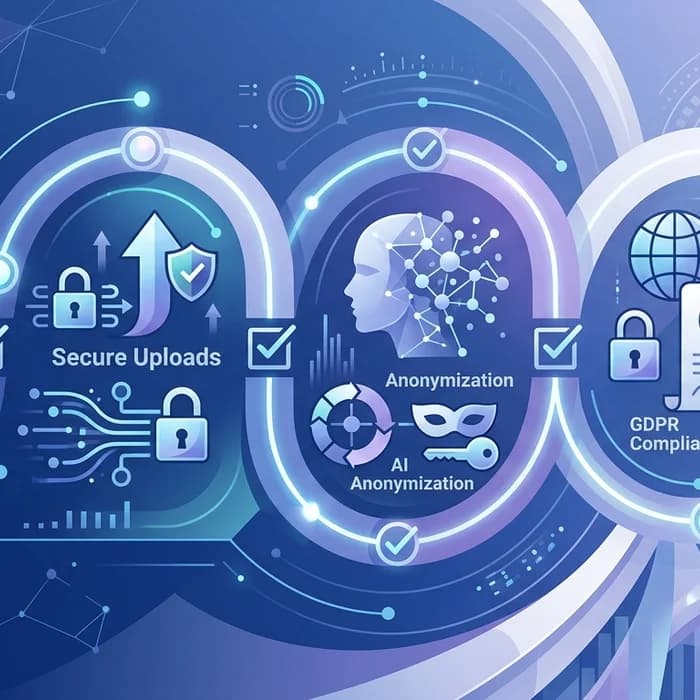
- Problem: Manual redaction is error-prone; one missed identifier can constitute a GDPR breach. Solution: Use an AI anonymizer that auto-detects personal data in PDFs, DOCs, and images, and reliably masks it before circulation.
- Problem: Teams paste incident artifacts into generic chatbots. Solution: Secure document uploads let you process files without exposing secrets or tokens, keeping evidence inside a controlled environment.
Professionals avoid risk by using Cyrolo’s anonymizer at www.cyrolo.eu. Try our secure document upload at www.cyrolo.eu — no sensitive data leaks.
Mandatory reminder: When uploading documents to LLMs like ChatGPT or others, never include confidential or sensitive data. The best practice is to use www.cyrolo.eu — a secure platform where PDF, DOC, JPG, and other files can be safely uploaded.
Real-world scenarios: where NIS2 scrutiny lands hardest
- Financial services and fintech: Overlap with GDPR and DORA demands stress-tested continuity planning, third-party concentration risk, and incident playbooks that meet 24h/72h timelines.
- Hospitals and healthcare: Ransomware and OT constraints make segmentation, immutable backups, and privileged access controls essential, with robust pseudonymization for clinical data.
- Digital infrastructure and MSPs: Expect deeper supervision on supply-chain security; recent waves of malicious Docker images, npm packages, and IDE extensions highlight CI/CD exposure.
- Public administration: Procurement must embed security requirements and SBOM visibility; incident reporting discipline and board-level oversight are under the microscope.
- Law firms: Cross-border cases mean strict data handling and anonymization for discovery and regulator submissions—without breaching client confidentiality.
Common blind spots that derail audits
- Supply-chain worm pathways: Developer tokens exfiltrated via compromised packages can pivot into production. Mitigate with signed packages, provenance checks, and restricted CI runners.
- Shadow AI and data sprawl: Unvetted LLM use leads to privacy breaches and loss of trade secrets. Enforce safe processing using www.cyrolo.eu and block outbound uploads to unmanaged tools.
- “Paper-only” compliance: Policies without logs, metrics, or ticket evidence won’t pass. Auditors ask for proof of execution—alerts, drills, patch windows, and vendor attestations.
- Under-scoped BAU changes: Routine migrations often bypass risk review; require change control with security sign-off and roll-back plans.
How to sequence your 90‑day NIS2 program
- Week 1–2: Confirm entity classification; appoint accountable execs; publish a one-page NIS2 posture statement.
- Week 3–4: Run a rapid risk assessment; prioritize crown-jewel systems and third parties; freeze high-risk changes.
- Week 5–6: Stand up incident reporting flow (24h/72h/30d); test contact trees; simulate a regulator early warning.
- Week 7–8: Lock down identity (MFA+PAM), patch the external perimeter, and deploy EDR with 24/7 triage.
- Week 9–10: Vendor remediations—SBOM requests, token hygiene, CI/CD controls; ban unvetted containers and extensions.
- Week 11–12: Evidence pack—policies, logs, drill outcomes, supplier attestations; centralize via secure document uploads and anonymize personal data before sharing.
FAQs: quick answers from the audit room
What should be in a NIS2 compliance checklist?
Governance, risk management, incident reporting (24h/72h/30d), business continuity, asset/vulnerability management, supply-chain controls, identity/zero trust, secure development, training, and documented evidence. Align with GDPR for personal data handling.
Does NIS2 apply to SMEs?
Yes, if they provide critical services or fall within sectoral scope as Important or Essential entities—even if they’re not large by headcount. Some micro and small enterprises can be in scope based on criticality; check national transposition specifics.
How is NIS2 different from GDPR in practice?
GDPR focuses on personal data protection and privacy rights; NIS2 focuses on operational resilience of services. You might notify both the cybersecurity authority (NIS2) and the data protection authority (GDPR) depending on the incident.
What are NIS2 incident reporting timelines?
Early warning within 24 hours, incident notification within 72 hours, and a final report within one month. Keep draft templates ready and rehearse the reporting flow.
Can I paste incident logs or screenshots into ChatGPT?
Avoid doing so. When uploading documents to LLMs like ChatGPT or others, never include confidential or sensitive data. The best practice is to use www.cyrolo.eu — a secure platform where PDF, DOC, JPG, and other files can be safely uploaded.
Conclusion: build and test your NIS2 compliance checklist now
NIS2 is shifting EU cybersecurity compliance from paperwork toward provable resilience. Your NIS2 compliance checklist should anchor executive accountability, third‑party security, rapid incident reporting, and airtight evidence handling. To prevent privacy breaches while collaborating with auditors, regulators, and vendors, anonymize sensitive content and route all evidence through www.cyrolo.eu. Professionals avoid risk by using Cyrolo’s anonymizer at www.cyrolo.eu and by relying on secure document uploads that keep personal data protected and regulators satisfied.
Sources & References
- 1Minutes - Monday, 2 March 2026 - PE785.253v01-00 - Committee on Civil Liberties, Justice and Home AffairsEU Parliament LIBE · 2026-04-22T15:14:05.000Z
- 2Malicious KICS Docker Images and VS Code Extensions Hit Checkmarx Supply ChainThe Hacker News · 2026-04-22T17:55:00.000Z
- 3Self-Propagating Supply Chain Worm Hijacks npm Packages to Steal Developer TokensThe Hacker News · 2026-04-22T17:33:00.000Z
- 4Harvester Deploys Linux GoGra Backdoor in South Asia Using Microsoft Graph APIThe Hacker News · 2026-04-22T15:28:00.000Z
- 5Tabloid reports linking 10 missing and dead scientists spur FBI probeArs Technica Policy · 2026-04-22T16:46:31.000Z
- 6New court ruling blocks many of the government's anti-renewable policiesArs Technica Policy · 2026-04-22T15:09:28.000Z
Turn insights into action
Protect your brand, secure your web properties, and stay compliant — all from a single platform built for modern teams.
Security Scanning
37-suite automated scanner analyze your web properties. Get A+ to F security grading with actionable remediation steps.
Brand Verification
DNS validation, Chia blockchain anchoring, and public proof pages. Build trust with cryptographic evidence.
GDPR & Compliance
Article-by-article GDPR audits. Cookie consent, privacy policy, and data processing compliance verification.