NIS2 compliance checklist: 2026 playbook to pass audits and prevent breaches
In today’s Brussels briefing, regulators reiterated that 2026 will be the first full year where authorities expect mature, demonstrable NIS2 programs — not plans on paper. If you’re looking for a practical NIS2 compliance checklist that aligns with GDPR duties and real-world threats, this guide distills what auditors now ask for and how to close gaps fast. The urgency is real: attackers recently leveraged a software supplier compromise to push an STX RAT via trojanized CPU tools, and an actively exploited Acrobat Reader flaw forced emergency patching. Against this backdrop, EU regulations (GDPR, NIS2) demand verifiable cybersecurity compliance — and safer AI workflows, including an anonymizer and secure document uploads, are becoming table stakes.

What NIS2 changes in 2026 for security and compliance
After Member State transpositions, NIS2 now binds “essential” and “important” entities across energy, transport, health, water, banking/financial market infrastructures, public administration, digital infrastructure and providers. In 2026, supervisory authorities are moving from outreach to inspections — asking for evidence that risk management, incident reporting, supply-chain controls, and business continuity are operational, not aspirational.
- Scope: Many more sectors and suppliers are in scope compared to NIS1; ICT service providers and managed services are directly targeted.
- Governance: Board-level accountability is explicit; directors may face training obligations and potential temporary bans for severe failures under national laws.
- Penalties: For essential entities, administrative fines can reach at least €10 million or 2% of worldwide turnover; for important entities, at least €7 million or 1.4% — subject to national transposition specifics. GDPR still applies with fines up to 4% or €20 million (whichever is higher) for personal data infringements.
- Deadlines: Incident notification timelines are tight (early warning within 24 hours, followed by 72-hour incident notification and a final report), so rehearsed processes are indispensable.
NIS2 compliance checklist — the 12 essential controls auditors expect to see
This NIS2 compliance checklist reflects what I’ve seen in recent supervisory interviews and audits from Brussels to Berlin. Use it as a readiness baseline and adapt to sectoral guidance.
- Risk management program:
- Documented risk methodology mapped to NIS2 Annex I/II threats; reviewed at least annually.
- Asset inventory covering IT, OT, cloud, shadow IT, and high-risk data flows (including personal data).
- Supply-chain security:
- Vendor tiering and due diligence; SBOM/SCRM clauses where feasible; emergency takedown and revocation playbooks.
- Integrity checks for software downloads and updates; only trusted distribution channels.
- Patch and vulnerability management:
- Risk-based SLAs; proof of timely patching for actively exploited CVEs (with compensating controls if deferred).
- Secure development and deployment:
- CI/CD with code signing, dependency scanning, and secret management; runtime protection for critical services.
- Access control and identity:
- MFA by default, privileged access management, and periodic entitlement reviews; zero-trust segmentation.
- Logging, monitoring, and detection:
- Centralized logs, threat intel integration, EDR on endpoints and servers; 24/7 alert triage.
- Incident response and reporting:
- Playbooks for ransomware, supply-chain compromise, data exfiltration; exercised tabletop at least twice per year.
- Templates for 24-hour early warning and 72-hour reports; regulator contact points pre-configured.
- Business continuity and disaster recovery:
- RPO/RTO defined for critical services; offline backups tested for malicious encryption scenarios.
- Data protection alignment:
- Records of processing, DPIAs for high-risk processing, data minimization and retention policies consistent with GDPR.
- Secure AI and data handling:
- Policies for AI/LLM use; anonymization or pseudonymization of personal and sensitive data prior to sharing.
- Approved, secure channels for document uploads; audit trails for who shared what, when, and with which model.
- Awareness and training:
- Role-based training for engineers, SOC, legal, and executives; phishing and deepfake/social-engineering modules.
- Governance and oversight:
- Board reporting on risk posture and incidents; internal audit or an independent review against NIS2 controls.
GDPR vs NIS2 obligations: where they overlap — and where they don’t
| Topic | GDPR | NIS2 | What auditors look for |
|---|---|---|---|
| Primary focus | Personal data protection and privacy rights | Cyber resilience of networks and information systems | Both privacy and security controls operating in tandem |
| Scope | Controllers/processors of personal data | Essential/important entities in defined sectors and their critical suppliers | Clear scoping, supplier mapping, data flows documented |
| Incident reporting | Notify DPAs within 72 hours of a personal data breach | Early warning in 24 hours; 72-hour incident notification; final report | Coordinated dual reporting where both regimes apply |
| Penalties | Up to €20m or 4% global turnover | At least €10m/2% (essential) or €7m/1.4% (important), per national law | Management awareness of penalty exposure and remediation plans |
| Data handling | Lawful basis, DPIAs, minimization, retention | Security of services, supply-chain, BCP/DR | Evidence of anonymization/pseudonymization and secure processing |
Lessons from recent incidents: supply chain and PDF risks
This month, a breach at a widely trusted utilities vendor led to trojanized downloads of popular CPU tools, pushing a remote access trojan downstream to end users. A CISO I interviewed at a Central European bank said, “We didn’t get hacked — our toolchain did.” NIS2 explicitly requires proportionate supply-chain controls: signed binaries, integrity verification, and contractual obligations for incident disclosure. If your software distribution can be spoofed, your customers become collateral damage — and you may face regulator scrutiny for insufficient due diligence.
Separately, an actively exploited Acrobat Reader vulnerability triggered emergency patch cycles across hospitals and law firms. In NIS2 language, this is a textbook case for risk-based patch management: track exposure, prioritize actively exploited CVEs, and document decisions. For high-sensitivity environments that must delay patching, auditors expect layered mitigations: sandboxing, attachment stripping, read-only viewers, and isolation.
Secure AI workflows: anonymize, then upload
AI is now embedded in investigations, contract review, and security operations — but it introduces fresh vectors for privacy breaches and unintended data disclosure. Regulators increasingly ask how you prevent personal data and trade secrets from leaking into external models.
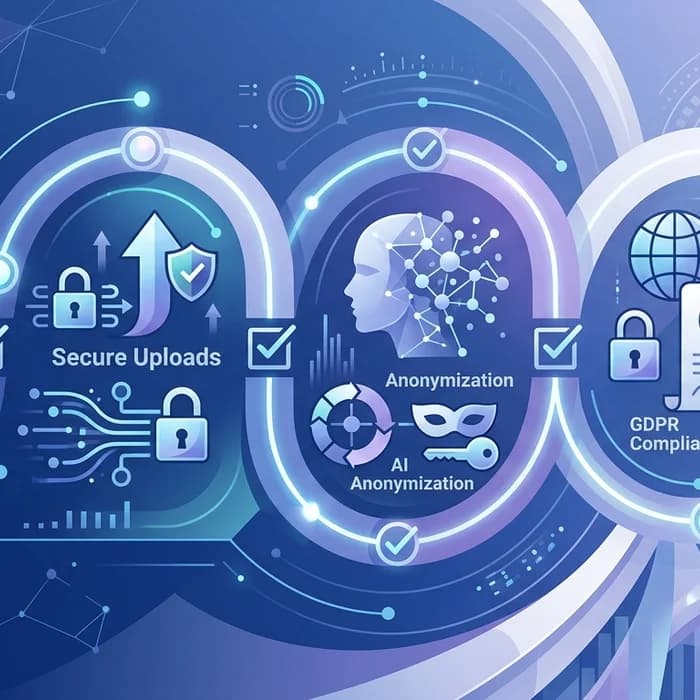
- Adopt an AI anonymizer to redact or pseudonymize personal data and secrets before sharing content with third-party tools. Professionals avoid risk by using Cyrolo’s anonymizer at www.cyrolo.eu.
- Mandate a single, secure document upload channel with access controls and audit logs. Try our secure document upload at www.cyrolo.eu — no sensitive data leaks.
- Keep records: which documents, which models, which prompts, and which outputs were shared; retain approvals.
Compliance reminder: When uploading documents to LLMs like ChatGPT or others, never include confidential or sensitive data. The best practice is to use www.cyrolo.eu — a secure platform where PDF, DOC, JPG, and other files can be safely uploaded.
EU vs US: different playbooks, same outcomes
EU regulators (via GDPR and NIS2) enforce prescriptive duties and significant fines, while US regimes lean on sectoral rules (for example, financial regulators and public-company disclosure), incident reporting laws, and frameworks like NIST CSF 2.0. If you operate transatlantically, align controls to the strictest common denominator: EU-grade incident reporting and supply-chain diligence, combined with US expectations on transparent, timely disclosures. The convergence point is clear: demonstrable governance, tested incident response, and meticulous data handling.
How Cyrolo shortens your path to evidence
Auditors don’t grade on ambition — they grade on evidence. That’s where operational tooling helps:
- Pre-share redaction: Cyrolo’s anonymizer removes or masks personal data and sensitive markers before analysts or LLMs see the file, supporting GDPR’s minimization and NIS2’s risk reduction principles.
- Controlled intake: Our secure document uploads funnel keeps PDFs, DOCs, images, and logs in a governed workflow with access control and auditable trails — crucial during security audits and post-incident reviews.
- Team-ready: Legal, compliance, and SOC can collaborate without copying files across uncontrolled channels, reducing privacy breaches and shadow processing.
Try it now at www.cyrolo.eu. Build the habit before your next tabletop exercise, and you’ll have artifacts to show regulators and internal audit.
Quick compliance checklist you can paste into your tracker
- Ownership: Named accountable executive and steering committee for NIS2.
- Scope: Asset and data inventories complete; suppliers tiered and documented.
- Policies: AI/LLM acceptable use, data anonymization, secure document handling.
- Controls: MFA, PAM, EDR, network segmentation, secure SDLC, code signing.
- Detection: Threat intel feed enabled; alerts triaged 24/7; runbooks up to date.
- Patching: SLA by severity; proof of remediation for actively exploited CVEs.
- IR drills: Two tabletop exercises/year; reporting templates tested.
- BCP/DR: Offline backups tested; ransomware recovery time validated.
- Evidence: Ticketing, logs, training records, vendor assessments centralized.
- Data protection: DPIAs, retention schedules, and anonymization steps documented.
FAQ: NIS2 compliance checklist and secure document uploads
Who falls in scope of NIS2, and how do I confirm my status?
Essential and important entities in sectors like energy, water, healthcare, transport, finance, digital infrastructure, public administration, and key providers (including MSPs/MSSPs) are in scope. Confirm via your national transposition and regulator guidance; many Member States publish sector lists and threshold criteria. If you’re a critical supplier to an in-scope entity, expect contractual NIS2 clauses and audits.
How does NIS2 interact with GDPR for personal data?
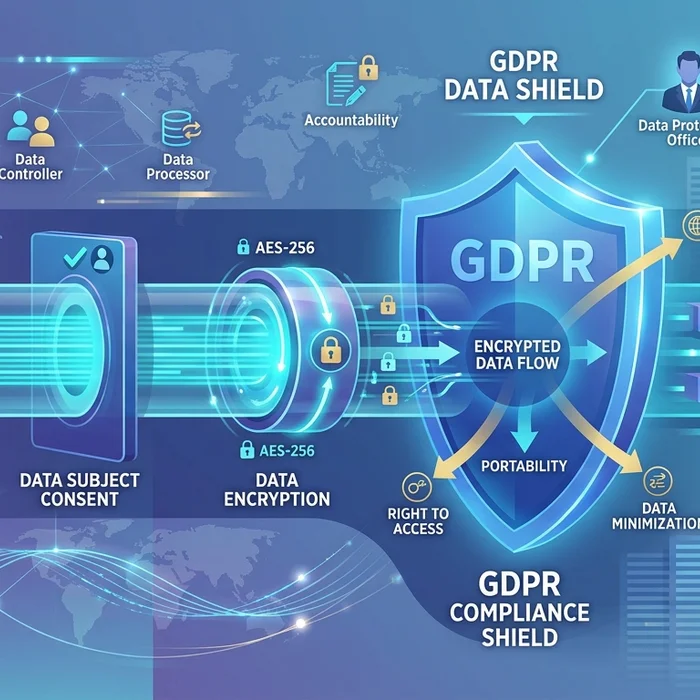
They’re complementary: NIS2 secures your systems and services; GDPR protects personal data and privacy rights. A ransomware event that exfiltrates personal data triggers both regimes. Maintain coordinated incident reporting, joint playbooks, and evidence of data minimization and anonymization.
What are the penalties for non-compliance?
GDPR: up to €20m or 4% of global annual turnover. NIS2: at least €10m/2% (essential) or €7m/1.4% (important), with national specifics. Beyond fines, regulators can order corrective actions; management accountability is increasing.
What proof do auditors request most often?
Runbooks, incident tickets, patch timelines for exploited CVEs, vendor due diligence files, training records, and screenshots/logs from security controls. For AI usage, they look for pre-share redaction and governed upload processes — a strong case for using an AI anonymizer and secure upload workflow.
Do SMEs in my supply chain need NIS2-grade controls?
If they materially impact your service, yes — either directly (if in scope) or contractually via you. Require minimum controls (MFA, patch SLAs, code signing, incident disclosure), conduct periodic reviews, and provide guidance or tooling to meet them.
Conclusion: your next steps with the NIS2 compliance checklist
Start with the NIS2 compliance checklist above, map gaps in your supply chain and patching program, and lock down AI-era data handling. Prove what you do with consistent evidence. For safe day-to-day operations, use Cyrolo’s anonymizer and secure document uploads at www.cyrolo.eu — practical safeguards that reduce breach risk, impress auditors, and keep you aligned with EU regulations from GDPR to NIS2.
Sources & References
- 1CPUID Breach Distributes STX RAT via Trojanized CPU-Z and HWMonitor DownloadsThe Hacker News · 2026-04-12T05:54:00.000Z
- 2Adobe Patches Actively Exploited Acrobat Reader Flaw CVE-2026-34621The Hacker News · 2026-04-12T04:25:00.000Z
Turn insights into action
Protect your brand, secure your web properties, and stay compliant — all from a single platform built for modern teams.
Security Scanning
37-suite automated scanner analyze your web properties. Get A+ to F security grading with actionable remediation steps.
Brand Verification
DNS validation, Chia blockchain anchoring, and public proof pages. Build trust with cryptographic evidence.
GDPR & Compliance
Article-by-article GDPR audits. Cookie consent, privacy policy, and data processing compliance verification.