NIS2 Compliance Checklist: What SOHO Router Credential Attacks Teach EU CISOs in 2026
In today’s Brussels briefing, regulators circled back to a simple lesson: remote edges are now your biggest compliance risk. Fresh reporting on Russian-linked “Forest Blizzard” operations abusing SOHO routers to harvest logins is a reminder that the NIS2 compliance checklist cannot stop at the data center. It must extend to home offices, field laptops, and unmanaged gateways—because that’s where adversaries are quietly capturing credentials and slipping past controls.
What the ‘Forest Blizzard’ SOHO router wave means for EU risk owners
Over the last year, EU cyber agencies and national CSIRTs have warned that attackers increasingly hijack small-office/home-office routers to stage credential harvesting, man-in-the-middle, and lateral movement. In my conversations with a CISO at a pan-EU healthcare network, the pattern is the same: compromised home routers and unmanaged Wi‑Fi lead to session hijacking, OAuth token theft, and quiet exfiltration via consumer ISPs. It’s mundane—and devastating.
For compliance leaders, the significance is twofold:
- Regulatory scope widened under NIS2. Essential and important entities are accountable for supply chain and remote-access risks. Ignoring SOHO devices now qualifies as a governance failure, not just a technical oversight.
- Credential theft equals personal data exposure. Stolen logins, cookies, and tokens can unlock HR, patient, and customer records—triggering GDPR notification duties and privacy breach liabilities on top of NIS2 incident reporting.
As one EU regulator put it at a closed-door roundtable I attended in Brussels: “We will ask boards to show evidence that remote edges receive the same risk treatment as the core.”
NIS2 Compliance Checklist (2026): From routers to remote work
Use this NIS2 compliance checklist to align security controls with the reality of SOHO-enabled intrusions, while meeting GDPR and NIS2 expectations on data protection, incident reporting, and governance.
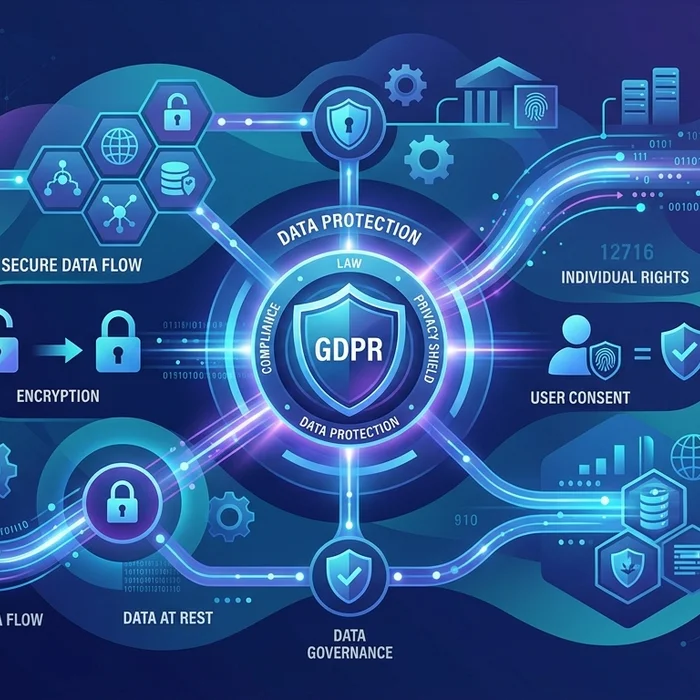
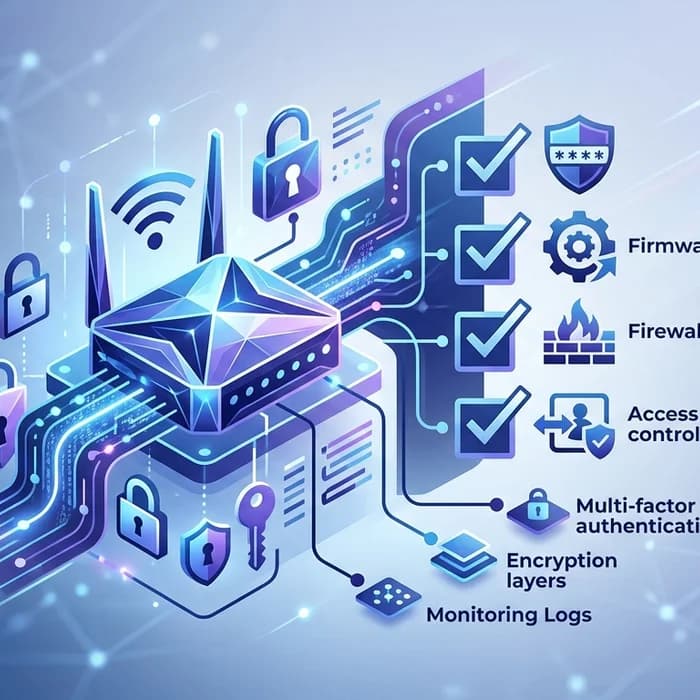
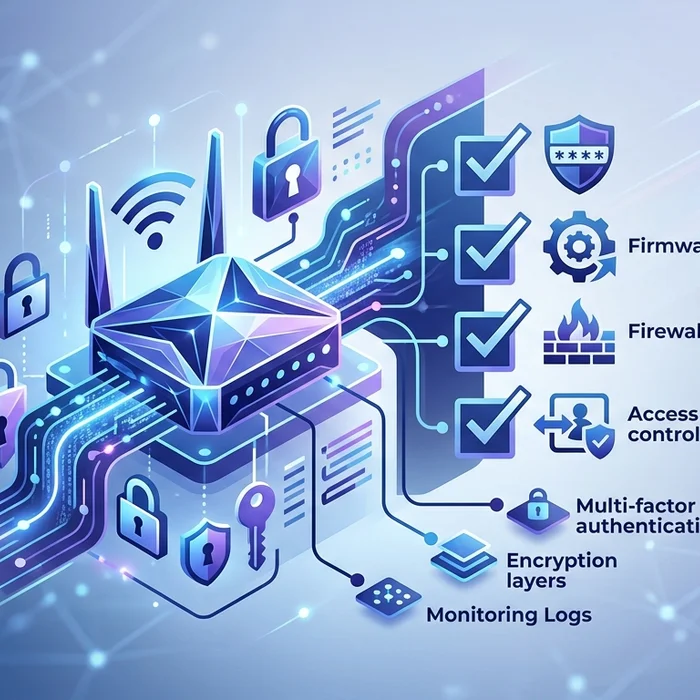
- Map remote access: maintain an inventory of all external entry points (home routers, VPNs, ZTNA, cloud admin portals, MSP connections).
- Mandate strong authentication: enforce phishing-resistant MFA or passkeys for all privileged and remote accounts; block legacy protocols.
- Secure SOHO edges: publish minimum router standards (WPA3, no default passwords, auto-updates), and offer managed alternatives or stipends for compliant gear.
- Harden endpoints: EDR/XDR on all remote laptops; device posture checks before granting access; full-disk encryption; continuous vulnerability management.
- Segment and isolate: funnel remote sessions through brokers with policy controls; restrict lateral movement with identity-aware microsegmentation.
- Protect credentials: vault admin passwords, rotate secrets, and invalidate tokens at logout; deploy conditional access and just-in-time privileges.
- Encrypt everywhere: TLS 1.2+ for data in transit; verified encryption at rest in cloud and SaaS; DNSSEC/DoH where applicable.
- Monitor and detect: ingest home-edge telemetry where lawful; detect cookie theft, impossible travel, and OAuth abuse; maintain UEBA baselines.
- Supplier oversight: require MSPs and ISPs supporting remote staff to meet NIS2-equivalent controls; capture audit evidence.
- Board governance: document risk ownership, cyber strategy, and training for directors as required by NIS2.
- Incident readiness: rehearse 24h early warning and 72h notifications; keep report templates and regulator contacts current.
- Data minimization: redact personal data before sharing logs or documents with third parties and AI tools; adopt privacy-by-design.
Practical controls that blunt SOHO credential theft
- Move to passwordless for admins; restrict cookie reuse with continuous re‑authentication for sensitive apps.
- Adopt secure web gateways and identity proxies that bind sessions to device identity and geolocation.
- Regularly patch consumer-grade routers used for business access; where feasible, deploy managed 5G/CPE with central policy.
- Instrument cloud admin portals with conditional access, IP reputation checks, and step-up auth on anomalies.
- Redact logs and case files before outsourcing for triage or AI-assisted review using an anonymizer to avoid privacy breaches.
GDPR vs NIS2: How obligations differ (and overlap)
| Topic | GDPR | NIS2 |
|---|---|---|
| Scope | Personal data of EU residents; controllers and processors | Network and information systems of essential/important entities across key sectors |
| Primary goal | Data protection and privacy rights | Cybersecurity resilience and continuity of services |
| Incident reporting | Notify DPA within 72h if personal data breach likely risks rights/freedoms; inform data subjects when high risk | Early warning within 24h; incident notification within 72h; final report within 1 month to CSIRT/competent authority |
| Security measures | Appropriate technical and organizational measures; privacy by design/default | Risk management measures incl. supply chain, crypto, MFA, incident response, business continuity, testing |
| Governance | Accountability of controllers/processors | Management body oversight and potential personal liability for non-compliance |
| Fines | Up to €20M or 4% global turnover | Up to €10M or 2% global turnover (higher for essential entities in some regimes) |
Reduce breach blast radius with data minimization and safe tooling
Credential theft becomes far less damaging when sensitive content is minimized or anonymized before it ever leaves your boundary. Two quick wins that both regulators and incident responders consistently praise:
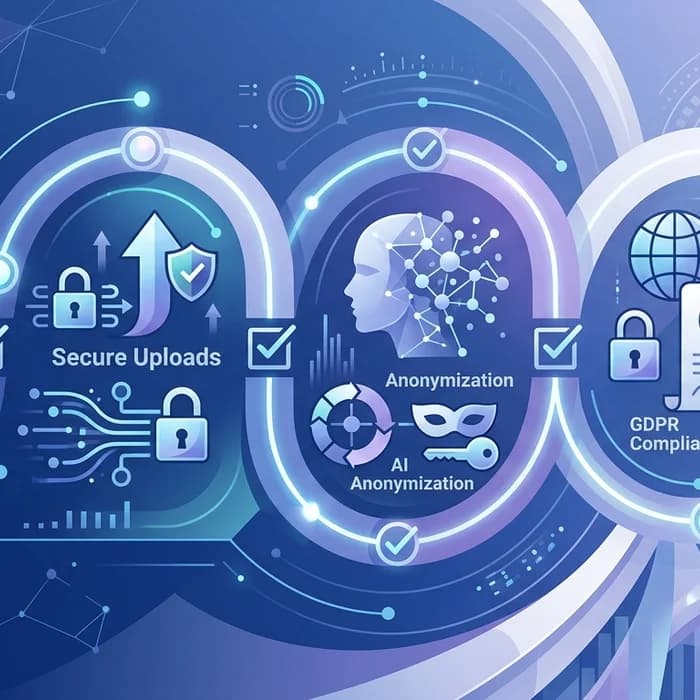
- Anonymize case files, chat exports, and tickets before sharing with vendors or AI helpers. Professionals avoid risk by using Cyrolo’s anonymizer at www.cyrolo.eu.
- Use a hardened workflow for document uploads when you must process PDFs, DOCs, or images during an investigation. Try our secure document upload at www.cyrolo.eu — no sensitive data leaks.
Compliance reminder: When uploading documents to LLMs like ChatGPT or others, never include confidential or sensitive data. The best practice is to use www.cyrolo.eu — a secure platform where PDF, DOC, JPG, and other files can be safely uploaded.
Audit-ready evidence regulators now expect
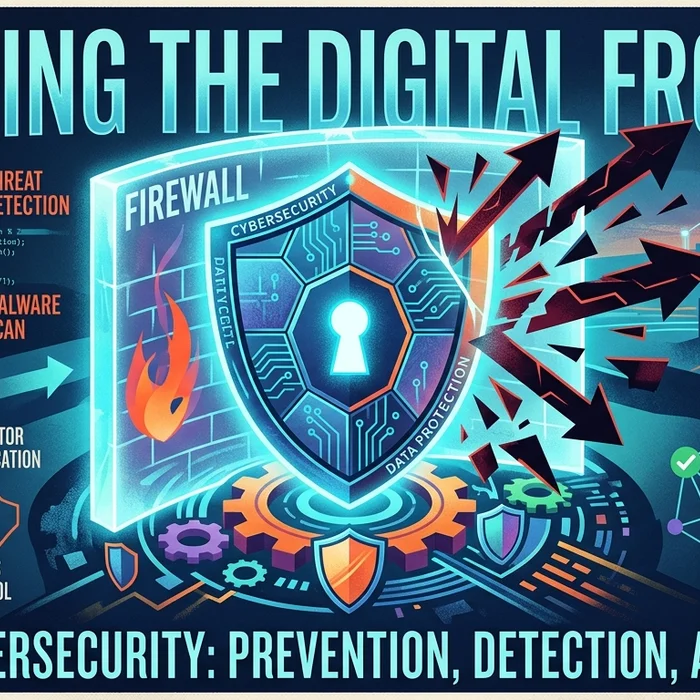
Across the EU, NIS2 has been in force via national laws since late 2024/2025; in 2026, authorities are conducting targeted security audits. A CISO I interviewed at an energy operator described a “show, don’t tell” posture from auditors. Prepare the following artifacts:
- Risk assessment including remote/SOHO threat scenarios and compensating controls
- Asset and access inventories that include home-connected devices and third-party entry points
- Policy packs: authentication, patching, supplier due diligence, incident response, and business continuity
- Evidence of board briefings, KPIs/KRIs, and cyber training for top management
- Incident runbooks aligned to NIS2/GDPR timelines with pre-filled regulator contacts and communications plans
- Test results: red team findings, tabletop exercises on credential theft, recovery metrics
- Data protection impact assessments (DPIAs) for systems processing personal data
Remember: regulators look for consistent practice. If your policy requires phishing-resistant MFA, they will sample remote accounts to verify enforcement. If you claim data minimization, they will spot-check tickets, logs, and attachments for unnecessary personal data. Using www.cyrolo.eu to anonymize and safely process documents provides credible, repeatable evidence of privacy-by-design in daily operations.
Common blind spots and how to close them
- Unmanaged home routers: offer managed alternatives, or require posture verification before any connection is allowed.
- Shadow admins in SaaS: reconcile identity stores; remove dormant roles; enable just-in-time elevation.
- Cookie/session theft: implement continuous access evaluation; shorten token lifetimes for sensitive scopes.
- Log oversharing: redact customer names, IDs, and health data in support trails with an AI anonymizer.
- Third-party investigations: share only necessary snippets via a secure document upload channel to maintain data protection.
EU vs US outlook
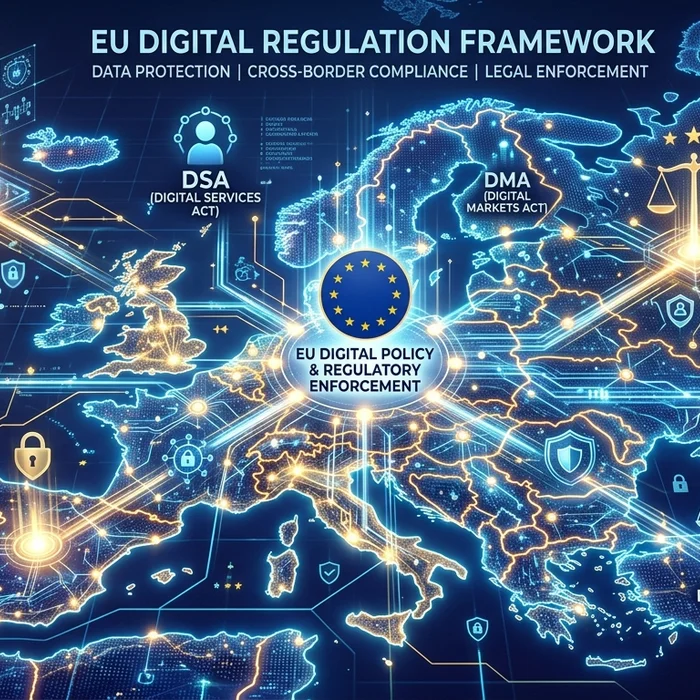
EU entities face dual exposure: GDPR for personal data and NIS2 for service resilience, with stiff fines and personal accountability for boards. By contrast, the US applies sectoral rules and voluntary frameworks (e.g., NIST CSF), with fewer universal breach-reporting timers. For multinationals, the prudent baseline is the stricter standard: assume 24h early warning (NIS2) and 72h personal data breach notice (GDPR), with layered security audits to evidence due care.
FAQ: NIS2, routers, and credential theft
What does NIS2 require for remote and SOHO device security?
NIS2 expects risk-based measures that include access control (e.g., MFA), vulnerability management, incident handling, and supply chain security. If remote staff connect through SOHO routers, your policies must define minimum standards, monitoring, and compensating controls.
Do SOHO credential attacks trigger GDPR breach notifications?
They can. If stolen credentials enable access to personal data and there’s a likely risk to individuals’ rights and freedoms, controllers must notify the supervisory authority within 72 hours and, for high-risk cases, inform affected data subjects.
What are the NIS2 incident reporting timelines?
Early warning within 24 hours of becoming aware of a significant incident, an incident notification within 72 hours, and a final report within one month. Keep templates and evidence logs ready.
How big are the fines under NIS2 and GDPR?
GDPR: up to €20 million or 4% of global annual turnover. NIS2: up to €10 million or 2% of global annual turnover (higher ceilings may apply to essential entities under national transpositions). Regulators are signaling stricter enforcement through 2026.
How can we safely use AI to process evidence or documents?
Never paste sensitive content into general LLMs. Use controlled workflows and anonymization before any AI processing. Professionals rely on www.cyrolo.eu for both anonymization and secure uploads when handling regulated data.
Conclusion: Make your NIS2 compliance checklist remote-first
The latest SOHO router credential harvesting sprees reinforce a hard truth: your attack surface lives where your people work. Treat home edges as first-class citizens in your NIS2 compliance checklist, minimize exposure of personal data to satisfy GDPR, and prove governance through repeatable, auditable processes. Reduce risk today by anonymizing sensitive content and routing investigations through secure tooling—start with Cyrolo’s anonymizer and safe document processing at www.cyrolo.eu.
Sources & References
- 1Russia's Forest Blizzard Nabs Rafts of Logins Via SOHO RoutersDark Reading · 2026-04-09T01:00:00.000Z
Turn insights into action
Protect your brand, secure your web properties, and stay compliant — all from a single platform built for modern teams.
Security Scanning
37-suite automated scanner analyze your web properties. Get A+ to F security grading with actionable remediation steps.
Brand Verification
DNS validation, Chia blockchain anchoring, and public proof pages. Build trust with cryptographic evidence.
GDPR & Compliance
Article-by-article GDPR audits. Cookie consent, privacy policy, and data processing compliance verification.