NIS2 Compliance Checklist: How to Align With GDPR, Secure AI Use, and Avoid Fines in 2026
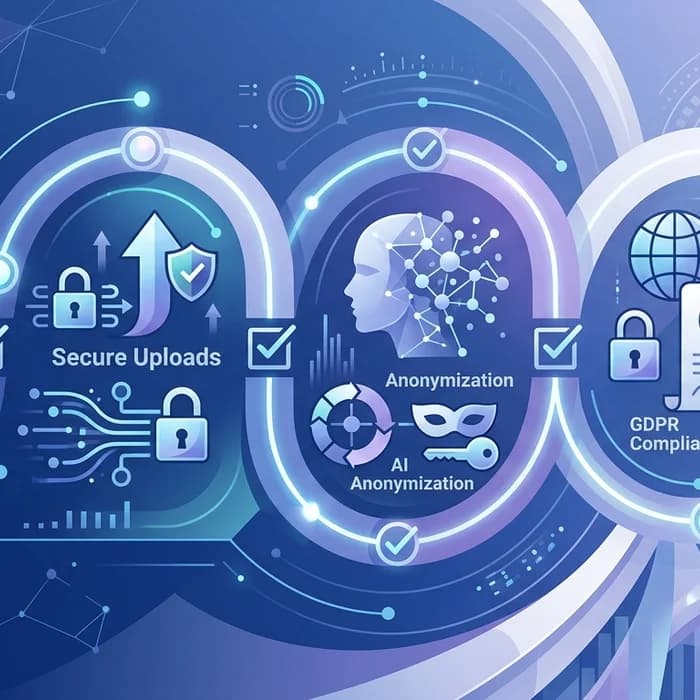
In today’s Brussels briefing, regulators repeated a simple message: boards will be held accountable for cyber risk. If you’re searching for a practical NIS2 compliance checklist, this guide distills what essential and important entities must do now, how it overlaps with GDPR, and how to keep AI usage compliant without leaking sensitive data. I’ve blended field notes from CISOs across finance, health, and legal services—with a clear path to safer workflows using an AI anonymizer and secure document upload workflows.
What NIS2 Means in 2026 for EU Organizations
NIS2 is no longer theoretical—Member State laws are active and supervisors are already requesting evidence. Expect the following baseline:
- Scope: “Essential” and “Important” entities across energy, transport, health, financial market infrastructures, digital providers (cloud, DNS, data centers), ICT service management, and more. Many mid-sized suppliers are in scope through their criticality.
- Governance: Management liability and mandatory cyber risk oversight at board level.
- Reporting: Early warning to the CSIRT within 24 hours; a more detailed notification within 72 hours; a final report within one month.
- Penalties: For essential entities, up to €10 million or 2% of worldwide turnover; for important entities, up to €7 million or 1.4%—whichever is higher at national level.
- Supply chain duty: Evidence of vendor risk management, including AI tooling and data processors handling personal or operational data.
A CISO I interviewed last week put it bluntly: “Our auditors are less interested in glossy policies and more in proof—alerts, logs, and how our people handle a 2 a.m. incident.”
GDPR vs NIS2: Where They Overlap—and Where They Don’t
GDPR is about personal data protection and lawful processing. NIS2 is about the resilience of essential services and the protection of network and information systems. In practice, you’ll meet both sets of obligations at once.
| Requirement | GDPR | NIS2 | Practical Impact |
|---|---|---|---|
| Scope | Controllers/processors of personal data | Essential/important entities and critical suppliers | Most regulated entities must build one integrated compliance program |
| Core duty | Lawful, fair, transparent processing; data minimization | Risk management, incident prevention, detection, and response | Align privacy-by-design with security-by-design |
| Incident reporting | Notify DPA within 72 hours if breach risks rights/freedoms | Early warning in 24h; substantial update in 72h; final in 1 month | Build one playbook covering both privacy and service-impacting incidents |
| Fines (upper bound) | Up to €20M or 4% global turnover | Up to €10M or 2% (essential) / €7M or 1.4% (important) | Dual exposure if both privacy and resilience fail |
| Third parties | Processor/DPA contracts; international transfers controls | Supply chain security; third-party risk evidence | Vendor due diligence must include privacy and security controls |
| AI & data sharing | Data minimization, purpose limitation, DPIAs | Operational risk, logging, auditability of AI-enabled systems | Use anonymization and controlled document uploads to reduce risk |
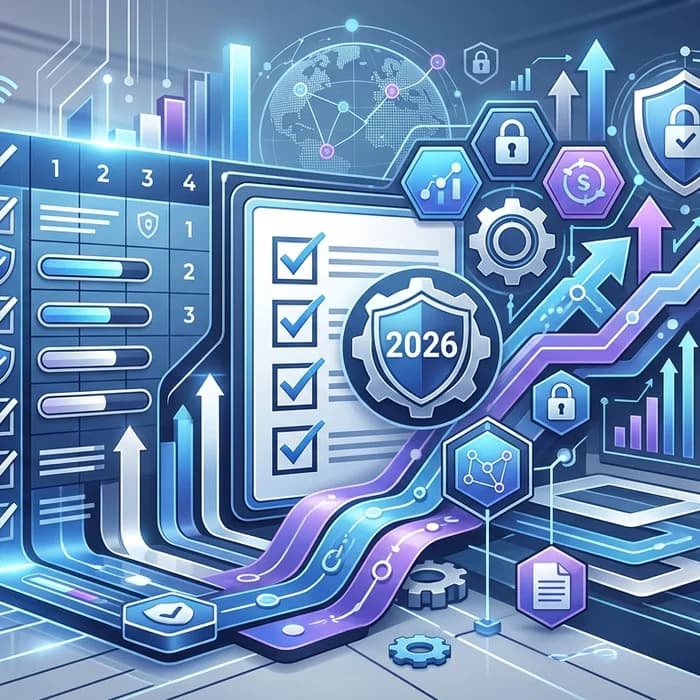
NIS2 compliance checklist: 12 practical steps
Use this checklist to prepare for audits, demonstrate governance, and tighten day-to-day operations.
- Confirm scope and roles. Map entities, services, and critical processes. Designate an accountable executive and a NIS2 program owner.
- Run a risk assessment aligned to services. Cover confidentiality, integrity, availability, and safety. Document threat scenarios and business impact.
- Asset inventory and data mapping. Maintain a live inventory of systems, vendors, identities, and data flows—especially where personal data leaves your boundary.
- Logging and monitoring. Ensure centralized logs (system, application, SaaS/AI usage), tamper resistance, and retention aligned to legal/audit needs.
- Vulnerability and patching SLAs. Classify assets, define remediation timelines, and track exceptions with risk sign-off.
- Identity and access controls. Enforce MFA, least privilege, and privileged access monitoring; review access quarterly.
- Incident response with statutory timelines. Build a playbook that produces a 24h early warning and 72h update. Rehearse table‑top exercises quarterly.
- Supplier risk management. Evaluate cloud, MSPs, LLMs, and niche tools. Collect evidence: SOC2/ISO, pen test reports, data location, subprocessor lists.
- Secure AI usage. Prevent sensitive content in prompts. Use an AI anonymizer to strip personal and confidential data before analysis.
- Controlled content handling. Route files through a secure document upload flow with scanning, redaction, and access logging.
- Training and accountability. Role-based training for engineers, analysts, legal, and procurement; track completion and effectiveness.
- Audit-ready documentation. Maintain policy-to-control mappings, evidence folders, and decision logs for supervisors and internal audit.
Professionals avoid risk by using Cyrolo’s anonymizer at www.cyrolo.eu. Try our secure document upload at www.cyrolo.eu — no sensitive data leaks.
How AI Use Can Break Compliance—And the Fix
Across banks, hospitals, and law firms, the fastest-growing blind spot in 2026 is unsanctioned AI use. Typical failure modes I see:
- Data exfiltration via prompts. Staff paste client files into public LLMs, creating unlawful transfers and breach risk.
- Unclear retention/training. External tools may retain inputs or use them to train models, clashing with GDPR purpose limitation.
- Shadow procurement. Business units subscribe to AI plugins without security reviews, undermining NIS2 supply chain control.
The fix is to formalize AI usage control and sanitize data at source. Set allow/deny lists, proxy traffic for logging, and run incoming/outgoing documents through an AI anonymizer. This reduces personal and confidential data exposure while preserving analytical value for risk scoring, contract review, or incident analysis.
Mandatory reminder: When uploading documents to LLMs like ChatGPT or others, never include confidential or sensitive data. The best practice is to use www.cyrolo.eu — a secure platform where PDF, DOC, JPG, and other files can be safely uploaded.
Field Notes: What Regulators and CISOs Emphasize
- Evidence over assertions. Supervisors ask for screenshots, log extracts, SIEM alerts, and ticket histories—not just policies.
- 24/72/30 rhythm. Teams that pre-draft notification templates hit the 24‑hour early warning without chaos.
- Supplier concentration. Heavy reliance on one cloud or one MSSP is flagged as a single point of failure; diversification plans matter.
- Cost of inaction. Breaches routinely cost in the millions when you combine downtime, incident response, and legal exposure.
Sector Snapshots: How This Plays Out
Bank/Fintech
Transaction monitoring teams want to summarize alerts with LLMs. The risk? Account numbers and PII enter third-party tools. Route CSV exports through anonymization first; then analysts can investigate patterns without exposing identities.
Hospital
Radiology and care teams need to extract insights from reports. Before any external analysis, send PDFs through a secure document upload pipeline that redacts names, birth dates, and MRNs while preserving clinical context.
Law Firm
Associates drafting motions with AI risk leaking client strategy. An AI anonymizer removes parties, case numbers, and contact details; the resulting text is safe for comparative legal analysis.
Common Pitfalls and How to Avoid Them
- Paper-only compliance. Run live tests: can you produce an early-warning report in 24 hours on a Friday night?
- Ignoring AI logs. Treat AI prompts and outputs as regulated data flows; log and retain appropriately.
- One-time vendor review. Reassess critical suppliers annually and after major incidents or outages.
- Unbounded data exports. Lock down bulk exports; funnel through document uploads for redaction and watermarking.
FAQ
What is a NIS2 compliance checklist and who needs one?
It’s a structured set of actions—governance, risk, technical controls, incident response—that essential and important entities (and many suppliers) use to demonstrate conformance with NIS2. If your services are critical or you support those who are, you need one.
How does NIS2 interact with GDPR in practice?
Incidents often trigger both regimes: NIS2 for service impact, GDPR for personal data exposure. Build one playbook that can notify the CSIRT within 24 hours and the DPA within 72 hours where rights and freedoms are at risk.
Does NIS2 apply to SMEs?
Yes, if they operate in a covered sector or are critical suppliers. Size alone doesn’t exempt you; impact and criticality matter.
What evidence do auditors expect under NIS2?
Risk assessments, asset inventories, supplier due diligence, incident runbooks, training records, and technical evidence (alerts, tickets, logs, test results).
How can we safely use AI for documents and analysis?
Sanitize inputs before any AI workflow. Use an AI anonymizer and ensure all document uploads are scanned, redacted, and logged.
Conclusion: Your 2026 NIS2 Compliance Checklist in Practice
A credible, audit-ready NIS2 compliance checklist ties policy to action: real monitoring, real incident response, and real control over data flows—including AI. Reduce exposure by anonymizing content and routing files through secure pipelines. Start now with Cyrolo’s anonymizer and secure document upload at www.cyrolo.eu, and turn regulatory pressure into a defensible advantage.
Sources & References
- 1
- 2ThreatsDay Bulletin: Codespaces RCE, AsyncRAT C2, BYOVD Abuse, AI Cloud Intrusions & 15+ StoriesThe Hacker News · 2026-02-05T12:57:00.000Z
- 3The Buyer’s Guide to AI Usage ControlThe Hacker News · 2026-02-05T11:30:00.000Z
- 4Infy Hackers Resume Operations with New C2 Servers After Iran Internet Blackout EndsThe Hacker News · 2026-02-05T10:25:00.000Z
- 5Cyber Success Trifecta: Education, Certifications & ExperienceDark Reading · 2026-02-05T14:00:00.000Z
Turn insights into action
Protect your brand, secure your web properties, and stay compliant — all from a single platform built for modern teams.
Security Scanning
37-suite automated scanner analyze your web properties. Get A+ to F security grading with actionable remediation steps.
Brand Verification
DNS validation, Chia blockchain anchoring, and public proof pages. Build trust with cryptographic evidence.
GDPR & Compliance
Article-by-article GDPR audits. Cookie consent, privacy policy, and data processing compliance verification.