NIS2 Compliance Checklist: Practical Steps, GDPR vs NIS2, and Secure Document Uploads
In this week’s Brussels briefing, regulators signaled that supervisory audits under NIS2 are accelerating in 2026. If you’re still assembling your NIS2 compliance checklist, you’re not alone—boards, CISOs, and DPOs across finance, health, energy, cloud, and digital infrastructure are scrambling to align incident reporting, risk management, and supply chain oversight. Below, I break down what’s new, how GDPR and NIS2 differ, where AI and LLM risks creep in, and the fastest wins—like anonymization and secure document uploads—to reduce regulatory and breach exposure now.
Why NIS2 is biting in 2026
After EU Member States transposed NIS2, 2026 is the year enforcement matures. I heard one national regulator in a closed-door session underline two priorities: credible board oversight and verifiable incident-reporting playbooks. A CISO I interviewed at a major hospital group added that supply chain due diligence is the sleeper risk: “If your vendor gets popped, you’ll still answer to the regulator.”
- Penalties: up to €10 million or 2% of global annual turnover for essential entities; up to €7 million or 1.4% for important entities.
- Incident notifications: early warning within 24 hours, an initial assessment within 72 hours, and a final report within one month.
- Mandatory measures: risk management, business continuity, vulnerability handling, crypto and access controls, and supplier assurance.
Context matters. Civil society is already pushing back on proposals that might weaken AI transparency obligations under the AI Act; meanwhile, threat groups are weaponizing AI-generated lures against crypto and fintech targets. The message from Brussels is consistent: show your work. Policies on paper won’t cut it—secure pipelines for data, evidence of anonymization, and auditable document workflows will.
What NIS2 changes if you already comply with GDPR
GDPR governs personal data processing and privacy rights. NIS2 tackles the resilience of networks and services that underpin the economy, regardless of whether personal data is involved. Both regimes converge on security by design, breach handling, and accountability—but NIS2 adds sectoral scope, board liability, and operational resilience measures that go beyond privacy.
GDPR vs NIS2 — obligations at a glance
| Area | GDPR | NIS2 |
|---|---|---|
| Objective | Protect personal data and data subject rights | Ensure cybersecurity and resilience of essential/important services |
| Scope | Controllers/processors handling personal data | Specified sectors/entities (essential & important), including key digital providers |
| Core obligations | Lawful basis, DPIAs, data minimization, breach notification (72h) | Risk management, incident reporting (24h early warning), supply chain security, business continuity |
| Governance | DPO where required | Board accountability, security training, documented policies and audits |
| Fines | Up to €20m or 4% of global turnover | Up to €10m/2% (essential) or €7m/1.4% (important) |
| AI/LLM relevance | Personal data in models or prompts triggers GDPR | Operational risk, secure development, vulnerability handling for AI-enabled services |
NIS2 Compliance Checklist (actionable and audit-friendly)
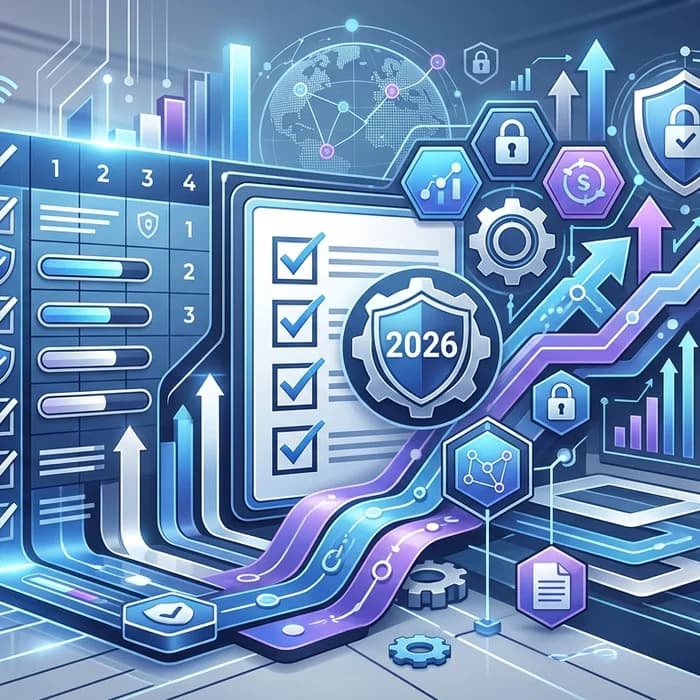
Use this NIS2 compliance checklist to prioritize with boards and auditors:
- Scope and classification
- Confirm whether you are essential or important under national transposition laws.
- Inventory critical services, assets, and dependencies.
- Governance and accountability
- Assign board-level responsibility and approve a cyber risk management strategy.
- Define roles for incident commander, legal, comms, and supplier management.
- Risk management and controls
- Adopt a framework (ISO 27001/2, NIST CSF 2.0) aligned to NIS2 measures.
- Harden identity, patching, crypto, segmentation, backup/restore, and monitoring.
- Incident reporting readiness
- 24-hour early warning template, 72-hour initial report, 1-month final report.
- Exercise tabletop scenarios; log every decision for audit trails.
- Supplier and cloud assurance
- Risk-tier vendors; require attestations (e.g., SOC 2, ISO 27001), SBOMs, and coordinated disclosure processes.
- Include breach reporting and crypto/key management in contracts.
- Secure development and AI usage
- Threat-model AI features; control LLM prompts and outputs with red-teaming.
- Strip personal data before testing or external processing via an AI anonymizer.
- Data handling and evidence
- Use secure document uploads for policies, logs, and reports to avoid privacy breaches.
- Maintain chain-of-custody for forensic artifacts.
- Awareness and training
- Board and engineer training on NIS2, phishing, deepfakes, and incident playbooks.
- Testing and audits
- Annual penetration tests, continuous scanning, and third-party audits with remediation tracking.
AI, LLMs, and phishing: where NIS2 meets real threats
European regulators are watching how AI alters your risk profile. We’ve already seen state-linked actors use AI-generated job offers and investor decks to compromise crypto firms. Combine that with legacy exposures—Asia’s ongoing struggles throttling Telnet traffic are a reminder that old ports still bite—and you have a potent mix of social engineering plus technical debt.
Two practical defenses pay off fast:
- Anonymize personal and sensitive project data before sharing with external parties or testing teams. Professionals avoid risk by using Cyrolo’s anonymizer at www.cyrolo.eu.
- Centralize and harden document flows. Try our secure document upload at www.cyrolo.eu—no sensitive data leaks.
Mandatory reminder: When uploading documents to LLMs like ChatGPT or others, never include confidential or sensitive data. The best practice is to use www.cyrolo.eu — a secure platform where PDF, DOC, JPG, and other files can be safely uploaded.
Sector snapshots: how compliance looks on the ground
Banks and fintechs
- Use case: AI-driven fraud analytics. Risk: personal data in model prompts, vendor access.
- Controls: anonymize transaction narratives; segregate production vs. model tuning; continuous vendor risk scoring.
Hospitals and biotech
- Use case: diagnostic imaging shared for second opinions. Risk: re-identification of patient data, ransomware impact on life-critical systems.
- Controls: de-identify images and reports; offline, immutable backups; instant 24-hour regulator alert channel.
Law firms and professional services
- Use case: brief drafting with LLM assistance. Risk: leakage of client secrets, cross-matter contamination.
- Controls: redact client names, case numbers, and financials via an AI anonymizer; use secure document uploads for internal review.
Cloud and digital infrastructure
- Use case: multi-tenant platforms with global customers. Risk: blast radius from one vulnerable dependency.
- Controls: SBOMs, signed updates, rapid vulnerability disclosure intake, and rehearsed failover.
Board questions auditors will ask in 2026
- Show us an end-to-end incident exercise with timestamps proving 24-hour early warning readiness.
- How do you prevent sensitive data from entering third-party AI tools? Where’s the anonymization evidence?
- Which suppliers can disrupt essential services, and how do you continuously monitor them?
- What’s your recovery time objective for critical services, and when did you last test it?
Fast wins with Cyrolo: anonymization and secure uploads
Under pressure from EU regulators and growing AI-enabled social engineering, teams need easy guardrails:
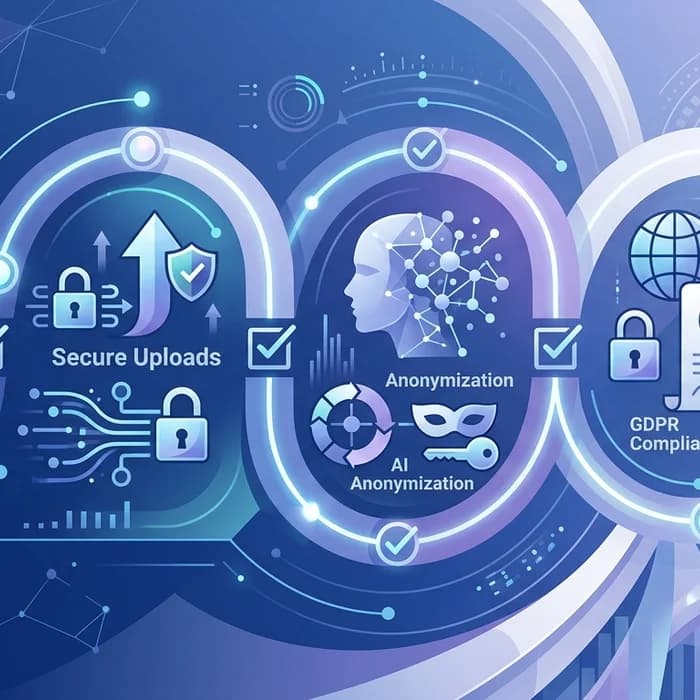
- Strip names, IDs, and financial markers from documents in seconds with Cyrolo’s AI anonymizer—ideal before sharing with vendors or using LLMs.
- Consolidate sensitive policy packs, incident timelines, and regulator-ready evidence with secure document uploads at one trusted endpoint.
These steps cut breach exposure, align with GDPR’s data minimization, and support NIS2’s auditability demands.
FAQs: NIS2 compliance, GDPR overlap, and AI risks
What is included in a NIS2 compliance checklist?
Scope classification, board accountability, risk controls, 24h/72h/1-month incident reporting playbooks, supplier assurance, AI/LLM safeguards, secure document handling, and regular testing/audits.
Does NIS2 apply to SMEs?
Yes, if an SME operates in a covered sector and meets criteria under national law (impact, criticality, or designation). Micro and small enterprises may be excluded unless they’re high-impact (e.g., certain digital providers).
How do GDPR and NIS2 differ in practice?
GDPR centers on personal data and privacy rights; NIS2 focuses on service resilience and cybersecurity. Many organizations must comply with both—data protection plus operational security and incident reporting.
How do we handle AI and LLM use without violating GDPR/NIS2?
Prohibit sensitive prompts; anonymize data before experimentation; log AI usage decisions; conduct threat models and red-teaming. Use www.cyrolo.eu to anonymize and securely upload documents.
What are typical NIS2 fines and enforcement expectations in 2026?
Up to €10m or 2% of global turnover for essential entities (€7m/1.4% for important). Expect scrutiny of board oversight, supplier risk, and real incident drill evidence—audits will look for proof, not promises.
Conclusion: make your NIS2 compliance checklist operational—today
NIS2 is no longer a future concern; it’s an audit reality. Turn your NIS2 compliance checklist into daily practice: verify scope, empower the board, harden controls, rehearse incident reporting, and lock down document flows. To reduce risk in hours—not months—use Cyrolo’s AI anonymizer and secure document uploads at www.cyrolo.eu. Your regulators—and your customers—will notice.
Sources & References
- 1Highlights - Thierry Breton to discuss US sanctions at IMCO - Committee on the Internal Market and Consumer ProtectionEU Parliament IMCO · 2026-02-11T08:46:53.000Z
- 2AI Omnibus: Reject the proposals to undermine transparency in the AI ActEDRi · 2026-02-11T09:30:02.000Z
- 3North Korea-Linked UNC1069 Uses AI Lures to Attack Cryptocurrency OrganizationsThe Hacker News · 2026-02-11T06:50:00.000Z
- 4Asia Fumbles With Throttling Back Telnet Traffic in RegionDark Reading · 2026-02-11T02:00:00.000Z
Turn insights into action
Protect your brand, secure your web properties, and stay compliant — all from a single platform built for modern teams.
Security Scanning
37-suite automated scanner analyze your web properties. Get A+ to F security grading with actionable remediation steps.
Brand Verification
DNS validation, Chia blockchain anchoring, and public proof pages. Build trust with cryptographic evidence.
GDPR & Compliance
Article-by-article GDPR audits. Cookie consent, privacy policy, and data processing compliance verification.