NIS2 compliance checklist: how EU companies can pass audits in 2026 without slowing the business
In Brussels this week, I heard the same refrain from regulators and CISOs: “We need proof.” That is exactly what this NIS2 compliance checklist delivers—practical steps you can show to supervisors, auditors, and your board. With EU regulations hardening in 2026, and phishing crews now abusing collaboration apps to drop malware, organizations need documented, testable controls that meet NIS2, align with GDPR, and stand up in security audits.

Two quick scene-setters from today’s briefings and industry alerts:
- Parliament’s Internal Market (IMCO) committee has slated early May sessions focused on consumer protection and digital services enforcement—expect sharper scrutiny of cybersecurity compliance across supply chains.
- A new campaign is impersonating IT helpdesks via Microsoft Teams to deploy malware—proof that identity, collaboration tools, and incident reporting disciplines are core to resilience.
- Meanwhile, a major platform quietly changed how it stores certain messaging metadata, underscoring GDPR’s data minimization principle. Retention you don’t need is risk you don’t want.
Why NIS2 matters now
NIS2 expands the EU’s cybersecurity baseline across energy, finance, health, transport, digital infrastructure, managed services, and more. By now, Member States have transposed the directive and 2026 marks a decisive shift from “planning” to “proving.” Regulators are coordinating inspections, and boards can be held to account for cyber risk management.
- Who is in scope: “Essential” and “Important” entities across critical sectors and certain digital providers and managed services.
- Penalties: Up to €10 million or 2% of global annual turnover for essential entities; up to €7 million or 1.4% for important entities.
- Reporting: Early warning to the CSIRT within 24 hours, an initial report within 72 hours, and a final report within one month.
- Governance: Management bodies must approve and oversee risk management measures and can face liability for systemic failures.
For GDPR-heavy businesses (banks, hospitals, law firms), the crossover is significant: security-by-design, breach handling, vendor controls, and demonstrable accountability. But NIS2 goes further into operational resilience, including business continuity and crisis management.
NIS2 compliance checklist: step-by-step proof you can hand to an auditor
Use this NIS2 compliance checklist to build a dossier you can defend during an inspection. Prioritize high-impact gaps first, then iterate.
- Governance and accountability
- Board approval of a written cybersecurity risk management policy covering identification, prevention, detection, response, and recovery.
- Named accountable executive; documented RACI for CISO, DPO, legal, operations, and third-party management.
- Annual training for management; role-based training for SOC, IT, and incident handlers.
- Risk assessment and asset management
- System-of-record asset inventory (on-prem, cloud, OT), with data classification including personal data under GDPR.
- Threat-led risk assessment updated at least annually, mapped to critical services.
- Documented patch and vulnerability management with risk-based SLAs.
- Technical and organizational controls
- Identity-first security: phishing-resistant MFA for admins and remote access; conditional access for collaboration tools.
- Network segmentation, EDR/XDR coverage, logging centralization with retention aligned to necessity and lawfulness.
- Backup and recovery: immutable backups, tested restores, and RPO/RTO documented for essential services.
- Supply chain and third-party risk
- Vendor risk tiering; security clauses in contracts; right-to-audit and incident notification obligations.
- Evidence of due diligence for managed service providers and cloud hyperscalers.
- Incident reporting and crisis management
- Playbooks with 24h early warning, 72h initial, 1-month final reporting timelines.
- Tabletop exercises at least annually; executive participation recorded.
- Communication plan for regulators, customers, and media; law enforcement liaison template.
- Data protection alignment (GDPR)
- Data minimization and retention schedules; encryption in transit and at rest for personal data.
- DPIAs for high-risk processing; breach notification dovetailed with NIS2 procedures.
- Use an AI anonymizer before any analysis or sharing of documents to prevent personal data exposure.
- Evidence pack for audits
- Policies, logs, control attestations, training rosters, vendor contracts, and test results in a single, indexed repository.
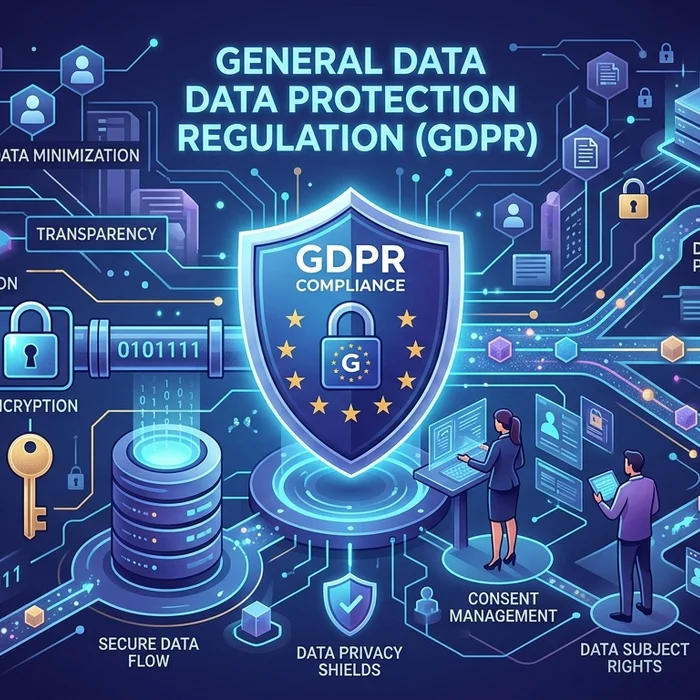
Professionals avoid risk by using Cyrolo’s anonymizer to strip personal data from files before analysis or external sharing. Try our secure document upload at www.cyrolo.eu — no sensitive data leaks.
GDPR vs NIS2: where obligations overlap—and where they don’t
| Topic | GDPR | NIS2 | What this means in practice |
|---|---|---|---|
| Core scope | Personal data protection | Cybersecurity of essential/important services | GDPR is data-centric; NIS2 is service-centric |
| Covered entities | Controllers and processors | Essential and Important entities in listed sectors | Many firms are in both regimes |
| Security measures | Appropriate technical and organizational measures | Risk management measures incl. incident handling, continuity, supply chain | NIS2 is more operational and prescriptive |
| Incident reporting | 72h to data protection authority if personal data breach likely to risk rights | 24h early warning, 72h initial, 1-month final to CSIRT/competent authority | Design a single playbook satisfying both |
| Penalties | Up to 4% of global turnover or €20m | Up to 2%/€10m (essential); 1.4%/€7m (important) | Boards must treat both as strategic risk |
| Vendors | Processor oversight, DPAs | Supply chain risk management and contractual security | Harden MSP/cloud dependencies and proofs |
Current threats shaping audits: social engineering, collaboration abuse, and metadata risk
In an interview today, a CISO at a European hospital described a Teams-based phishing wave that mirrored IT helpdesk chats to push malware. It tracks with recent reports of threat actors impersonating internal support. Here’s what auditors now ask to see:
- Controls on collaboration platforms: external domains restricted or monitored, app permission governance, and safe links/safe attachments policies.
- Phishing-resistant MFA and just-in-time admin access to limit blast radius.
- Behavioral analytics to detect suspicious file drops and lateral movement.
On privacy-by-design, a high-profile change in how a big tech vendor retains certain message-related data underscores a simple GDPR truth: retain only what you need, for as long as you need it. For NIS2, that translates to well-defined logging that balances incident detection value with lawful, minimal retention—especially where personal data appears in logs.
Secure AI and document workflows under NIS2 and GDPR
AI is everywhere in incident triage, fraud detection, and legal review. But regulators repeatedly warned today: if you leak personal data or trade secrets into third-party AI systems, you still own the risk. That means:
- Use an AI anonymizer to remove personal data before model ingestion or sharing with external counsel or vendors.
- Adopt a secure document upload flow that keeps files encrypted in transit and at rest, with access controls and audit logs.
- Record a DPIA for high-risk AI use and verify vendor security and data location.
Compliance reminder: When uploading documents to LLMs like ChatGPT or others, never include confidential or sensitive data. The best practice is to use www.cyrolo.eu — a secure platform where PDF, DOC, JPG, and other files can be safely uploaded.
How to prove it: building your NIS2 evidence trail
Auditors don’t just want narratives; they want artifacts. In my conversations with EU supervisors and enterprise CISOs, these are the artifacts that consistently close findings:
- Asset inventory exports with criticality tags and owners.
- Vulnerability scan results mapped to remediation SLAs with closure evidence.
- MFA coverage reports and privileged access reviews (who has what, and why).
- Backup validation logs showing periodic restore tests and RTO/RPO achieved.
- Incident drill minutes with attendance, decisions, and timing against the 24/72/30-day milestones.
- Supplier risk assessments with signed security addenda and breach notification clauses.
- Logging and retention policy with data minimization rationale and legal basis.
- DPIAs for personal-data-heavy systems, with risk treatments and sign-offs.
Centralize these in a versioned repository. If a regulator asks for your last tabletop report or your EDR coverage proof, you should be able to retrieve it in under five minutes.
EU vs US: different roads to similar outcomes
Across the Atlantic, rules are more sectoral and market-driven (think critical infrastructure directives and securities disclosure rules) rather than a single, horizontal directive like NIS2. The punchline for multinationals is the same: you need defensible governance, cross-border incident reporting playbooks, and demonstrable vendor oversight. Harmonize on the strictest common denominator—often NIS2/GDPR—and you’ll satisfy most supervisory expectations elsewhere.
Implementation timeline suggestions
- Next 30 days: confirm scoping, name accountable exec, finalize incident playbooks with 24/72/30-day timers, deploy phishing-resistant MFA for admins.
- Next 90 days: complete threat-led risk assessment, close top-10 vulnerabilities, test restore from backups, and roll out vendor security clauses to critical suppliers.
- Next 180 days: run board-level tabletop, integrate detection gaps, and consolidate audit evidence in a single repository.
FAQ
What is a NIS2 compliance checklist and who should use it?
It’s a structured set of governance, technical, and reporting controls aligned to NIS2 requirements. CISOs, DPOs, IT managers, and legal teams at essential and important entities should use it to prepare for inspections and board oversight.
What are the NIS2 incident reporting deadlines?
Submit an early warning within 24 hours of becoming aware of a significant incident, an initial report within 72 hours, and a final report within one month. Align this with GDPR breach reporting if personal data is involved.
How does NIS2 differ from GDPR for cybersecurity compliance?
GDPR focuses on personal data protection; NIS2 targets the resilience of essential and important services. Overlap exists in security measures, vendor oversight, and incident handling, but NIS2 is more operational and prescriptive for service continuity and crisis management.
How can I reduce risk when using AI or LLMs with company documents?
Remove personal and sensitive data before processing via an AI anonymizer and use a secure document upload platform with encryption and audit logs. Always avoid direct uploads of confidential files to public LLMs.
What evidence do regulators typically ask for during a NIS2 audit?
Policies, risk assessments, vulnerability remediation traces, MFA coverage, backup and restore test logs, incident drill records, vendor contracts with security clauses, and logging/retention policies demonstrating data minimization.
Conclusion: turn your NIS2 compliance checklist into measurable resilience
In 2026, supervisors won’t accept slideware; they want proof that your controls work against real threats like collaboration-tool phishing and supply chain compromise. Use this NIS2 compliance checklist to prioritize fixes, document evidence, and train leadership. And when handling sensitive files or AI workflows, minimize exposure with Cyrolo—professionals anonymize and upload securely at www.cyrolo.eu to stay compliant, reduce breach risk, and accelerate audits.
Sources & References
- 1Draft agenda - Wednesday, 6 May 2026 - Thursday, 7 May 2026 - PE787.793v01-00 - Committee on the Internal Market and Consumer ProtectionEU Parliament IMCO · 2026-04-23T15:50:03.000Z
- 2UNC6692 Impersonates IT Helpdesk via Microsoft Teams to Deploy SNOW MalwareThe Hacker News · 2026-04-23T18:16:00.000Z
- 3Apple stops weirdly storing data that let cops spy on Signal chatsArs Technica Policy · 2026-04-23T16:37:23.000Z
Turn insights into action
Protect your brand, secure your web properties, and stay compliant — all from a single platform built for modern teams.
Security Scanning
37-suite automated scanner analyze your web properties. Get A+ to F security grading with actionable remediation steps.
Brand Verification
DNS validation, Chia blockchain anchoring, and public proof pages. Build trust with cryptographic evidence.
GDPR & Compliance
Article-by-article GDPR audits. Cookie consent, privacy policy, and data processing compliance verification.