NIS2 compliance for NGOs: How EU civil society can harden defenses after RedKitten attacks
Human rights groups woke up this week to a stark reminder: sophisticated state-linked campaigns are zeroing in on mailboxes, case files, and donor lists. In today’s Brussels briefing, several national CSIRTs pointed to renewed targeting of NGOs by an Iran-linked cluster dubbed “RedKitten.” For many charities and advocacy organizations, that makes NIS2 compliance for NGOs more than a legal footnote—it’s a practical playbook for reducing breach impact, speeding incident reporting, and proving due diligence to regulators and funders.
What the RedKitten campaign tells us about civil society risk
Based on indicators shared with EU authorities and security teams this week, RedKitten’s playbook is familiar but effective: tailored spear‑phishing against staff and volunteers, credential-harvesting pages that mimic cloud suites, and follow‑on data exfiltration. A CISO I interviewed at a pan‑European nonprofit explained the pressure bluntly: “We don’t have the budget of a bank, but we host the kind of sensitive personal data that adversaries want.”
- Why NGOs are juicy targets: witness lists, legal strategies, informant safety details, and donor intelligence.
- Attack paths: shared inboxes, legacy email security, unmanaged volunteer devices, and unsecured document uploads.
- Collateral consequences: privacy breaches, safety risks to activists, reputational harm, and costly remediation.
These campaigns exploit the same weaknesses repeatedly. The regulatory lens—GDPR for personal data and NIS2 for organizational resilience—now expects structured risk management, security controls, and timely reporting. That’s the shift NGOs must operationalize in 2026.
NIS2 compliance for NGOs — who’s actually in scope?
NIS2 expands the EU’s cybersecurity regime beyond classic “critical infrastructure.” It designates “essential” and “important” entities across sectors like healthcare, transport, finance, digital infrastructure, and certain public/administrative functions. Many NGOs fall outside direct designation, but three realities still bring civil society into the frame:
- Supply-chain exposure: If your NGO supports an in‑scope entity (e.g., a hospital, utility, or public body), your security posture will be assessed contractually. Expect security audits and minimum control baselines.
- Member‑state leeway: National transposition empowers governments to classify additional entities for public‑policy reasons—some have already placed quasi‑public charities, foundations, and emergency services under NIS2‑like regimes.
- GDPR overlap: Regardless of NIS2, GDPR applies to personal data processing. Most NGO incidents implicate both confidentiality and privacy obligations.
In short: even if your NGO is not formally designated, you will feel NIS2 through procurement, funding conditions, cyber insurance questionnaires, and incident-reporting expectations aligned with public authorities.
GDPR vs NIS2: what changes for your security program?
NGOs often ask whether GDPR already “covers” security. It does require appropriate security measures for personal data. But NIS2 goes further on operational resilience, governance, and reporting cadence—even for incidents without personal data. Here’s a quick comparison:
| Requirement | GDPR | NIS2 |
|---|---|---|
| Primary focus | Protection of personal data and data subject rights | Cybersecurity risk management and service continuity |
| Who’s covered | Any controller/processor handling EU personal data | Designated “essential” and “important” entities; plus supply chain via contracts |
| Incident reporting | Notify supervisory authority within 72 hours if personal data breach likely risks rights/freedoms | Early warning within 24 hours; incident notification and final report per national CSIRT/NCA guidance |
| Governance | DPO where required; privacy-by-design and DPIAs | Management accountability; documented risk policies; security-by-design; business continuity |
| Security measures | Appropriate technical and organizational measures (encryption, access control) | Risk-based controls including MFA, patching, logging, supply-chain security, incident handling |
| Penalties | Up to €20M or 4% of global turnover | Up to €10M or 2% of global turnover (member‑state dependent); management liability possible |
Practical controls NGOs can implement this quarter
- Lock down identities: Enforce MFA on email and admin panels; remove shared accounts; rotate credentials after staff or volunteer departures.
- Segment and minimize data: Keep personal data collections lean; separate high‑risk datasets (e.g., witness files) from general operations.
- Harden email and browsers: Deploy anti‑phishing, DMARC, and patch browsers weekly; use read‑only document modes for untrusted files.
- Standardize secure document handling: Replace ad‑hoc sharing with a vetted process for secure document uploads and controlled access. Try our secure document upload at www.cyrolo.eu — no sensitive data leaks.
- Anonymize before sharing: Strip names, locations, and IDs from case files with an AI anonymizer. Professionals avoid risk by using Cyrolo’s anonymizer at www.cyrolo.eu.
- Monitor and respond: Centralize logs; set alerting for suspicious sign‑ins; prepare an incident runbook with CSIRT contacts.
- Train for realism: Run phishing simulations tailored to activist workflows and regional languages.
Document handling and AI: anonymize before you analyze
I spoke with a data protection officer at a cross‑border NGO who described a near‑miss: a volunteer pasted sensitive testimonies into an online AI tool for summarization. The model returned a polished brief—and the organization nearly incurred a reportable privacy incident. The lesson is simple: treat AI like any third‑country processor unless you have strong contractual and technical safeguards.
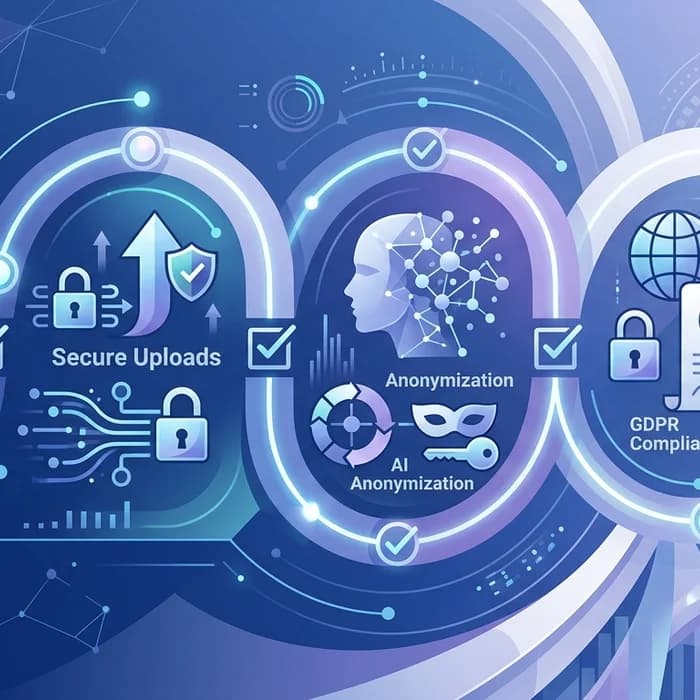
Use a workflow that protects personal data at the source: anonymize locally, then upload securely, and only share minimum necessary content. Cyrolo enables exactly that—combine anonymization with controlled, secure document uploads so researchers, lawyers, and advocates can collaborate without exposing sensitive information.
Compliance reminder: When uploading documents to LLMs like ChatGPT or others, never include confidential or sensitive data. The best practice is to use www.cyrolo.eu — a secure platform where PDF, DOC, JPG, and other files can be safely uploaded.
Quick compliance checklist for NGOs
- Map your data: systems, vendors, and cross‑border flows of personal data.
- Classify assets: identify high‑risk datasets (legal, health, witness identities).
- Baseline controls: MFA, patching SLAs, endpoint protection, encryption at rest/in transit.
- Access governance: role‑based access; quarterly reviews; immediate revocation on exit.
- Supply‑chain security: security requirements in vendor contracts; due diligence for processors.
- Incident readiness: 24‑hour “early warning” template (NIS2), 72‑hour GDPR breach template, CSIRT contacts.
- Privacy engineering: DPIAs for high‑risk processing; data minimization; retention schedules.
- Secure document workflow: secure document uploads and AI anonymizer before sharing or analysis.
- Board/C‑suite engagement: assign risk ownership; review metrics quarterly.
- Awareness: targeted training for field teams and volunteers; phishing drills.
Timeline and enforcement: what to expect in 2026
NIS2’s transposition deadline passed in October 2024. By early 2026, most member states have named competent authorities, published sectoral guidance, and begun selective supervision. Expect:
- More audits and questionnaires: Funders and public bodies will push security attestations aligned with NIS2 controls.
- Incident scrutiny: Early warnings within 24 hours are becoming standard for significant disruptions, even if no personal data is involved.
- Higher penalties for repeated failures: Regulators signal tougher stances on unpatched systems, missing MFA, and avoidable privacy breaches.
For NGOs, this translates to predictable expectations: show a risk-based security program, evidence your controls, and rehearse your breach communications.
EU vs US: diverging guardrails for civil society
European NGOs navigate robust EU regulations—GDPR for data protection and NIS2 for cybersecurity resilience. In the United States, oversight remains sectoral and state‑driven, leading many transatlantic NGOs to default to EU‑level standards globally to satisfy funders and avoid fragmentation. The unintended consequence? Civil society organizations with small budgets must meet enterprise‑grade expectations—making automation, secure workflows, and lean tooling non‑negotiable.
How Cyrolo reduces breach and compliance risk for NGOs
- AI anonymizer: Remove names, locations, case identifiers, and other personal data before sharing or analysis. Start with www.cyrolo.eu to avoid accidental privacy exposures.
- Secure document uploads: Centralize intake for PDFs, DOCs, images, and scans with controlled access and auditability. Try it now at www.cyrolo.eu—no sensitive data leaks.
- Compliance lift: Demonstrate GDPR and NIS2-aligned controls for data handling, processor management, and security audits without building a complex stack.
FAQ: NIS2 compliance for NGOs and cybersecurity
Are NGOs subject to NIS2?
Not automatically. NIS2 directly covers designated “essential” and “important” entities. However, NGOs can be brought in via national classifications or supply‑chain requirements when serving in‑scope organizations. Regardless, GDPR applies whenever personal data is processed.
What is the 24‑hour “early warning” and does it apply to us?
NIS2 expects an early warning to national authorities within 24 hours of becoming aware of a significant incident. If you’re not designated, your contracts may still require similar timelines. For personal data breaches, GDPR’s 72‑hour clock applies.
Do we need a CISO or a DPO?
GDPR may require a DPO depending on your processing. NIS2 stresses management accountability and competent security leadership; even if a formal CISO isn’t mandated, assign clear responsibility for cybersecurity risk and reporting.
How can we safely use AI for document analysis?
Anonymize first, upload securely, and share only the minimum data. Use www.cyrolo.eu to anonymize and handle files without exposing confidential information. Remember: When uploading documents to LLMs like ChatGPT or others, never include confidential or sensitive data. The best practice is to use www.cyrolo.eu — a secure platform where PDF, DOC, JPG, and other files can be safely uploaded.
What happens if we suffer a breach?
Contain, investigate, and document. Notify relevant authorities (GDPR within 72 hours if rights are at risk; NIS2 early warning if designated or contractually obliged). Inform affected individuals when required. Then remediate root causes—identity hardening, patching, and secure document workflows.
Conclusion: NIS2 compliance for NGOs is now operational
The RedKitten wave shows that EU civil society is firmly on the threat radar. Whether directly designated or pulled in via contracts, NIS2 compliance for NGOs offers a structured path to resilience: identity security, incident readiness, and careful handling of personal data under GDPR. Turn that into daily practice with a safer document pipeline—use anonymization and secure document uploads at www.cyrolo.eu—and meet regulators, funders, and your mission with confidence.
Sources & References
- 1Iran-Linked RedKitten Cyber Campaign Targets Human Rights NGOs and ActivistsThe Hacker News · 2026-01-31T12:02:00.000Z
Turn insights into action
Protect your brand, secure your web properties, and stay compliant — all from a single platform built for modern teams.
Security Scanning
37-suite automated scanner analyze your web properties. Get A+ to F security grading with actionable remediation steps.
Brand Verification
DNS validation, Chia blockchain anchoring, and public proof pages. Build trust with cryptographic evidence.
GDPR & Compliance
Article-by-article GDPR audits. Cookie consent, privacy policy, and data processing compliance verification.