NIS2 compliance after the latest supply-chain attacks: a practical guide for EU security leaders
In today’s Brussels briefing, regulators emphasized that NIS2 compliance cannot be a checklist exercise after back-to-back revelations of supply-chain compromises and actively exploited enterprise software flaws. Within hours, researchers detailed how dozens of malicious npm packages abused exposed Redis and PostgreSQL instances to drop persistent implants, while a major endpoint management vendor rushed an emergency patch for an actively exploited vulnerability. For EU organizations navigating GDPR obligations alongside cybersecurity compliance under NIS2, these incidents are a loud reminder: secure development, asset hygiene, and rapid incident reporting are now board-level duties.

Why the npm/Redis–PostgreSQL attacks change your NIS2 compliance priorities
The latest campaign leveraged typosquatted npm packages to land in CI/CD pipelines, harvested credentials from misconfigured Redis and PostgreSQL, and used that access to maintain long-term footholds. This isn’t a theoretical supply-chain risk—it’s a living case study of how one weak link can cascade across vendors, SaaS tenants, and on‑prem environments.
- Exposed services as soft targets: Internet-facing Redis/PostgreSQL with weak auth were used for lateral movement and persistence—classic “misconfig-to-breach” pathways that NIS2 expects you to close.
- CI/CD abuse: Package managers and pipelines are critical national infrastructure by proxy. NIS2’s supply-chain controls push you to vet third-party components and continuously validate integrity.
- Telemetry gap: Many organizations lack the log depth to prove what attackers touched—risking regulatory findings and extended audits after a major incident.
Layer onto that an actively exploited enterprise endpoint management flaw patched this week. Together, these events underline NIS2’s central message: inventory, patching, vulnerability disclosure handling, and supplier risk management are not “nice to have”—they are enforceable obligations with fines attached.
What NIS2, GDPR, and EU regulators now expect
I asked a national regulator this morning how they view the current wave of supply-chain activity. “You own your exposure surface,” they told me. “If an npm package or an unprotected database led to a compromise, we’ll look for the risk assessment, the supplier due diligence, and your patch timelines.”
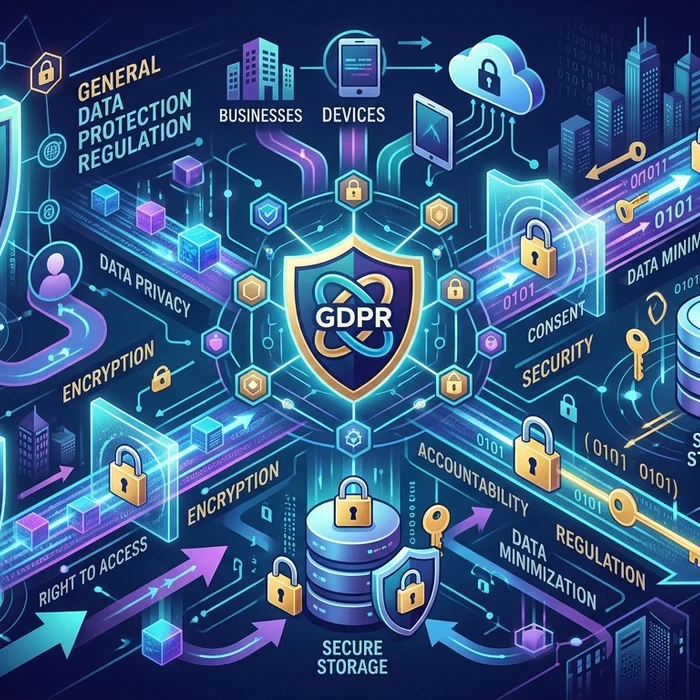
Under NIS2, essential and important entities must adopt “appropriate and proportionate” technical and organizational measures, including risk management, incident handling, business continuity, supply-chain security, and cryptography. GDPR remains your baseline for personal data—think breach notification to data protection authorities and potential data subject harm—while NIS2 elevates operational resilience and incident reporting to sectoral authorities/CSIRTs.
- Fines: For essential entities, up to €10 million or 2% of global annual turnover (whichever is higher). For important entities, up to €7 million or 1.4%.
- Incident reporting: Early warning within 24 hours, initial notification within 72 hours, and a final report within one month—expect to show evidence trails.
- Supply-chain obligations: Documented supplier risk assessments, contractual security requirements, and verifiable controls for software integrity.
Compare that to GDPR’s fines up to €20 million or 4% of global turnover for severe violations. Both frameworks can apply to the same event: a library-led intrusion that exfiltrates personal data can trigger NIS2 incident reporting and GDPR breach notification simultaneously. In the U.S., by contrast, cyber rules are more fragmented—SEC disclosure rules and sectoral mandates impose transparency but lack NIS2’s prescriptive, cross-sector supply‑chain emphasis.
GDPR vs NIS2: obligations at a glance
| Topic | GDPR (Data Protection) | NIS2 (Cybersecurity Resilience) |
|---|---|---|
| Primary scope | Personal data processing and data subject rights | Network and information systems of essential/important entities |
| Core goal | Data protection and privacy | Operational resilience and service continuity |
| Incident reporting | Notify DPA “without undue delay,” typically within 72 hours if risk to individuals | 24h early warning, 72h notification to CSIRT/authority, final report in 1 month |
| Supply-chain focus | Data processing agreements with processors | Mandatory supplier risk management and software integrity controls |
| Security measures | “Appropriate” technical and organizational measures (Art. 32) | Risk management, vulnerability handling, logging, crypto, business continuity |
| Sanctions | Up to €20m or 4% global turnover | Up to €10m/2% (essential) or €7m/1.4% (important) |
| Evidence burden | Show data protection by design/default, DPIAs, records of processing | Show incident response plans, supplier due diligence, patch timelines, audit logs |
NIS2 compliance action plan: your next 30–60–90 days
From my interviews this week with CISOs in banking, healthcare, and industrials, the pattern is clear: organizations that prepared for NIS2 early are weathering today’s headlines with fewer surprises. Here’s a pragmatic roadmap you can start now.
Days 1–30: Stabilize exposure
- Asset inventory refresh: Auto-discover all Internet-facing services (especially Redis/PostgreSQL), CI/CD nodes, and admin portals. Tag business owners.
- Emergency hardening: Enforce authentication, TLS, and network segmentation; rotate secrets; disable anonymous access in data stores.
- Patch sprint: Prioritize actively exploited vulnerabilities, including endpoint management and VPN gateways. Track mean time to remediate (MTTR).
- Package hygiene: Freeze risky dependencies; enable lockfiles and integrity checks; audit npm/pip registries for typosquats.
- Logging uplift: Centralize logs for identity, databases, CI/CD, and EDR; retain for at least the period needed to support investigations and audits.
Days 31–60: Prove control
- Supplier risk program: Tier vendors by criticality; add software bill of materials (SBOM) requirements; mandate vulnerability disclosure timelines.
- Incident playbooks: Build 24h/72h/1‑month reporting workflows; pre-draft regulator notification templates and stakeholder comms.
- Tabletop exercises: Simulate a package-manager compromise and a managed endpoint zero‑day; capture lessons and gaps.
- Backups and recovery: Test restores for critical services; document recovery time objectives regulators will ask about.
Days 61–90: Institutionalize
- Policy alignment: Update security policies to explicitly reference NIS2 obligations, GDPR overlaps, and sector guidance.
- Metrics and audits: Define KRIs/KPIs (e.g., patch SLAs by severity, supplier attestation coverage, mean time to detect).
- Board briefings: Educate directors on fines and accountability; document risk acceptance where applicable.
- Evidence management: Standardize how artifacts (logs, DPIAs, supplier attestations) are collected, redacted, and shared during audits.
NIS2 compliance checklist
- Map essential/important entity status and scope of covered services.
- Maintain real-time asset and exposure inventory, including CI/CD and data stores.
- Embed supply-chain security: SBOMs, code signing, dependency pinning, vendor tiers.
- Operate a risk-based patch and vulnerability management program with SLAs.
- Implement MFA everywhere; segment admin access; enforce least privilege.
- Centralize logging with tamper‑evident retention for investigations and security audits.
- Run incident response with 24h/72h/1‑month reporting to CSIRTs/authorities.
- Test backups, business continuity, and disaster recovery; document outcomes.
- Align with GDPR for personal data impacts; prepare breach notification templates.
- Train developers and ops on secure defaults for Redis/PostgreSQL and pipeline tools.
Secure evidence handling and AI: anonymize before you share
A CISO I interviewed warned that “we lost a week to legal wrangling because our logs contained email addresses and tokens—we couldn’t share them with suppliers until we scrubbed personal data.” This is the quiet bottleneck in modern incident response: moving fast while respecting data protection.
- Redact before distribution: Scrub personal data and secrets from logs, tickets, and screenshots before they leave your environment.
- Use tools built for privacy: Professionals avoid risk by using Cyrolo’s anonymizer—a practical step that preserves evidence utility while reducing GDPR exposure.
- Control ingress/egress: When outsourcing forensics or patch validation, share only the minimum necessary and track recipients.
If you must review large documents quickly, try a secure workflow that doesn’t leak sensitive fields. Try our secure document upload at www.cyrolo.eu — no sensitive data leaks. When uploading documents to LLMs like ChatGPT or others, never include confidential or sensitive data. The best practice is to use www.cyrolo.eu — a secure platform where PDF, DOC, JPG, and other files can be safely uploaded.
Real-world scenarios: where organizations stumble
- Fintechs and banks: Over-reliance on managed pipelines without verifying build provenance; auditors later ask for SBOMs and signing evidence that don’t exist.
- Hospitals: Exposed databases used by radiology and lab systems; incident containment reveals unencrypted backups and shared admin credentials.
- Law firms: Client data in eDiscovery platforms; breach overlaps GDPR and professional secrecy rules, extending regulator and bar inquiries.
- Manufacturers: OT/IT boundary violations; an npm dependency in a monitoring tool opens a path into production scheduling.
Each case turned from an operational problem into a regulatory one because artifacts weren’t ready, supplier duties were vague, or personal data made evidence sharing risky. A small investment in anonymization and structured evidence management pays off when the clock starts on 24‑hour reporting.
FAQ: EU cybersecurity compliance in 2026
What’s the current deadline landscape for NIS2 compliance?
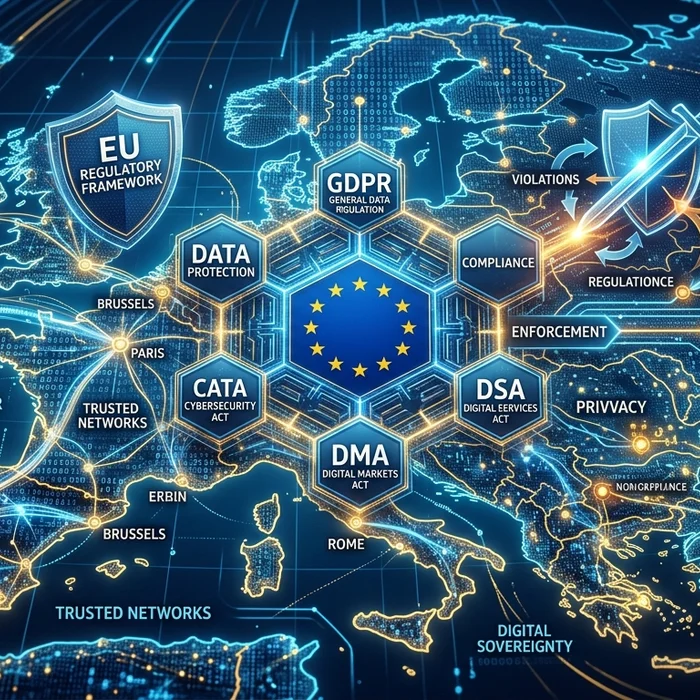
Member States have transposed NIS2 into national law, and enforcement is active. Supervisors expect essential and important entities to demonstrate operational readiness now—policies on paper won’t suffice. If you’re in scope, assume you must already meet incident reporting, supply-chain, and resilience requirements.
How is NIS2 different from GDPR in an incident like the npm/Redis campaign?
GDPR focuses on risks to individuals and personal data, driving breach notifications and privacy remediation. NIS2 targets your service continuity and systemic cyber risk. A single incident can trigger both: NIS2 for operational disruption and GDPR if personal data was accessed.
What supply-chain controls satisfy regulators?
Expectations include SBOMs for critical software, dependency pinning and integrity checks, vendor tiering, contractual vulnerability disclosure windows, and proof that you can revoke or block compromised packages quickly across environments.
What are the NIS2 incident reporting timelines?
Submit an early warning within 24 hours, an initial report within 72 hours, and a final report within one month. Be ready to show timelines, evidence, and remediation status; missing logs can prolong supervisory actions.
Can we use AI tools to summarize evidence without risking data leaks?
Yes—if you anonymize first and use a secure platform. Use an AI anonymizer and controlled document uploads to keep personal data and secrets out of third-party models. When uploading documents to LLMs like ChatGPT or others, never include confidential or sensitive data. The best practice is to use www.cyrolo.eu — a secure platform where PDF, DOC, JPG, and other files can be safely uploaded.
Conclusion: NIS2 compliance is now supply‑chain‑first
The week’s headlines—malicious packages riding into CI/CD, databases pressed into service for persistence, and a scramble to patch an actively exploited enterprise tool—are exactly the scenarios NIS2 was written to address. If you can inventory your exposure, patch with urgency, prove supplier due diligence, and share evidence safely, you turn regulatory pressure into resilience. Start today: anonymize what you share using www.cyrolo.eu and streamline secure evidence handling with document uploads. NIS2 compliance isn’t just about avoiding fines—it’s how you stay online when the supply chain wobbles.
Sources & References
- 136 Malicious npm Packages Exploited Redis, PostgreSQL to Deploy Persistent ImplantsThe Hacker News · 2026-04-05T05:07:00.000Z
- 2Fortinet Patches Actively Exploited CVE-2026-35616 in FortiClient EMSThe Hacker News · 2026-04-05T04:32:00.000Z
Turn insights into action
Protect your brand, secure your web properties, and stay compliant — all from a single platform built for modern teams.
Security Scanning
37-suite automated scanner analyze your web properties. Get A+ to F security grading with actionable remediation steps.
Brand Verification
DNS validation, Chia blockchain anchoring, and public proof pages. Build trust with cryptographic evidence.
GDPR & Compliance
Article-by-article GDPR audits. Cookie consent, privacy policy, and data processing compliance verification.