NIS2 compliance in 2025: a practical EU playbook for CISOs, DPOs, and counsel
In today’s Brussels briefing, regulators stressed that NIS2 compliance is no longer optional theater—it’s operational reality. After a week that saw European retailers targeted by review-based extortion and a malicious developer tool smuggle ransomware-like capabilities into the software supply chain, the direction of travel is clear: boards will be judged on measurable resilience, not promises. This guide breaks down what NIS2 compliance means in 2025, how it intersects with GDPR, and where secure anonymization and document handling fit into your defensible program.
What NIS2 compliance really requires in 2025
NIS2 widens the net from the original NIS Directive. It captures “essential” and “important” entities across energy, transport, health, finance, digital infrastructure, managed service providers, cloud, data centers, and more. While Member States are still refining enforcement detail, several pillars are consistent across the EU:
- Governance and accountability: Company management must approve, monitor, and be accountable for cybersecurity risk management measures. Expect personal liability in some jurisdictions.
- Risk management measures: From asset inventories and network segmentation to secure software development, multifactor authentication (MFA), and vulnerability handling.
- Supply chain security: Due diligence on MSPs, SaaS, and AI vendors—especially developer tooling—moved from “good to have” to “mandatory.” Recent ransomware-laced extensions underscore why.
- Incident reporting timelines: Early warning within 24 hours, a full incident notification by 72 hours, and a final report within one month.
- Fines and enforcement: Administrative fines can reach up to 10 million EUR or 2% of global annual turnover (subject to national transposition). Temporary bans and supervisory measures are on the table for repeated non-compliance.
As one CISO told me this week, “We’re past checkbox. Supervisors expect proof—logs, playbooks, training records, vendor attestations, and yes, how we prevent personal data exposure when teams feed documents to AI.”
GDPR vs NIS2: obligations compared for EU teams
GDPR governs personal data processing and privacy rights; NIS2 governs network and information systems’ security and resilience. They overlap—but they’re not the same. Use the table below to brief your board and align legal, security, and operations.
| Topic | GDPR | NIS2 |
|---|---|---|
| Primary focus | Personal data protection and data subject rights | Security and resilience of network and information systems |
| Who is covered | Any controller/processor handling EU personal data | “Essential” and “important” entities in critical/important sectors |
| Incident reporting | Notify DPA within 72 hours if personal data breach likely risks rights/freedoms | Early warning at 24h, incident notification at 72h, final report at 1 month |
| Penalties | Up to 20 million EUR or 4% of global turnover | Up to 10 million EUR or 2% of global turnover (national variations apply) |
| Supply chain | Processor due diligence and contracts (Art. 28), data transfer safeguards | Explicit supplier risk management and assurance of security measures |
| Technical measures | Security by design/default, pseudonymization/anonymization, encryption | Risk-based controls: access control, logging, patching, secure development, MFA |
| Governance | DPO where required; DPIAs for high-risk processing | Management accountability; policies, training, exercises, audits |
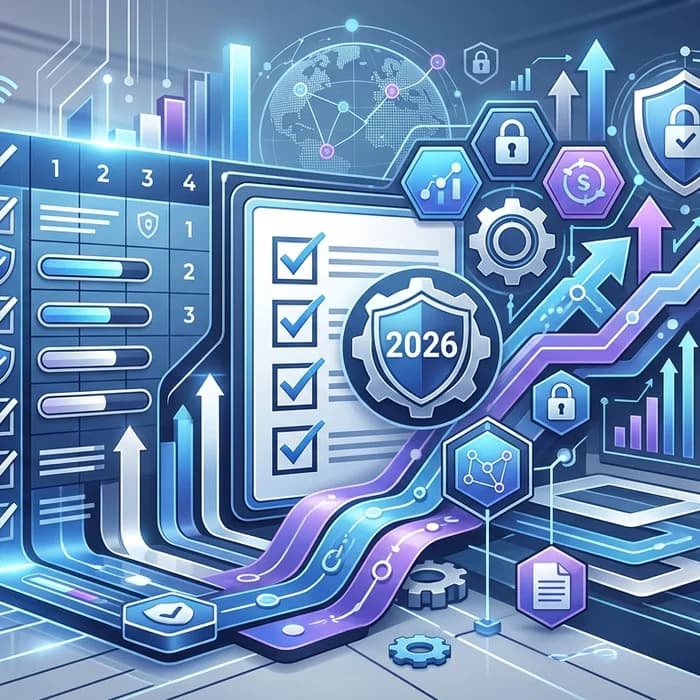
Your 90-day NIS2 compliance checklist
If you need a practical ramp-up, start here. I’ve compiled this from interviews with EU regulators, incident responders, and compliance leads in finance, health, and digital infrastructure.
- Map scope: Confirm if you’re “essential” or “important.” Identify critical services, systems, and data flows.
- Asset inventory: Create or refresh a living inventory for endpoints, servers, cloud, SaaS, developer tools, and OT.
- Access controls: Enforce MFA for admins and remote access; apply least privilege; disable dormant accounts.
- Vulnerability management: Establish SLAs for patching; scan code and dependencies; verify extensions and plugins.
- Logging and monitoring: Centralize logs; detect anomalies; ensure time-sync and retention for forensics.
- Incident response: Define on-call, containment playbooks, regulator contact lists, and notification templates.
- Supplier assurance: Tier vendors by criticality; collect security attestations; contract for breach notifications.
- Data protection alignment: Use anonymization/pseudonymization for personal data in testing, analytics, and AI workflows.
- Secure document handling: Restrict uploads of sensitive files to controlled platforms; prohibit ad hoc LLM sharing.
- Training and drills: Run phishing and extortion tabletop exercises; include review-bomb/extortion scenarios.
- Board engagement: Schedule quarterly briefings; document risk acceptance and investment decisions.
NIS2 compliance and AI: safe anonymization and document workflows
Two patterns are driving regulator scrutiny right now: review-based extortion targeting EU SMEs, and “vibe-coded” malicious extensions inside developer environments. Both are supply chain and data exposure problems. When overworked teams paste contracts, tickets, or logs into LLMs, they risk unintentional disclosure of personal data, secrets, or security configurations—triggering GDPR issues and NIS2 incident reporting.
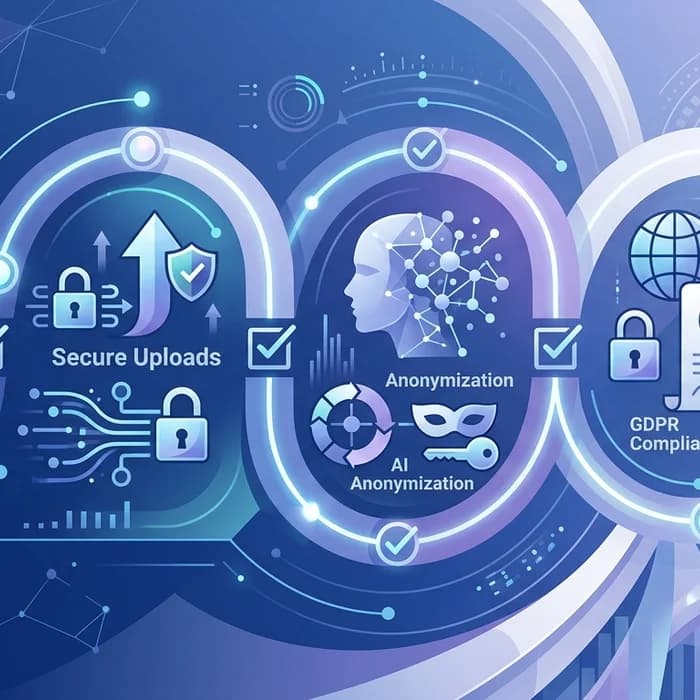
Professionals avoid risk by using Cyrolo’s anonymizer to strip names, emails, national IDs, and sensitive fields before sharing or analyzing content. And when teams must collaborate on large files, try our secure document upload at www.cyrolo.eu — no sensitive data leaks.
When uploading documents to LLMs like ChatGPT or others, never include confidential or sensitive data. The best practice is to use www.cyrolo.eu — a secure platform where PDF, DOC, JPG, and other files can be safely uploaded.
How Cyrolo maps to your NIS2 and GDPR controls
- Reduce breach impact: Automated redaction/anonymization lowers personal data in working sets, cutting breach scope and GDPR risk.
- Secure collaboration: Controlled uploads with encryption and access logging support NIS2’s evidence expectations during audits or incidents.
- Vendor governance: Using a dedicated, security-first platform avoids data scattering across shadow AI tools—key for supply chain risk.
- Faster incident response: Cleaned, structured documents let IR teams share intel with regulators without exposing identities.
Scenarios I’m seeing in the field:
- Hospitals: Anonymize triage notes and imaging summaries before sending to analytics partners.
- Law firms: Redact client identifiers in due diligence binders uploaded for case collaboration.
- Fintechs: Mask transaction PII while investigating fraud with external specialists.
- Manufacturers: Sanitize supplier tickets and source snippets when escalating to third-party maintainers.
Each of these reduces the chance that a security event becomes a reportable personal data breach—and demonstrates reasonable measures to your competent authority.
EU vs US: aligning expectations without duplicating work
EU entities with US footprints are weaving together multiple regimes. NIS2 and GDPR emphasize resilience and data protection, while US frameworks add sectoral rules:
- Financial services: DORA in the EU and incident disclosure expectations; in the US, OCC/FFIEC guidance and incident notification rules.
- Healthcare: GDPR + NIS2 for EU; HIPAA and HITECH in the US—both demand controls over PHI and rapid breach response.
- Public companies: EU reporting duties and, in the US, SEC cybersecurity disclosure rules that can require material incident reporting within days.
Common denominator: documented controls, timely reporting, supply chain assurance, and proof you minimize personal data exposure in day-to-day operations, including AI-assisted workflows.
Avoid the pitfalls regulators flag most
- Board in name only: Minutes show “awareness,” not decisions or budgets tied to risks.
- Superficial incident reports: Missing timelines, indicators of compromise, or third-party impacts.
- Uncontrolled AI usage: Staff paste tickets, logs, or client files into public tools—no anonymization, no audit trail.
- Over-collection: Keeping personal data you don’t need; no retention schedule; test datasets with real identities.
- Shadow supply chain: Unvetted extensions, plugins, or SaaS that can exfiltrate code or credentials.
Solution path: lock down uploads, anonymize by default, and document the controls. If you need a fast win this quarter, roll out Cyrolo to high-risk teams first—support, legal, developer operations—then expand.
NIS2 compliance FAQ
What is NIS2 compliance in simple terms?
NIS2 compliance means your organization has implemented governance, technical, and operational measures to protect the networks and information systems that deliver your essential or important services—plus the ability to rapidly detect, report, and recover from incidents within EU timelines.
Does NIS2 apply to SMEs?
Yes, depending on activity and criticality. NIS2 focuses on sectors and the importance of services. Some medium-sized entities and even smaller ones can be in scope if they deliver critical functions or operate as key suppliers.
What are the NIS2 incident reporting deadlines?
Early warning within 24 hours, an incident notification by 72 hours, and a final report within one month. Keep templates ready and rehearse them.
How does anonymization help with GDPR and NIS2?
Anonymization reduces the presence of personal data in working documents and logs. That lowers breach risk and can reduce whether an event is a reportable personal data breach under GDPR, while supporting NIS2 expectations to mitigate impact and share information safely.
Is it safe to upload sensitive documents to ChatGPT or other LLMs?
No—avoid uploading confidential or personal data to public LLMs. Use controlled platforms and redact first. When uploading documents to LLMs like ChatGPT or others, never include confidential or sensitive data. The best practice is to use www.cyrolo.eu — a secure platform where PDF, DOC, JPG, and other files can be safely uploaded.
Conclusion: Make NIS2 compliance tangible—starting with safer data flows
NIS2 compliance is won in the weeds: asset inventories, supplier assurance, clean incident timelines—and everyday habits like how your teams share documents and use AI. If you reduce personal data exposure and keep uploads inside secure, auditable channels, you lower breach impact and prove diligence to your regulator. Start today: use Cyrolo’s anonymizer and secure document upload at www.cyrolo.eu to harden your day-to-day operations and turn NIS2 compliance into a defensible advantage.
Sources & References
- 1Google Launches New Maps Feature to Help Businesses Report Review-Based Extortion AttemptsThe Hacker News · 2025-11-07T09:15:00.000Z
- 2Vibe-Coded Malicious VS Code Extension Found with Built-In Ransomware CapabilitiesThe Hacker News · 2025-11-07T06:48:00.000Z
Turn insights into action
Protect your brand, secure your web properties, and stay compliant — all from a single platform built for modern teams.
Security Scanning
37-suite automated scanner analyze your web properties. Get A+ to F security grading with actionable remediation steps.
Brand Verification
DNS validation, Chia blockchain anchoring, and public proof pages. Build trust with cryptographic evidence.
GDPR & Compliance
Article-by-article GDPR audits. Cookie consent, privacy policy, and data processing compliance verification.