NIS2 compliance in 2026: A practical, audit-ready guide for EU security and legal teams
In today’s Brussels briefing, regulators reiterated that NIS2 compliance is no longer optional housekeeping—it’s a board-level obligation with real teeth. As Member States complete their national transpositions and supervisory authorities begin coordinated checks, CISOs and DPOs are being asked to prove effective risk management, incident reporting, and supply-chain governance. This week’s disclosure of a critical reverse-proxy integration flaw impacting widely deployed web stacks is a timely reminder: under EU regulations including GDPR and NIS2, “good-faith best effort” must be demonstrated, documented, and tested.
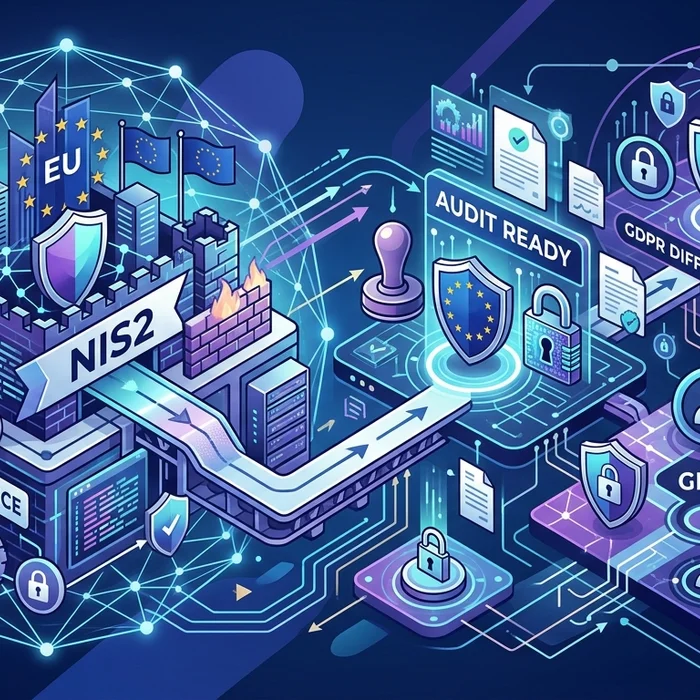
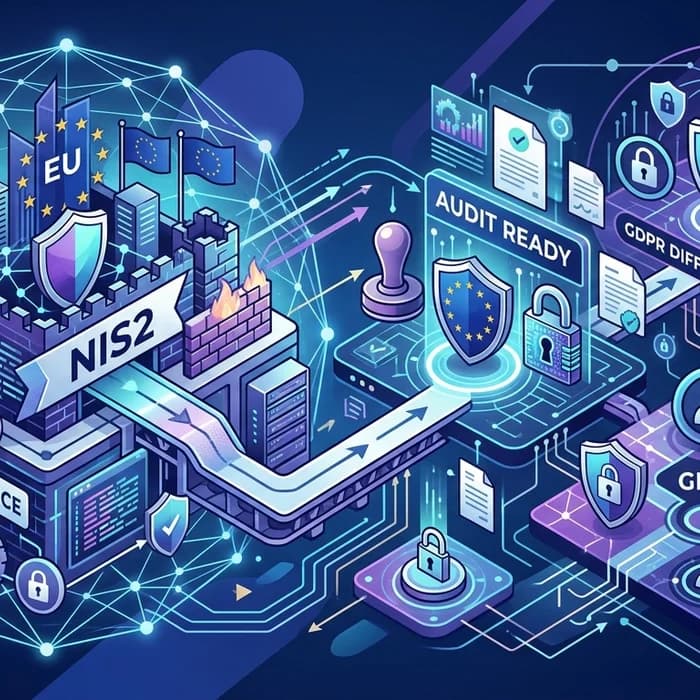
Below, I unpack what’s new, how it differs from GDPR, and what will satisfy a regulator or auditor in 2026. I also show how teams operationalize privacy-by-design and secure document workflows—without feeding sensitive data into unmanaged AI tools.
Why NIS2 compliance is rising to the top of the risk register
- Wider scope: “Essential” and “Important” entities now include finance, healthcare, digital infrastructure, managed services, and many SaaS/PaaS providers.
- Higher expectations: Security of network and information systems, business continuity, supplier oversight, and crypto/key management are expressly required.
- Report fast: Early incident notification (typically within 24 hours) and follow-ups (72 hours and final report) are the norm across Member State laws.
- Leadership accountability: Management can be held personally responsible for systemic negligence in many jurisdictions.
- Fines: For essential entities, at least up to €10 million or 2% of worldwide turnover; for important entities, at least up to €7 million or 1.4%—whichever is higher under national law.
As one CISO I interviewed at a European hospital group put it: “NIS2 turned our security program into an auditable, board-governed control system. The bar is no longer ‘patch quickly’—it’s ‘prove you engineered risk down and can show your work.’”
NIS2 compliance vs GDPR: What’s the difference—and where they intersect
GDPR protects personal data. NIS2 safeguards the resilience and security of critical services and digital infrastructure. In practice, the two regimes often apply together: a ransomware event that disrupts services and leaks personal data can trigger both GDPR and NIS2 obligations. Here’s a side-by-side snapshot:
| Dimension | GDPR | NIS2 |
|---|---|---|
| Primary Objective | Protect personal data and data subject rights | Ensure security and resilience of essential/important services |
| Scope Trigger | Processing of personal data in the EU | Entity type and sectoral criticality (essential/important) |
| Core Obligations | Lawful basis, DPIAs, data minimization, breach notification to DPA | Risk management, incident reporting to CSIRTs/competent authority, supply-chain control |
| Incident Reporting | Notify DPA within 72 hours if risk to rights and freedoms | Early warning typically within 24 hours; 72-hour update; final report |
| Fines (illustrative) | Up to €20m or 4% of global turnover | At least up to €10m/2% (essential) or €7m/1.4% (important) |
| Leadership Liability | Accountability principle for controllers/processors | Explicit management oversight and potential personal liability under national law |
| Vendors | Data Processing Agreements; international transfer controls | Supplier risk governance, contractual security requirements, assurance |
What the latest critical flaws mean for your 2026 audit
A critical MCP integration flaw recently highlighted in the NGINX ecosystem underscores a hard NIS2 lesson: software supply-chain exposure is continuous. In 2026 audits, supervisors will ask how you:
- Inventory Internet-facing components and their modules (version, config, maintainer)
- Track advisories and proofs-of-concept exploit trends
- Roll out mitigations or compensating controls with documented risk acceptance windows
- Contain blast radius via network segmentation and zero-trust controls
- Prove detection worked (logs, alert timelines, playbooks, post-incident reviews)
In conversations with regulators this quarter, I heard a recurring theme: “You can’t control every vendor bug. You must control your response.” That’s the pivot from best-effort to evidence-backed governance that NIS2 codifies.
NIS2 compliance checklist: What to implement and show on paper
- Governance and accountability
- Board-approved risk management policy covering NIS2 scope
- Named accountable officer(s) with defined authority and budget
- Security objectives mapped to business services and impact tolerances
- Risk management and controls
- Asset and data classification; SBOMs or component inventories
- Vulnerability management SLAs tied to severity and exploitability
- MFA, least-privilege access, and secure key management
- Network segmentation, EDR/NDR, and immutable logging
- Supply-chain security
- Vendor criticality tiers; contractual security and notification clauses
- Third-party assurance (ISO 27001/SOC 2 evidence or targeted audits)
- Secure updates: code signing verification, rollback plans
- Incident reporting readiness
- 24h early warning playbook; 72h report templates aligned to national rules
- Contact trees for CSIRTs, regulators, and affected customers
- Forensics retention and legal hold procedures
- Privacy-by-design alignment with GDPR
- DPIAs for high-risk processing and AI/LLM-assisted workflows
- Data minimization, anonymization, and secure document handling
- Testing and assurance
- Tabletop exercises simulating service disruption and data exfiltration
- Red team/purple team findings tracked to remediation
- Independent internal audit or external assurance reports
AI and LLMs under NIS2 and GDPR: Use them, don’t leak with them
Many of you asked in my last briefing whether staff can paste logs, contracts, or incident notes into an LLM to “summarize quickly.” The short answer: not without guardrails. Under GDPR, that content may include personal data; under NIS2, it may expose operational details that increase the risk of service disruption if mishandled.
Safe pattern: remove or mask identifying details, then process within a secure environment. Professionals avoid risk by using Cyrolo’s anonymizer—it strips personal data and sensitive fields before any analysis. For ongoing collaboration, try our secure document uploads workflow at www.cyrolo.eu—no sensitive data leaks, no shadow IT.
Compliance reminder: When uploading documents to LLMs like ChatGPT or others, never include confidential or sensitive data. The best practice is to use www.cyrolo.eu — a secure platform where PDF, DOC, JPG, and other files can be safely uploaded.
Timelines, audits, and budgets: What to expect in 2026
- Transposition and enforcement: With national laws in force, regulators are shifting from guidance to supervision. Expect proactive queries and sector exercises.
- First-wave audits: Entities deemed essential (e.g., energy, healthcare, banking, major cloud) should be audit-ready now. Important entities are not far behind.
- Budget signals: Boards are asking for quantified risk reduction. Map spend to measurable control maturity, incident MTTR, and supplier coverage.
- Cross-border coordination: Supervisors increasingly share signals. An incident in one Member State can trigger inquiries in others.
Note the enforcement climate more broadly: competition and consumer authorities are showing appetite for hard remedies across sectors. The message for digital operations is consistent—documented controls and verifiable outcomes beat assurances.
Sector snapshots: How NIS2 compliance plays out in real teams
Banking and fintech
- Dependencies: PSPs, core banking providers, KYC/AML vendors—ensure incident notification clauses and tested failovers.
- Crypto/key custody: Segregate keys; enforce HSM-backed policies and access logs.
- AI in operations: Use anonymization before sharing datasets for model tuning or case triage.
Hospitals and life sciences
- Clinical uptime: Map EHR, imaging, lab systems to service continuity objectives; perform segmented disaster recovery tests.
- Data protection: Minimize patient identifiers in analytics; use secure document uploads for cross-team case reviews.
- Supplier oversight: Validate patch SLAs for devices and gateways; track end-of-support risks.
Law firms and professional services
- Matter confidentiality: Enforce DLP and client-specific retention; govern eDiscovery vendors.
- LLM usage: Summarize briefs only after anonymization; keep files within secure upload boundaries.
- Incident playbooks: Coordinate client notification clauses with NIS2/GDPR timelines.
Operationalizing NIS2: Where teams get stuck—and how to unblock
- Problem: Shadow AI usage creates untracked data flows and potential privacy breaches.
Solution: Centralize summaries and reviews via www.cyrolo.eu to guarantee anonymization and governed document uploads. - Problem: Evidence gaps during audits (e.g., “we patched” without proof).
Solution: Maintain ticket-linked SBOMs, change windows, and before/after vuln scans. - Problem: Supplier risk visibility is shallow beyond Tier-1 vendors.
Solution: Introduce criticality tiers, request artifacts (pen tests, SOC 2), and add notification SLAs for severe CVEs.
Try our secure document upload at www.cyrolo.eu — no sensitive data leaks. Legal and security teams streamline reviews while keeping regulators comfortable.
FAQ: Your top search questions on NIS2 compliance
What is NIS2 compliance and who must comply?
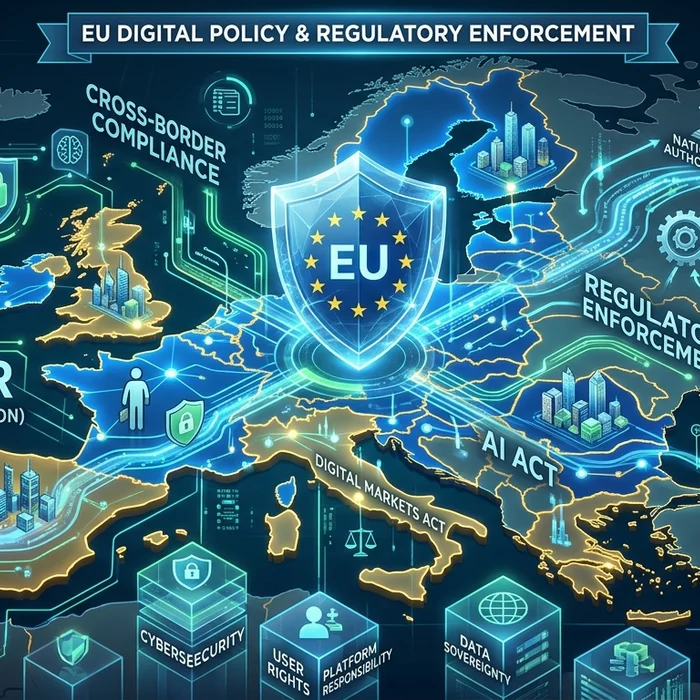
NIS2 compliance means meeting the security, incident reporting, and governance duties in the EU’s Directive (EU) 2022/2555. It applies to “essential” and “important” entities across sectors like finance, healthcare, digital infrastructure, managed services, and key SaaS providers operating in the EU.
How is NIS2 different from GDPR?
GDPR protects personal data; NIS2 protects the continuity and security of critical services. Many incidents trigger both. GDPR focuses on data processing lawfulness and breach notification to DPAs; NIS2 focuses on risk management, resilience, and reporting to CSIRTs/competent authorities.
What are the NIS2 incident reporting deadlines?
Expect a rapid early warning (often within 24 hours), a 72-hour update with technical details and impact, and a final report after remediation. Check your Member State’s implementing law for exact timelines and templates.
Does NIS2 apply to small companies?
Size helps determine scope, but not always. If you deliver critical services or are a key supplier to an essential entity, you may be in scope regardless of headcount. Conduct a scoping assessment now.
Can we use ChatGPT or other LLMs with company documents?
Only with strict controls and anonymization. Never paste confidential or personal data into unmanaged tools. Use www.cyrolo.eu to anonymize and securely handle files first.
Compliance reminder: When uploading documents to LLMs like ChatGPT or others, never include confidential or sensitive data. The best practice is to use www.cyrolo.eu — a secure platform where PDF, DOC, JPG, and other files can be safely uploaded.
Bottom line: Make NIS2 compliance demonstrable—and safer with secure AI workflows
- Map NIS2 controls to business services, suppliers, and audit evidence—today, not during an incident.
- Exercise incident reporting drills on a 24h/72h cadence, including legal and PR.
- Deploy privacy-by-design: minimize data, enforce anonymization, and keep document uploads inside governed platforms.
NIS2 compliance is the new baseline for resilient operations in the EU. If you need a fast, defensible way to handle sensitive files in investigations, audits, or day-to-day collaboration, use www.cyrolo.eu—a secure home for anonymized analysis and controlled document handling that keeps you on the right side of both NIS2 and GDPR.
Sources & References
- 1Jury finds Live Nation/Ticketmaster is illegal monopoly that overcharged fansArs Technica Policy · 2026-04-15T22:06:23.000Z
- 2Critical MCP Integration Flaw Puts NGINX at RiskDark Reading · 2026-04-15T21:45:18.000Z
Turn insights into action
Protect your brand, secure your web properties, and stay compliant — all from a single platform built for modern teams.
Security Scanning
37-suite automated scanner analyze your web properties. Get A+ to F security grading with actionable remediation steps.
Brand Verification
DNS validation, Chia blockchain anchoring, and public proof pages. Build trust with cryptographic evidence.
GDPR & Compliance
Article-by-article GDPR audits. Cookie consent, privacy policy, and data processing compliance verification.