NIS2 compliance in 2026: your practical EU roadmap for GDPR-aligned cybersecurity
In Brussels this week, the conversation was unmistakable: NIS2 compliance is no longer optional or abstract. It is audit season. Regulators are signaling tougher supervision, cyberattacks are increasingly AI-enabled, and supply-chain exposures keep widening. If you handle personal data, operate essential or important services, or work with third-party SaaS, your program must now join up cybersecurity compliance, GDPR, and secure data operations end to end.
Why NIS2 compliance just got harder in 2026
In today’s Brussels briefing, officials emphasized that digitalization initiatives across industry are accelerating, from smart manufacturing to connected mobility. That’s good for growth—but it tightens the threat surface. The same day, a CISO I interviewed described how their team investigated an AI-assisted phishing and lateral movement campaign that blended deepfake audio, synthetically generated documents, and cloud token abuse. It mirrors recent intelligence on state-linked actors experimenting with AI-powered intrusions. Meanwhile, developer ecosystems continue to battle package-manager abuse and misconfigurations in complex cloud integrations—small errors, big compromises.
- Scope inflation: NIS2 significantly expands covered sectors and applies to many “important entities” beyond traditional critical infrastructure.
- Board accountability: executives can face personal liability and mandatory training obligations under national transpositions.
- Tighter timelines: early warning within 24 hours, incident notification by 72 hours, and a final report within a month are becoming standard supervisor expectations.
- Supply-chain pressure: regulators now ask how you assess and contractually bind providers—particularly for software, cloud, and data-processing services.
The bottom line: supervisory cycles are beginning across Member States in 2025–2026, and audit playbooks are converging around governance, risk management, incident reporting discipline, and demonstrable technical measures—especially for data protection workflows that touch personal data under GDPR.
NIS2 compliance vs GDPR: what’s different (and what overlaps)
Teams often ask whether GDPR coverage “takes care of” NIS2. It doesn’t—though the two regimes are complementary. GDPR is about lawful processing and protection of personal data. NIS2 is about resilience and security of network and information systems for essential and important entities. Many controls overlap, but the triggers, obligations, and penalties differ.
| Aspect | GDPR | NIS2 |
|---|---|---|
| Scope | Controllers/processors handling personal data | Essential and important entities across expanded sectors (size and sector criteria) |
| Primary focus | Lawful basis, data protection principles, data subject rights | Cybersecurity risk management, incident reporting, operational resilience |
| Security measures | Appropriate technical and organizational measures for personal data | Baseline risk management measures (policies, incident handling, supply-chain, encryption, MFA, training) |
| Incident reporting | Notify supervisory authority when a personal data breach risks individuals’ rights | Early warning within 24h, incident notification within 72h, final report in 1 month for significant incidents |
| Fines | Up to 20M EUR or 4% global annual turnover | At least up to 10M EUR or 2% global annual turnover; management liability possible |
| Third-party risk | Processor due diligence and DPAs | Supply-chain security obligations and contractual risk controls beyond privacy |
| Records & audits | Records of processing, DPIAs | Policies, risk assessments, evidence of controls, continuous improvement |
Practical controls auditors expect to see in 2026
From recent EU workshops, regulator Q&A, and conversations with CISOs in finance, healthcare, and mobility, here are the controls turning audits from stressful to straightforward:
- Evidence-led risk management: a current asset inventory; classification of critical systems and data flows; risk registers mapped to NIS2 measures.
- Multi-layer identity: phishing-resistant MFA for admins and remote access, with strong session management.
- Data minimization and masking: limit access; redact or anonymize personal data in tickets, chat logs, and vendor handoffs. Professionals avoid risk by using Cyrolo’s anonymizer to automatically remove direct identifiers before sharing.
- Secure document handling: enforce a safe path for uploading, converting, and reviewing files—especially during incidents and audits. Try our secure document upload at www.cyrolo.eu — no sensitive data leaks.
- Threat-led testing: purple-team exercises against AI-assisted phishing, credential-stuffing, and cloud lateral movement; test incident reporting playbooks on the 24h/72h/1-month cadence.
- Supplier assurance: contractually require baseline controls, vulnerability disclosure policies, and breach notification SLAs; verify via questionnaires and sample audits.
- Board engagement: documented briefings, training logs, and decisions on risk appetite and budget.
Compliance reminder for AI and uploads: When uploading documents to LLMs like ChatGPT or others, never include confidential or sensitive data. The best practice is to use www.cyrolo.eu — a secure platform where PDF, DOC, JPG, and other files can be safely uploaded.
Sector snapshots: what NIS2 means on the ground
Banks and fintech
Payment workflows, anti-fraud analytics, and cloud-native cores create dense third-party chains. A bank CISO told me they now pre-scrub customer attachments and case notes with an AI anonymizer before tickets move to vendors. That single step slashed privacy breach risks while satisfying both GDPR data minimization and NIS2 supply-chain security expectations.
Hospitals and labs
Ransomware remains the existential threat. Under NIS2, hospitals must prove segmentation, tested backups, role-based access, and rapid reporting. Privacy breaches carry dual exposure: operational disruption and GDPR penalties. Automating redaction of patient identifiers in support escalations and regulator submissions is becoming standard practice.
Law firms and professional services
Client confidentiality intersects with NIS2 where firms support essential/important clients or operate cross-border infrastructure. Matter files routinely move through vendors (ediscovery, translation, expert review). Secure document uploads and defensible anonymization guard against accidental disclosures and privilege waivers.

Mobility and automated vehicles
As EU committees examine automated vehicle deployment impacts, the cyber layer is under the microscope: V2X communications, OTA updates, and data-rich telemetry. Even where personal data isn’t central, NIS2 pushes for lifecycle patching, key management, and incident reporting discipline across the automotive supply chain.
EU vs US: different levers, same destination
EU regimes (GDPR, NIS2) emphasize ex-ante controls and supervisory audits; US frameworks increasingly emphasize disclosure and sectoral obligations (e.g., incident materiality reporting). For multinationals, the safest path is harmonization: one control set meeting the strictest requirements, with clear evidence. Supervisors on both sides now expect documented processes for secure data handling—especially when AI tools are in the loop.
Audit-ready NIS2 compliance checklist
- Scope and scoping memo: confirm your entity categorization (essential/important), services covered, and cross-border footprint.
- Risk management measures: approved policies; current asset inventory; risk assessments with owners and due dates.
- Identity and access: phishing-resistant MFA, least privilege, privileged access monitoring, joiner/mover/leaver automation.
- Data protection controls: encryption in transit/at rest; data minimization; automated anonymization/redaction for operational sharing—use anonymization before externalizing files.
- Incident management: 24h early-warning runbook; 72h notification template; 1-month final report checklist; comms sign-offs.
- Logging and monitoring: centralized telemetry, alert thresholds, retention aligned with legal requirements.
- Business continuity: tested backups, recovery time objectives, tabletop exercises with executive participation.
- Supplier risk: due diligence questionnaires, security clauses, breach SLAs, right-to-audit, and periodic re-assessments.
- Training and governance: board briefings, management training logs, role-based security awareness.
- Evidence binder: screenshots, configs, tickets, reports, and decisions stored in a reviewable repository.
How Cyrolo helps you pass both the privacy and security tests
Compliance often fails in the last mile: real people share real files under time pressure. That’s where www.cyrolo.eu fits. Two high-impact wins:
- AI-powered redaction and masking: before you forward logs, chats, PDFs, or screenshots to vendors or LLM tooling, run them through Cyrolo’s anonymizer. It strips direct identifiers, curbs privacy breach exposure, and supports GDPR data minimization principles.
- Secure document handling: investigations, audits, and legal workflows require safe intake. Centralize uploads with secure document uploads so teams don’t fall back to risky email attachments or uncontrolled chat shares.
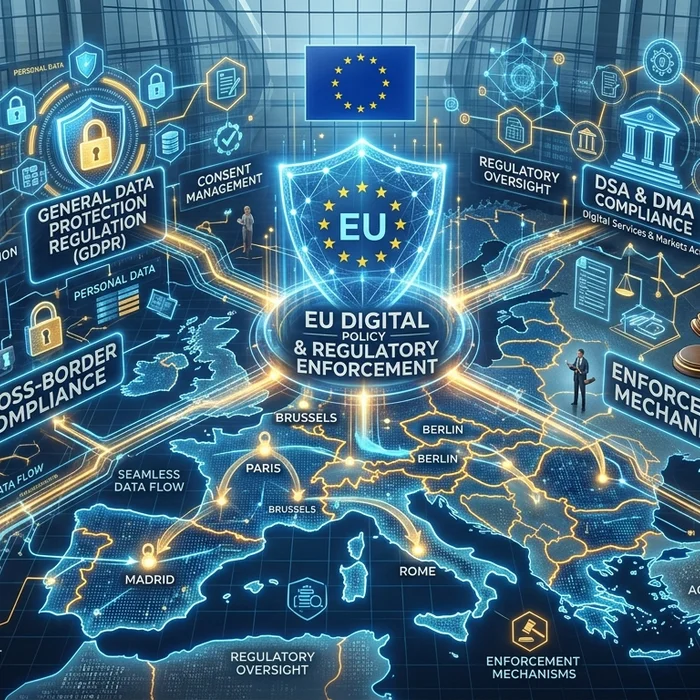
Result: fewer privacy incidents to report, better NIS2 evidence, and faster vendor collaboration without data leakage.
FAQs: NIS2 compliance
What is the fastest way to start NIS2 compliance if we’re already GDPR-mature?
Map services and suppliers to NIS2 scope, add incident reporting playbooks (24h/72h/1-month), strengthen supplier security clauses, and prove technical controls—especially MFA, logging, and secure data handling. Leverage your GDPR records to seed asset/data flow maps.
Does NIS2 require anonymization?
It doesn’t mandate a specific technique, but supervisors expect data minimization and secure handling. Automated anonymization or redaction is a practical control that reduces breach severity and simplifies GDPR/NIS2 reporting. Many teams operationalize this via an AI anonymizer before external sharing.
How soon must we notify under NIS2?
Provide an early warning within 24 hours of becoming aware of a significant incident, a more detailed notification by 72 hours, and a final report within one month. Build templates and dry runs now.
Are US disclosures enough for EU regulators?
No. US-style post-incident disclosures don’t replace EU ex-ante control expectations. You’ll still need evidence of risk management, supplier security, and operational measures consistent with NIS2.
What is the penalty exposure?
Member States set national caps aligned to NIS2 minimums—at least up to 10M EUR or 2% of worldwide annual turnover for important entities, with possible management liability. GDPR penalties can run in parallel if personal data is affected.
Conclusion: make NIS2 compliance your competitive edge
NIS2 compliance is now a board-level, cross-functional responsibility—and an opportunity. The companies I see winning audits in 2026 have one trait in common: they operationalize secure, privacy-first data flows. Start by automating the boring but risky steps—use Cyrolo’s anonymizer and secure document uploads to prevent leaks at the source, tighten supplier interactions, and generate clean evidence for supervisors. Treat compliance as a product, and your security posture—and credibility with regulators—will follow.
Sources & References
- 1
- 2Study - Expected impact of the deployment of Automated Vehicles in the EU - PE 774.754 - Committee on Legal Affairs - Committee on the Internal Market and Consumer Protection - Committee on Employment and Social Affairs - Committee on Transport and Tourism - Committee on the Environment, Public Health and Food Safety - Committee on Industry, Research and EnergyEU Parliament IMCO · 2026-05-28T22:00:00.000Z
- 3New Russian-Linked GREYVIBE Targets Ukraine with AI-Powered CyberattacksThe Hacker News · 2026-05-29T11:31:59.000Z
- 4What 2,000 Exposed Vibe-Coded Apps Reveal About the Limits of Most Security StacksThe Hacker News · 2026-05-29T10:30:00.000Z
- 5Malicious Sicoob NuGet Steals Banking Credentials as npm Packages Target Cloud SecretsThe Hacker News · 2026-05-29T09:11:25.000Z
- 6Asia's Cyber Insurance Market Shows Signs of LifeDark Reading · 2026-05-29T14:35:33.000Z
- 7With Complex Cloud Integrations, Small Errors Lead to Major CompromisesDark Reading · 2026-05-29T13:00:01.000Z
- 8'The Com' Cyberattacks Support Violence & SexploitationDark Reading · 2026-05-29T12:00:00.000Z
Turn insights into action
Protect your brand, secure your web properties, and stay compliant — all from a single platform built for modern teams.
Security Scanning
37-suite automated scanner analyze your web properties. Get A+ to F security grading with actionable remediation steps.
Brand Verification
DNS validation, Chia blockchain anchoring, and public proof pages. Build trust with cryptographic evidence.
GDPR & Compliance
Article-by-article GDPR audits. Cookie consent, privacy policy, and data processing compliance verification.