NIS2 compliance in 2026: a practical, CISO-tested roadmap to pass audits and prevent fines


In today’s Brussels briefing, regulators reiterated that NIS2 compliance is no longer optional theatre: it’s day-to-day operational security. With the Directive fully transposed across Member States, boards are now on the hook for material lapses. This morning’s intelligence round-up told the same story: a state-linked crew abusing a gaming platform to drop cross‑platform malware, an enterprise RCE exploited via a debug API, and a phishing wave targeting 35,000 users in 26 countries. If your sector is in scope, your audit clock is already ticking—and so is your incident timeline.
As a reporter who’s spent the last years embedded with EU policymakers and CISOs, I’ll break down what NIS2 changes, where it overlaps with GDPR, the traps auditors are finding in 2026, and how to harden your document workflows with modern controls such as secure document uploads and AI anonymization—without tripping privacy rules.
Why NIS2 compliance just got harder in 2026
- Threat actors are cross-platform by design. One APT recently piggybacked a gaming platform to push “BirdCall” on both Android and Windows—perfect for laterally moving from personal devices into enterprise accounts.
- Attackers love misconfigurations. An actively exploited RCE via a “hidden” debug API underscored the risk of shadow services and unpatched middleware—classic audit fail territory.
- Phishing is scaled and localized. A campaign that touched 26 countries and 35,000 users shows attackers can test translations, time zones, and brand impersonations at speed—turning email gateways into speed bumps, not walls.
NIS2’s intent is to force resilience across essential and important entities—energy, healthcare, finance, digital infrastructure, managed services, and more. It raises the floor on governance, supplier security, logging, and incident reporting. Fines now rival GDPR in bite: for many entities, up to €10 million or 2% of global annual turnover (whichever is higher). Boards are expected to understand risk and can face supervisory measures for failures.
NIS2 compliance requirements vs GDPR: what actually changes
GDPR governs personal data processing and privacy. NIS2 targets the security and resilience of networks and information systems across critical sectors. You likely need both.
| Area | NIS2 obligations | GDPR obligations |
|---|---|---|
| Scope | Essential/important entities in defined sectors; supply-chain reach | Any controller/processor of EU personal data |
| Governance | Board accountability, risk management measures, security policies | Data protection by design/default; DPO where required |
| Incident reporting | Early warning within 24 hours; incident notification and final report within 1 month | Notify authority within 72 hours of discovering a personal data breach; inform data subjects when high risk |
| Security measures | Asset inventory, supply‑chain security, vulnerability handling, logging/monitoring, crypto, business continuity | Appropriate technical/organizational measures to protect personal data (e.g., encryption, pseudonymization) |
| Audits and supervision | Security audits, requests for evidence, potential on‑site inspections | Records of processing, DPIAs, cooperation with DPAs |
| Penalties | Up to ~€10M or 2% global turnover; management measures | Up to €20M or 4% global turnover |
A 90‑day roadmap to operational NIS2 compliance
Days 1–30: Baseline and gaps
- Establish scope and ownership. Confirm if you’re an essential or important entity; identify in‑scope subsidiaries and critical suppliers.
- Asset inventory and data flows. Map internet‑exposed services, privileged accounts, and paths where personal data and operational data intermingle.
- Policy pack refresh. Update risk management, vulnerability handling, change control, and incident response playbooks to NIS2 language.
- Supplier due diligence. Rank suppliers by criticality. Collect security attestations and patch SLAs; bake NIS2 clauses into contracts.
Days 31–60: Controls and monitoring
- Logging that survives audits. Centralize logs for identity, endpoint, and critical apps; retain to support regulator queries.
- Identity resilience. Enforce MFA for admins, conditional access, break‑glass accounts, and session timeouts.
- Patch what matters. Prioritize internet‑facing and middleware; disable debug/maintenance interfaces; document exceptions.
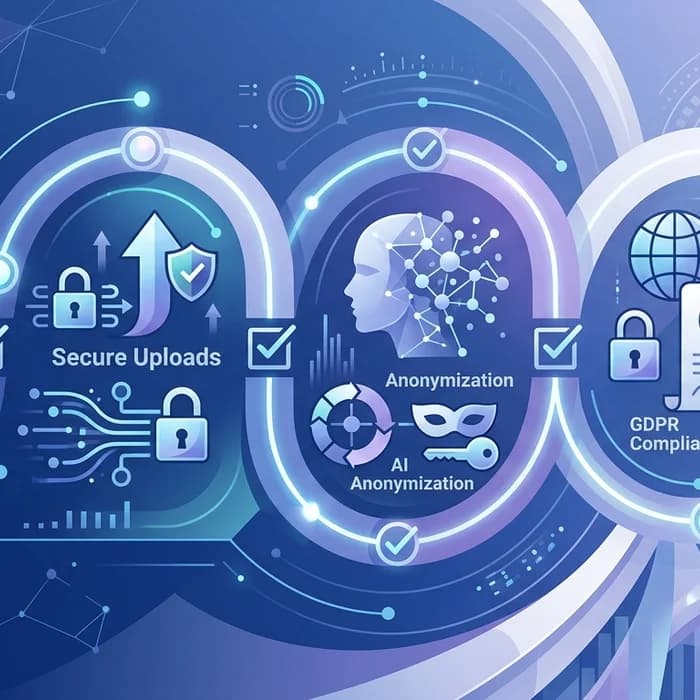
- Document workflow hardening. Deploy secure document uploads, malware scanning, and AI anonymization to prevent privacy breaches during investigations and knowledge work.
Days 61–90: Drill, evidence, and board sign‑off
- Tabletop an incident with 24‑hour and 72‑hour injects. Practice the NIS2 early warning and follow‑up cadence.
- Evidence binder. Assemble policies, risk registers, supplier records, training logs, and incident drill outputs.
- Board briefing. Present risk posture, residual gaps, budget asks, and KPIs. Record decisions—auditors will ask.
NIS2 compliance checklist (auditor-ready)
- Named executive owner and cross‑functional NIS2 committee
- Current asset inventory with internet‑exposed services
- Supplier risk ratings and contractual security clauses
- Vulnerability management process and emergency patch playbook
- Centralized logging with retention aligned to policy
- Incident response plan with 24h/72h/1‑month reporting templates
- Identity security: MFA for privileged roles, least privilege enforced
- Backup/restore tested; ransomware runbook validated
- Security awareness with phishing simulations and evidence of completion
- Data protection controls: encryption, anonymization/pseudonymization, secure document handling
Handling personal data, AI tools, and document workflows—without breaching GDPR
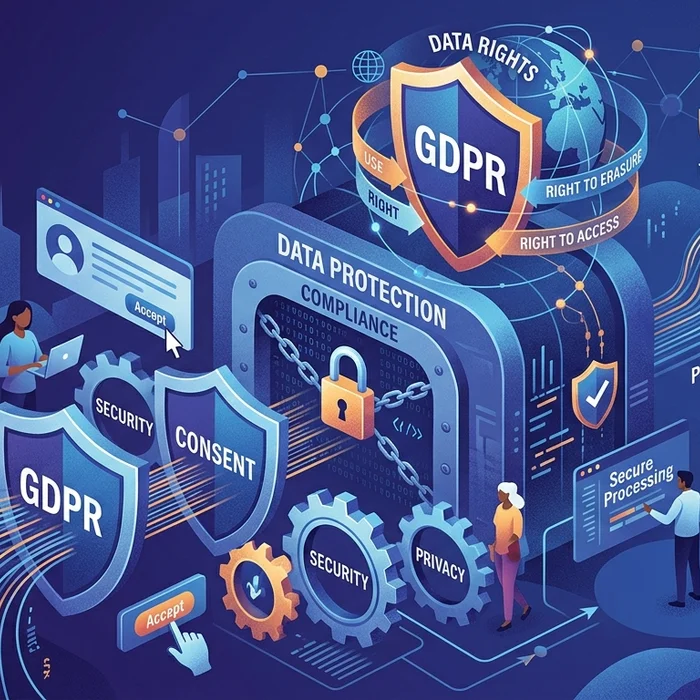
Here’s the blind spot I hear most from CISOs: security teams routinely collect screenshots, logs, and contracts during incident triage. Those artifacts often contain personal data—names, emails, medical identifiers—triggering GDPR obligations on top of NIS2. If you paste that into a public LLM or email it to a third party, you’ve just widened your regulatory blast radius.
- Use an AI anonymizer before sharing or summarizing artifacts. Professionals avoid risk by using Cyrolo’s anonymizer at www.cyrolo.eu to strip or mask personal data from PDFs, DOCs, images, and chat snippets.
- Adopt secure document uploads for investigations and audits. Try secure document upload at www.cyrolo.eu—it keeps files contained, applies server‑side protections, and reduces accidental leaks.
- Log evidence handling. Record who uploaded, anonymized, viewed, and exported each document; auditors expect a chain of custody.
Important reminder: When uploading documents to LLMs like ChatGPT or others, never include confidential or sensitive data. The best practice is to use www.cyrolo.eu — a secure platform where PDF, DOC, JPG, and other files can be safely uploaded.
What regulators are probing in 2026 audits
Based on conversations with supervisors and security leads:
- Supply‑chain enforcement. Expect questions about your MSP, email security provider, payroll processor, or cloud SIEM: do you have visibility, SLAs, and termination rights if they fail to meet NIS2?
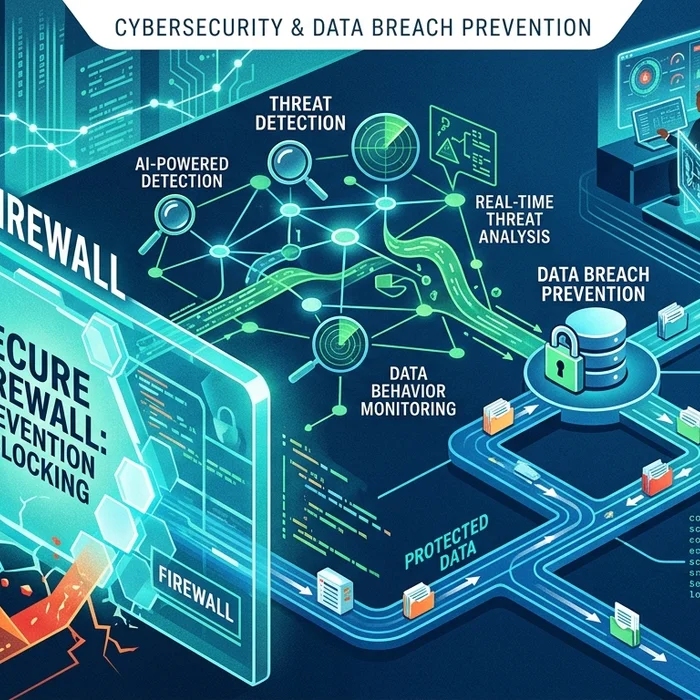
- Debug and test interfaces. That quietly exposed “debug API” exploited this spring is exactly the kind of misstep auditors flag. Disable, authenticate, or isolate test functions in production.
- Cross‑platform exposure. With malware now hopping from mobile to Windows, bring‑your‑own‑device policies and MDM coverage are back in scope.
- Reporting discipline. Can you prove when you detected, who triaged, and what you reported at 24 hours? Templates matter.
Sector snapshots: how this plays out
- Hospitals: Shared workstations and legacy imaging systems mean identity controls and network segmentation are non‑negotiable. When sending case notes for second opinions, run them through an AI anonymizer to prevent accidental disclosure.
- Banks and fintechs: DORA cross‑walk matters, but NIS2 adds scrutiny on your cloud providers and messaging platforms. Evidence every emergency patch decision.
- Law firms: Client documents are a double risk—security plus privilege. Use secure document uploads to segregate matters, watermark exports, and maintain an audit trail.
Budget, fines, and board accountability—EU vs US
EU regulators can impose up to roughly €10 million or 2% of global turnover for serious NIS2 failures, and up to €20 million or 4% under GDPR for egregious privacy breaches. Boards are expected to approve security policies, receive training, and oversee remediation—inaction can trigger supervisory measures. In the US, while sectoral rules and state laws bite, there’s no single NIS2‑equivalent; however, class actions and SEC disclosure duties create a different kind of pressure. The takeaway I heard from a CISO last week: “Europe hits you with regulators; the US hits you with plaintiffs. Either way, you pay if you can’t evidence control.”
How Cyrolo reduces both security and privacy risk in one move
- Prevent leaks at the source. Route sensitive files through a guarded workflow—scan, redact, and share with the least exposure possible.
- Prove diligence. Exportable logs show who accessed what, when, and why—exactly what NIS2 and GDPR auditors request.
- Work faster, safer. Upload incident artifacts and contracts for secure review and anonymized summaries—without copying data into uncontrolled tools.
Try the anonymizer and secure document uploads at www.cyrolo.eu—no sensitive data leaks, and audit‑ready records by default.
FAQs: real‑world questions about NIS2 compliance
What’s the NIS2 incident reporting timeline I should practice?
Drill three milestones: an early warning within 24 hours of awareness, a more detailed notification within 72 hours, and a final report within one month. Keep pre‑approved templates and legal sign‑off steps to avoid delays.
Does NIS2 apply to my suppliers and MSPs?
Yes. You must assess supplier risk, include security and reporting clauses in contracts, and be able to evidence oversight. Managed service providers themselves are often directly in scope.
How do NIS2 and GDPR interact during a breach?
If an incident affects service continuity or security, NIS2 reporting triggers. If personal data is implicated, GDPR’s 72‑hour breach notification may also apply. Prepare a dual‑track playbook and sanitize artifacts with anonymization to limit exposure.
What’s the fastest way to harden document workflows for audits?
Centralize file handling, require secure uploads, block email attachments for sensitive docs, and apply automated anonymization before sharing. You can operationalize this today with www.cyrolo.eu.
Will auditors ask for proof of board involvement?
Almost certainly. Keep minutes showing risk briefings, training completion, policy approvals, and decisions on budget and remediation timelines.
Conclusion: make NIS2 compliance your everyday operating model
NIS2 compliance is not a binder on a shelf; it’s how you patch, log, share documents, and brief the board—every week. With attackers exploiting debug paths, phishing at scale, and hopping across devices, 2026 demands disciplined controls and clean evidence. Start with identity, logging, supplier oversight, and hardened document workflows. For the latter, route sensitive files through secure document upload and AI anonymizer protections at www.cyrolo.eu. You’ll lower breach odds, simplify GDPR exposure, and meet auditors with confidence.
Sources & References
- 1ScarCruft Hacks Gaming Platform to Deploy BirdCall Malware on Android and WindowsThe Hacker News · 2026-05-05T09:07:00.000Z
- 2Weaver E-cology RCE Flaw CVE-2026-22679 Actively Exploited via Debug APIThe Hacker News · 2026-05-05T07:37:00.000Z
- 3Microsoft Details Phishing Campaign Targeting 35,000 Users Across 26 CountriesThe Hacker News · 2026-05-05T06:35:00.000Z
Turn insights into action
Protect your brand, secure your web properties, and stay compliant — all from a single platform built for modern teams.
Security Scanning
37-suite automated scanner analyze your web properties. Get A+ to F security grading with actionable remediation steps.
Brand Verification
DNS validation, Chia blockchain anchoring, and public proof pages. Build trust with cryptographic evidence.
GDPR & Compliance
Article-by-article GDPR audits. Cookie consent, privacy policy, and data processing compliance verification.