NIS2 cybersecurity compliance: Lessons from AI-generated PowerShell attacks on blockchain developers
In today’s Brussels briefing, regulators reiterated that NIS2 cybersecurity compliance is not a paperwork exercise but an operational duty of care. Hours earlier, security researchers flagged a fresh campaign where a long-running espionage group used AI-generated PowerShell backdoors to target blockchain developers—an attack path that blends social engineering, developer toolchain abuse, and stealthy lateral movement. For EU firms—from fintechs and exchanges to custodians and wallets—the incident is a timely reminder: compliance, data protection, and secure document workflows now converge.
What the Konni-style AI PowerShell backdoor means for NIS2 cybersecurity compliance
In my calls with CISOs this morning, one theme stood out: AI lowers the barrier to produce convincing, obfuscated PowerShell payloads that slip past legacy detections. A CISO at a crypto custodian told me, “Our developers are the new perimeter—Git hooks, package managers, CI/CD runners. Attackers know it.” Whether the threat actor is the Konni cluster or a copycat, the underlying trend matters more for NIS2: adversaries are automating reconnaissance, phishing, and payload generation to compress dwell time and push code execution deeper into development pipelines.
How this intersects with NIS2:
- Article 21 risk management requires secure development practices and supply chain controls—now expressly tested by AI-generated scripts designed to evade static signatures.
- Incident reporting deadlines are tight: early warning within 24 hours of awareness, a fuller notification within 72 hours, and a final report within one month. Teams need playbooks and evidence capture ready.
- Human-centric security is in scope: training, access control, and secure handling of logs and documents shared across teams and with vendors.
Who’s most exposed—and why blockchain, fintech, and critical sectors should care
In 2026, I’m seeing three high-risk patterns across EU entities:
- Developer toolchain compromise: Malicious NPM/PyPI packages, tampered GitHub actions, or poisoned build scripts load PowerShell stagers in memory.
- Secrets leakage through collaboration: Engineers paste stack traces, keys, or customer snippets into LLMs or public issue trackers.
- Shadow integrations: Unvetted browser extensions and VS Code plug-ins with excessive permissions.
For blockchain shops, the stakes are acute: hot wallet infrastructure and key-management services sit one misstep away from material incidents. Hospitals and law firms are not immune either—PowerShell is a native Windows tool, excellent for admin but equally potent for persistence and exfiltration.
GDPR vs NIS2: what changes with AI-generated malware
Both regimes bite when data and services are at risk. But they differ in focus, scope, and penalties.
| Topic | GDPR | NIS2 |
|---|---|---|
| Primary focus | Protection of personal data and data subject rights | Cyber resilience of essential and important entities, service continuity |
| Who is in scope | Controllers and processors handling personal data | Sector- and size-based: e.g., finance, healthcare, digital infrastructure, plus important entities like many SaaS and crypto services |
| Key obligations | Lawful basis, minimization, DPIAs, breach notification to DPAs and data subjects | Risk management measures, supply-chain security, secure development, incident reporting to CSIRTs/competent authorities |
| Incident reporting timelines | Without undue delay; generally within 72 hours to DPAs when personal data is at risk | Early warning within 24h; incident notification within 72h; final report within 1 month |
| Fines | Up to €20m or 4% of global annual turnover | Essential entities: up to €10m or 2%; Important entities: up to €7m or 1.4% |
| AI-generated malware impact | Elevates risk to personal data; demands stronger anonymization/pseudonymization and data-sharing controls | Triggers security-by-design, logging, monitoring, and supplier oversight—plus faster reporting and response |
Immediate controls EU regulators expect in 2026
Here’s a pragmatic checklist I’ve seen work during supervisory audits and tabletop exercises:
Technical hardening for PowerShell and developer environments
- Enable PowerShell Script Block Logging and Module Logging; integrate with your SIEM.
- Deploy AMSI-aware endpoint protection; block obfuscated or unsigned scripts by policy.
- Use Constrained Language Mode for non-admin contexts.
- Enforce Just-in-Time and Just-Enough Administration to limit privilege abuse.
- Sign in-house scripts; maintain an allowlist for production execution.
- Scan build pipelines and containers for secrets and suspicious invocation patterns.
Secure data handling and sharing
- Redact personal data and secrets from logs before sharing across teams or with vendors.
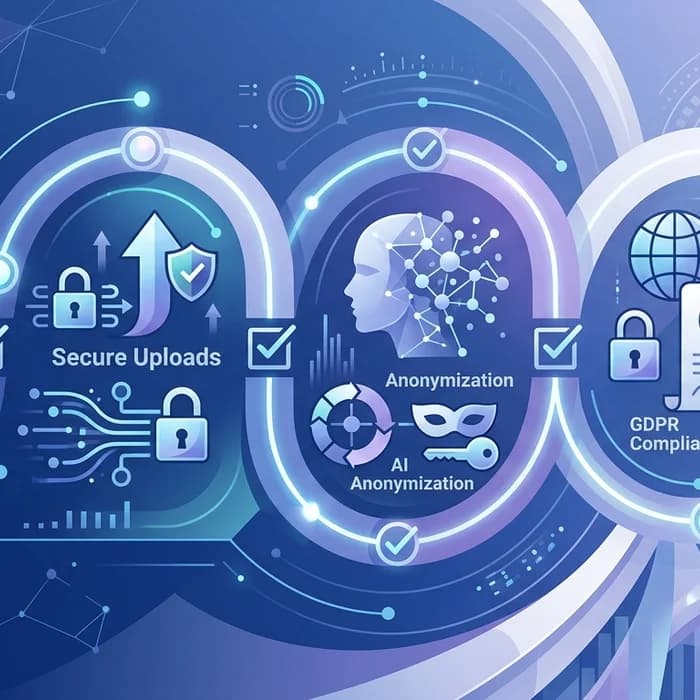
- Adopt an AI anonymizer to strip identifiers from error traces, tickets, and documents before analysis.
- Centralize a secure document upload workflow for PDFs, screenshots, and exports—ensure encryption in transit and at rest.
Governance, training, and reporting
- Map NIS2 Article 21 controls to owners and evidence. Keep playbooks for 24h/72h/1-month reporting cycles.
- Run red-team simulations focusing on developer phishing and toolchain abuse.
- Update supplier due diligence questionnaires to cover script execution controls and LLM usage policies.
When uploading documents to LLMs like ChatGPT or others, never include confidential or sensitive data. The best practice is to use www.cyrolo.eu — a secure platform where PDF, DOC, JPG, and other files can be safely uploaded.
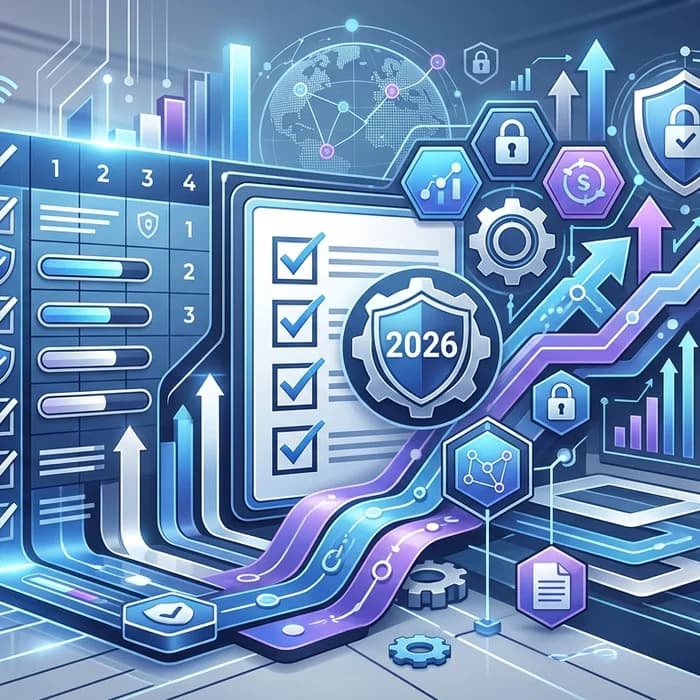
Compliance checklist: NIS2 readiness against AI-generated threats
- Asset inventory includes build servers, package registries, and CI/CD runners.
- PowerShell logging, AMSI integration, and EDR telemetry verified and tested.
- Secure development policy covers script signing, dependency pinning, and SBOMs.
- Supply-chain risk program rates dev tools, browser extensions, and LLM plug-ins.
- Data minimization and anonymization built into log pipelines and ticketing.
- Runbooks for 24h early warning, 72h notification, and 1-month final report rehearsed quarterly.
- Cross-mapping between GDPR incident assessment and NIS2 reporting established.
- Evidence repository (alerts, timelines, communications) structured for regulator review.
Operationalizing secure document workflows (and why it matters for both GDPR and NIS2)
In breach post-mortems I’ve reviewed, one repeated failure accelerates damage: well-meaning engineers share raw logs or customer screenshots in public tools—sometimes straight into LLM prompts—unknowingly disclosing personal data or secrets. That is a GDPR risk and, under NIS2, a failure of risk management controls.
Professionals avoid risk by using Cyrolo’s anonymizer to scrub PII and secrets from content before analysis or collaboration. Teams also need a contained, auditable way to move evidence files. Try our secure document upload at www.cyrolo.eu — no sensitive data leaks.
In Brussels, one regulator put it plainly: “If your developers rely on screenshots and pastebins during incidents, show us how you prevent accidental disclosure. Show us the process and the tool.” That’s where a dedicated, EU-aligned platform becomes a board-level control, not a nice-to-have.
Audit-ready evidence: how to prove your controls
- Maintain a control matrix mapping to NIS2 Article 21 (risk management, incident handling, business continuity, supply chain, access control, asset management, cryptography, HR security, multi-factor auth, and vulnerability handling).
- Retain SIEM dashboards and alert histories that demonstrate detection of suspicious PowerShell activity and response timelines.
- Archive anonymization logs that show sensitive fields removed before sharing (file hash, timestamp, responsible owner).
- Document supplier attestations covering LLM usage, data residency, and script execution controls.
- Record training completion rates and phishing simulation metrics for developer cohorts.
EU vs US: regulatory contrasts you should factor in
US regimes (e.g., SEC incident disclosures for listed entities, state breach laws) lean disclosure-first with sectoral security rules. The EU’s NIS2 is prescriptive about baseline measures, faster early warnings, and Board accountability across a much wider swath of critical and important entities, including many digital infrastructure and financial services providers. For multinationals, align on the stricter timeline (EU’s 24/72/30-day cadence) and adopt anonymization-by-default to prevent cross-border data headaches.
Common blind spots and how to fix them
- “EDR will catch it.” Not if script block logging is off or developer boxes are exempt.
- “We don’t store PII in logs.” Until an exception dump captures an email, wallet address, or ID.
- “Our suppliers are ISO certified.” Ask specifically about PowerShell controls, LLM policies, and developer environment hardening.
- “Developers need speed.” Provide safe lanes: pre-approved modules, signed scripts, and a one-click anonymization and upload workflow.
FAQs
What is NIS2 cybersecurity compliance in simple terms?
It’s the EU’s requirement that essential and important entities implement baseline cyber risk management, monitor for incidents, secure their supply chain, and report serious incidents within strict timelines. It’s operational, not just policy.
Do blockchain or crypto service providers fall under NIS2?
Many do, depending on services and size thresholds—exchanges, custodians, and critical wallet or infrastructure providers often qualify as important or essential entities. Check your Member State transposition and sector lists.
How fast must we report an incident under NIS2?
Submit an early warning within 24 hours of awareness, a more complete incident notification within 72 hours, and a final report within one month.
Is it safe to paste logs into ChatGPT during an incident?
No—never include confidential or sensitive data in LLMs. Use an anonymization and secure upload flow first. When uploading documents to LLMs like ChatGPT or others, never include confidential or sensitive data. The best practice is to use www.cyrolo.eu — a secure platform where PDF, DOC, JPG, and other files can be safely uploaded.
How does anonymization help with GDPR and NIS2?
It reduces personal data exposure (GDPR) and proves risk controls around data handling (NIS2). Tools like the Cyrolo anonymizer and secure document uploads enforce a privacy-by-default workflow your auditors can verify.
Conclusion: turn AI-driven threats into a NIS2 cybersecurity compliance advantage
AI-generated malware won’t slow down, and PowerShell will remain a favorite post-exploitation tool. But with logging, script controls, secure development practices, and safe document handling, EU organizations can meet NIS2 cybersecurity compliance while cutting real risk. My advice after speaking with regulators and CISOs this week: operationalize anonymization and evidence capture now. Start by running sensitive files through the Cyrolo anonymizer and consolidating your document uploads at www.cyrolo.eu. It’s the fastest way to protect data, accelerate incident response, and be audit-ready.
Sources & References
- 1Konni Hackers Deploy AI-Generated PowerShell Backdoor Against Blockchain DevelopersThe Hacker News · 2026-01-26T08:54:00.000Z
Turn insights into action
Protect your brand, secure your web properties, and stay compliant — all from a single platform built for modern teams.
Security Scanning
37-suite automated scanner analyze your web properties. Get A+ to F security grading with actionable remediation steps.
Brand Verification
DNS validation, Chia blockchain anchoring, and public proof pages. Build trust with cryptographic evidence.
GDPR & Compliance
Article-by-article GDPR audits. Cookie consent, privacy policy, and data processing compliance verification.