NIS2 compliance checklist: Lessons from the Oracle E‑Business Suite bug
In today’s Brussels briefing, regulators again underlined that critical business applications—especially ERP suites—are now squarely in scope for security-by-design. The fresh report of an Oracle E‑Business Suite flaw that could let attackers access data without logging in is a timely nudge: if your ERP touches operations or personal data, you need a living NIS2 compliance checklist. Waiting for a Tuesday patch cycle won’t cut it when 24-hour incident warnings and board accountability are the new normal across the EU.

- ERP platforms are high‑value targets and often sit at the intersection of operations and personal data.
- NIS2 raises the bar: risk management, incident reporting, supply‑chain security, and executive oversight.
- GDPR still applies wherever personal data is processed—expect dual obligations.
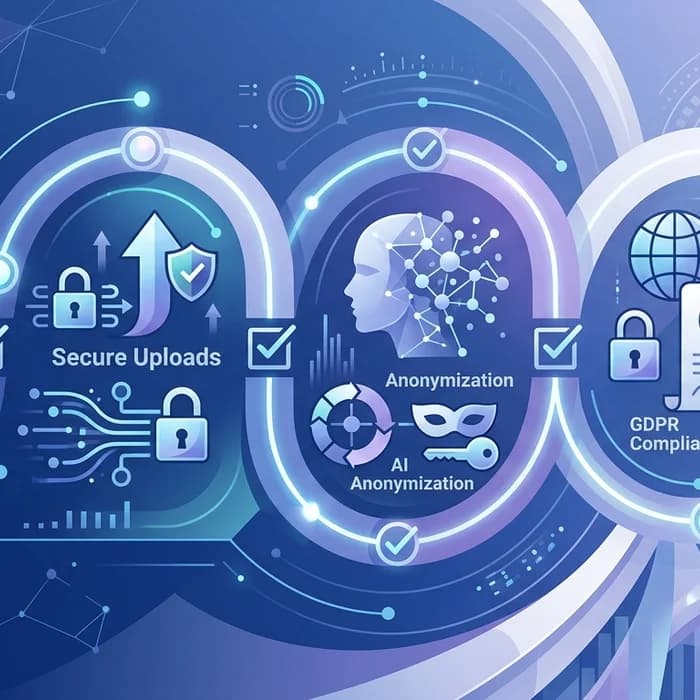
- Document evidence safely: use anonymization and secure document uploads to avoid secondary data leaks.
What the Oracle E‑Business Suite bug signals for EU operators
The latest disclosure—an Oracle E‑Business Suite issue enabling unauthenticated access—illustrates a familiar pattern I’ve heard repeatedly from CISOs across Europe: ERP modules accumulate customizations, third‑party extensions, and legacy interfaces, making patching and configuration assurance slow and brittle. One CISO I interviewed put it bluntly: “The bigger the ERP, the smaller the patch window.”
Under NIS2, that’s a governance risk, not just a technical one. Essential and important entities must implement risk management measures, ensure supply‑chain security, and report incidents rapidly. If an unauthenticated attacker can access production ERP data, you’re looking at potential operational disruption (NIS2) and personal data exposure (GDPR). Dual‑track obligations, dual‑track penalties.
Key implications from this case:
- Patch latency is exposure: Vulnerability-to-exploit times continue to compress; a 30‑day patch SLA for internet‑exposed ERP components is increasingly indefensible.
- Segmentation matters: If your ERP web tier and data layer aren’t network‑segmented with least privilege, a single bug can cascade to crown‑jewel data.
- Supplier coordination: Integrators and managed service providers often gate when and how fixes land. NIS2 expects contractual controls and monitoring, not blind trust.
- Evidence handling: Audit trails, configs, and screen captures used during triage often contain personal data—share them carelessly and you create a second breach.
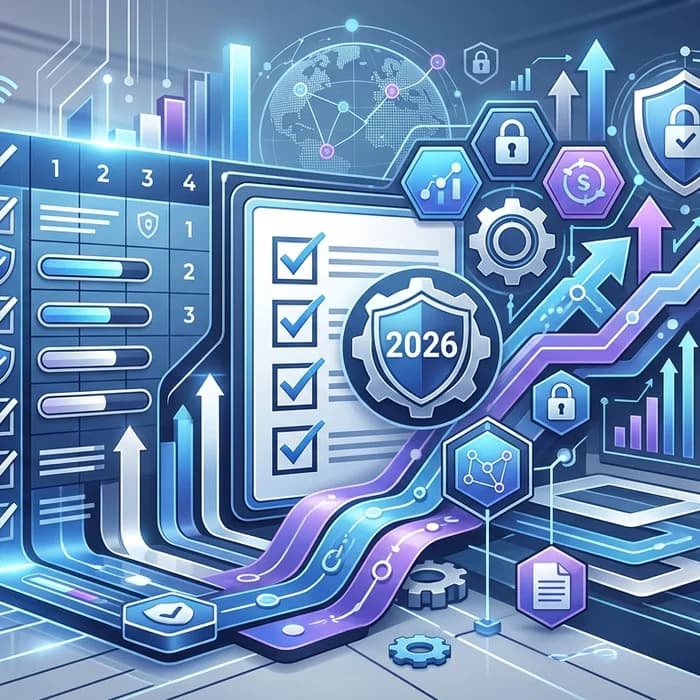
NIS2 compliance checklist: What to implement now
Use this pragmatic list to move from policy to practice. It aligns with NIS2 Articles on risk management, incident reporting, supply‑chain security, and governance—translated for ERP‑heavy environments.
- Asset inventory and criticality mapping: Catalog ERP modules, integrations, data stores, and external interfaces; rank by business impact.
- Vulnerability and patch management: Track vendor advisories; set risk‑based SLAs (e.g., internet‑facing critical CVEs ≤ 7 days; internal critical ≤ 14 days); verify with post‑patch scans.
- Configuration baselines: Enforce hardened templates for ERP web, application, and DB tiers; continuous drift detection.
- Network segmentation and identity: Isolate ERP tiers; enforce SSO with MFA; privilege by role; use just‑in‑time admin access and session recording.
- Logging and monitoring: Centralize ERP logs; alert on unauthenticated data access patterns; retain evidence for regulator and forensic needs.
- Incident reporting readiness: Playbooks for 24‑hour early warning, 72‑hour notification, and 1‑month final report; responsible roles pre‑assigned; templates pre‑approved.
- Supplier and MSP controls: Contracts with patch SLAs, notification duties, and secure remote access; review attestations and conduct periodic audits.
- Business continuity and disaster recovery: Tested backups with immutable storage; recovery objectives aligned to operational impact.
- Data protection by design: Minimize personal data in ERP; tokenization where possible; apply field‑level access; encrypt in transit and at rest.
- Evidence hygiene: Before sharing logs/configs/screens with vendors or auditors, run anonymization to strip personal identifiers and secrets.
- Board oversight and training: Brief executives on NIS2 and GDPR duties; tabletop exercises that include disclosure decisions.
- AI and LLM usage policy: Define approved tools and red‑lines for uploading business documents; require secure workflows and redaction.
- Documentation management: Store policies, risk assessments, and evidence in a tamper‑evident repository; version control and access logs.
GDPR vs NIS2: who owns the risk?
European organizations frequently ask whether GDPR or NIS2 “takes precedence.” In practice, both apply—often to the same incident. Use this quick comparison to align responsibilities across legal, security, and operations.
| Topic | GDPR | NIS2 |
|---|---|---|
| Scope | Personal data processing by controllers/processors in the EU (and extraterritorially) | Security and resilience of network and information systems of essential/important entities |
| Primary objective | Protect rights and freedoms of natural persons | Ensure continuity and security of essential/important services |
| Core obligations | Lawful basis, DPIA, data minimization, security of processing, data subject rights, breach notification | Risk management measures, incident reporting, supply‑chain security, governance/oversight, testing and auditing |
| Incident reporting | Notify DPA within 72 hours if personal data breach likely risks rights and freedoms | Early warning within 24 hours; incident notification within 72 hours; final report within 1 month (to CSIRTs/competent authority) |
| Fines | Up to €20M or 4% of global turnover | Essential entities: up to €10M or 2% of global turnover; Important entities: up to €7M or 1.4% |
| Roles | DPO for certain organizations; controller/processor duties | Management body accountability; CISO/security leadership expected |
| Examples | Exposure of HR records, customer data, health information | ERP outage at a utility, hospital IT disruption, logistics platform downtime |
Evidence, audits, and safe AI workflows
Whether you are submitting evidence to a regulator, a customer’s security audit, or your insurer, the operational headache is the same: documents and screenshots often expose usernames, invoice data, or patient details. That is a preventable privacy breach.
- Redact before you share: run an AI anonymizer to remove personal data, tokens, and secrets from PDFs, DOCs, and images.
- Keep a clean copy: preserve an original in a secure evidence vault; share only the anonymized version externally.
- Avoid risky pastes into chatbots: route sensitive files through a secure document upload workflow that prevents leakage and logs access.
Compliance note. When uploading documents to LLMs like ChatGPT or others, never include confidential or sensitive data. The best practice is to use www.cyrolo.eu — a secure platform where PDF, DOC, JPG, and other files can be safely uploaded.
In interviews this summer, several EU‑based CISOs admitted their teams copy‑paste stack traces and config snippets into generic AI tools during incidents. It speeds triage—but it also risks unapproved data transfers and uncontrolled model retention. Build a sanctioned, logged path for AI assistance that aligns with your risk appetite and regulator expectations.
Practical scenarios: how it plays out
- Bank with a customized ERP: A supplier portal module exposes order data. The bank triggers a 24‑hour early warning under NIS2, runs targeted patching, and anonymizes log extracts before sending them to the vendor. GDPR notification is evaluated because personal data is limited to contact names; the DPO documents the risk assessment and decision.
- Hospital running clinical and finance modules: Unauthenticated access is detected on a procurement interface. Because patient identifiers might be in adjacent tables, the hospital notifies both health authorities and CSIRT, isolates the interface, and uses anonymization to provide forensic artifacts to an external response firm—avoiding secondary data exposure.
- Fintech SaaS in an EU Member State: The firm is an “important entity” under NIS2. A third‑party integrator delays patching; contractually mandated SLAs kick in, and the firm reports governance measures (board oversight, supplier enforcement) in its final one‑month report.
Timeline and enforcement you should plan for in 2025
Member States were due to transpose NIS2 by 17 October 2024. Through 2025, we’re seeing supervisory ramp‑ups: sectoral guidance, pilot audits, and increased attention to supply‑chain controls and incident reporting quality. Expect questions like: How fast did you detect? What is your evidence chain? Did you anonymize shared data? What governance actions did the management body take?
Across the Atlantic, the US leans more heavily on disclosure regimes (e.g., market‑moving cyber incidents under securities rules) and sectoral laws like HIPAA. The EU’s model couples disclosure with prescriptive risk management and executive accountability. For global companies, harmonize on the strictest common denominator and automate evidence handling to survive both regimes.
FAQ
What is NIS2 and who must comply in 2025?
NIS2 is the EU’s directive on cybersecurity for essential and important entities across sectors like energy, healthcare, finance, transport, digital infrastructure, and more. If your organization fits those categories in an EU Member State, you must implement risk management measures, report incidents on tight timelines, and ensure governance oversight. Start with a structured NIS2 compliance checklist mapped to your assets and suppliers.
How does NIS2 differ from GDPR in practice?
GDPR protects personal data and individual rights; NIS2 protects the continuity and security of services. The same event can trigger both: an ERP breach may cause operational disruption (NIS2) and expose personal data (GDPR). Reporting channels and timelines differ; plan to run them in parallel.
Do ERP systems like Oracle E‑Business Suite fall under NIS2?
Yes, if the ERP supports an essential/important service or the entity is within scope. ERP compromises can degrade service delivery and spill personal data. That makes ERP hardening, patch SLAs, and evidence‑ready logging core items on any NIS2 program.
What are the incident reporting timelines under NIS2?
Early warning within 24 hours of becoming aware, an incident notification within 72 hours, and a final report within one month. Prepare templates and responsible roles now; don’t improvise under pressure.
How can we safely share logs and screenshots with vendors and auditors?
Run anonymization to strip personal data and secrets, then transmit via a controlled, secure document upload workflow with access logging. This reduces privacy risk and demonstrates due diligence to regulators.
Conclusion: turn the headline into a control—use your NIS2 compliance checklist
The unauthenticated access flaw in a flagship ERP suite is a reminder that attackers exploit the spaces between patches, suppliers, and processes. Close those gaps with a living NIS2 compliance checklist: rigorous patching, segmentation, supplier enforcement, evidence hygiene, and executive oversight. Professionals avoid risk by using Cyrolo’s anonymizer to prep audit‑ready files, and by routing sensitive artifacts through a secure document upload process. Try our secure document upload at www.cyrolo.eu — no sensitive data leaks.
Sources & References
- 1New Oracle E-Business Suite Bug Could Let Hackers Access Data Without LoginThe Hacker News · 2025-10-12T17:24:00.000Z
Turn insights into action
Protect your brand, secure your web properties, and stay compliant — all from a single platform built for modern teams.
Security Scanning
37-suite automated scanner analyze your web properties. Get A+ to F security grading with actionable remediation steps.
Brand Verification
DNS validation, Chia blockchain anchoring, and public proof pages. Build trust with cryptographic evidence.
GDPR & Compliance
Article-by-article GDPR audits. Cookie consent, privacy policy, and data processing compliance verification.