NIS2 incident reporting: what the latest AI supply chain breach means for EU compliance in 2026
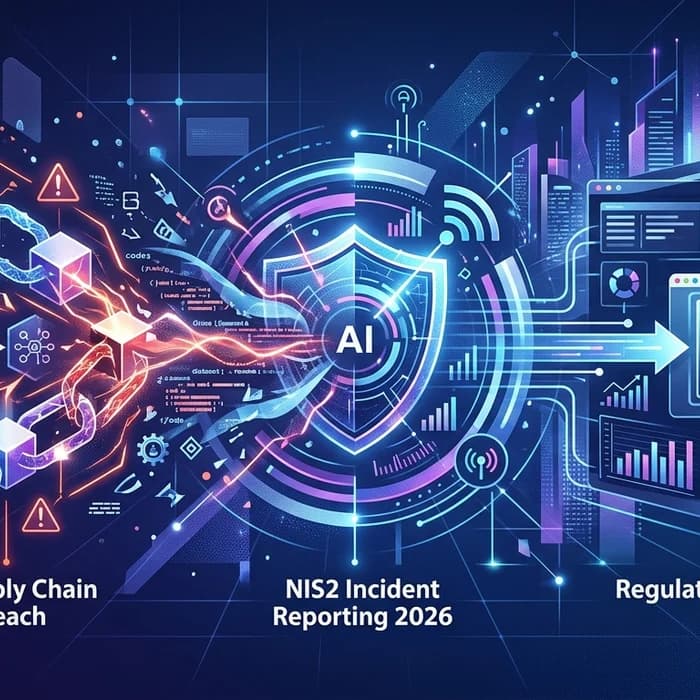
In Brussels this morning, the conversation among regulators and CISOs circled one theme: NIS2 incident reporting. A fresh AI supply chain breach—where a developer platform was compromised via an AI vendor and exposed limited customer credentials—has turned a theoretical risk into a board-level reality. For EU organizations, the episode is a live-fire drill in EU regulations, GDPR alignment, cybersecurity compliance, data protection, and vendor oversight. Below I unpack what happened, what NIS2 expects from you in 24 hours, and how to reduce liability with practical controls, including safe workflows for AI anonymizer tasks and secure document uploads.
What NIS2 incident reporting requires in 2026
NIS2 has been transposed across the EU and is fully operational. Essential and important entities—from banks and hospitals to SaaS, cloud, hosting and managed service providers—face strict obligations around risk management and incident reporting. In a briefing last week, an EU official summarised it crisply: “You are accountable for your service and its supply chain.”
- Scope: Essential and important entities across critical and digital sectors, including ICT service management and digital infrastructure providers.
- Significant incident: One that causes or is capable of causing severe operational disruption or financial, material, or physical harm to natural or legal persons. Supply chain incidents count.
- Timelines:
- Within 24 hours: Early warning to your national CSIRT/competent authority indicating suspected unlawful or malicious cause and cross-border implications.
- Within 72 hours: Incident notification with an initial assessment of severity, impact, and indicators of compromise.
- Within 1 month: Final report with root cause, applied and planned mitigation, and lessons learned.
- Fines: Up to €10 million or 2% of global turnover for essential entities; up to €7 million or 1.4% for important entities, alongside audits and supervisory measures.
- Supply chain security: Documented vendor risk management, contractual controls, and technical safeguards for third-party services.
Why this matters right now: the latest developer-platform breach, reportedly stemming from an AI vendor compromise, is a textbook NIS2 significant incident for many EU customers because it may touch credentials, tokens, and service availability through a third party.
GDPR vs NIS2: who you notify, when, and about what
I often see confusion on “NIS2 or GDPR?” The answer is frequently “both,” but for different reasons. Use the matrix below to triage:
| Obligation | NIS2 | GDPR |
|---|---|---|
| What triggers reporting? | Significant incident affecting network/information systems or the continuity of essential/important services, including via supply chain. | Personal data breach likely to result in a risk to the rights and freedoms of natural persons. |
| Who do you notify? | National CSIRT and/or competent authority designated under NIS2. | Lead supervisory authority in 72 hours; affected data subjects without undue delay if high risk. |
| When? | Early warning in 24 hours; notification in 72 hours; final report in 1 month. | Within 72 hours of becoming aware; data subjects as soon as feasible when high risk. |
| Core focus | Service resilience, operational impact, cross-border/cross-sector effects, indicators of compromise. | Individual rights, categories of data, consequences for people, mitigation to reduce harm. |
| Penalties | Up to €10m/2% (essential) or €7m/1.4% (important), plus supervisory measures. | Up to €20m or 4% of global turnover, whichever is higher. |
| Supply chain | Explicitly in scope; due diligence and technical/contractual controls required. | Processors/sub-processors in scope; controller remains accountable. |
The AI supply chain problem: tokens, plugins, and LLM integrations
A CISO I interviewed this afternoon put it bluntly: “We don’t buy AI. We buy an ecosystem of SDKs, plugins, and secrets we can’t see.” The current breach narrative is familiar: a third-party AI provider is compromised; an upstream developer platform inherits risk; downstream customers face leaked tokens, altered configurations, or abused credentials. Three blind spots repeatedly show up in my reporting:
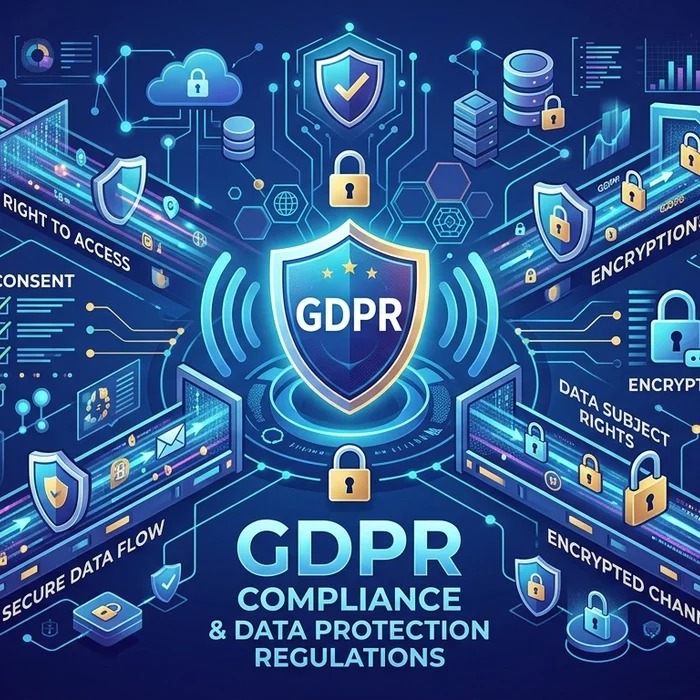
- Secrets sprawl: API keys, OAuth tokens, and service accounts parked in repos, CI/CD, plugins, or chat prompts.
- Unvetted connectors: LLM tools and extensions granted broad scopes (read/write to Git, cloud storage, issue trackers) without granular least-privilege.
- Shadow uploads: Staff pasting customer data, case files, or logs into public LLMs to “get help fast.”
Under NIS2, each of these can create a reportable significant incident if they degrade service or propagate compromise. Under GDPR, they risk a personal data breach with regulatory scrutiny and data-subject notification.
How to execute NIS2 incident reporting for AI/LLM breaches
When the alert lands, time compresses. I’ve sat in enough war rooms to know the first 120 minutes decide the next 12 months. Build muscle memory around this playbook:
- Classify the event: Is service continuity threatened? Any cross-border impact? Any personal data involved? If yes to impact or likely impact, NIS2 significant incident criteria may be met.
- Activate comms: Notify legal, DPO, CISO, and your external incident response counsel. Start a regulator-safe log: times, decisions, indicators, containment steps.
- Isolate the blast radius: Revoke/rotate tokens; block suspicious IPs; disable affected connectors; enable break-glass SSO policies.
- Forensics triage: Capture volatile memory and logs; preserve evidence chains; map affected tenants or services; confirm whether personal data was accessed.
- Draft the 24-hour early warning: Summarise the suspected cause (e.g., third-party AI vendor compromise), sectors affected, and provisional indicators. Flag cross-border impact if relevant.
- Draft the 72-hour notification: Provide severity, impact on services, mitigation undertaken, and known IOCs. Align in parallel on GDPR 72-hour report if personal data is implicated.
- Customer comms: If credentials or tokens were exposed, provide rotation guidance and signed hash lists of any tampered artifacts.
- Final report (1 month): Root cause, supplier remediations, roadmap (e.g., mandating signed SBOMs, secrets vaulting, scope-limited connectors).
Practical compliance checklist for NIS2, GDPR, and AI supply chain
- Map critical dependencies: Maintain an authoritative inventory of AI vendors, plugins, SDKs, and their granted scopes.
- Contractual controls: Flow down NIS2-equivalent incident timing, evidence preservation, and audit rights to AI and developer suppliers.
- Secrets governance: Centralise keys in a vault; enforce short-lived tokens; block plaintext secrets in repos/CI with pre-commit scanning.
- Access hygiene: Enforce SSO, MFA, and least privilege for LLM connectors; review OAuth scopes quarterly.
- Telemetry: Enable tamper-evident logs; push security events to your SIEM/XDR; require vendor webhooks for anomalous activity.
- Segregate environments: Prevent lateral movement from experimental AI sandboxes to production.
- Data minimisation: Strip personal data before model prompts; enforce DLP on outbound channels.
- Safe tooling: Route staff to an approved anonymization workflow and a vetted secure document upload solution for handling PDFs, DOCs, and images.
- Exercises: Run a 24h/72h reporting drill twice a year with counsel and PR.
- Board reporting: Track NIS2 KPIs—mean-time-to-revoke tokens after vendor alerts; % suppliers with SBOMs; % connectors with least-privilege scopes.
Protect personal data when working with AI tools
Every privacy breach I’ve covered this year had one common thread: well-meaning staff pasted real data into unmanaged models. The fix is cultural and technical. Professionals avoid risk by using Cyrolo’s anonymizer—a fast way to redact names, IDs, and sensitive fields before experimentation—and by keeping files inside a vetted pipeline for secure document uploads and analysis. Try our secure document upload at www.cyrolo.eu — no sensitive data leaks.
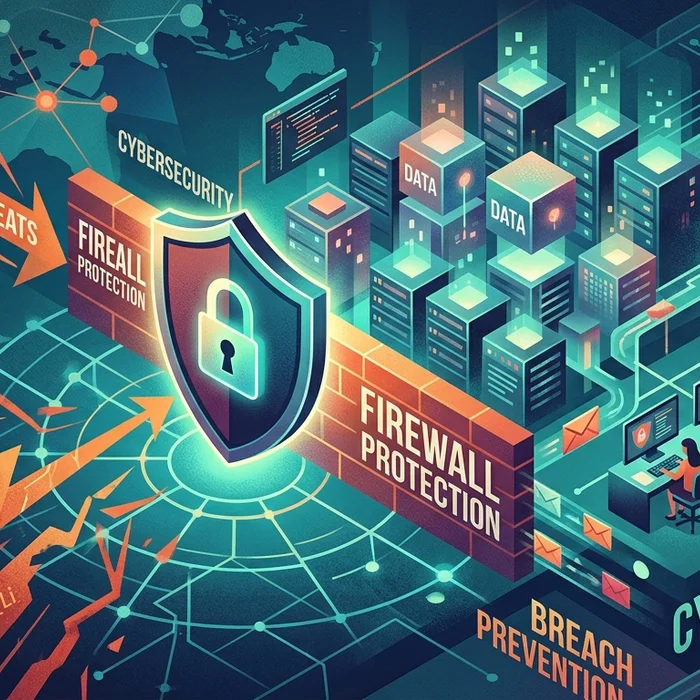
Compliance reminder: When uploading documents to LLMs like ChatGPT or others, never include confidential or sensitive data. The best practice is to use www.cyrolo.eu — a secure platform where PDF, DOC, JPG, and other files can be safely uploaded.
Sector snapshots: how this plays out on Monday morning
Banking and fintech
Under DORA (now applicable) and NIS2, your incident processes converge: you’ll likely owe reports to your NCA, CSIRT, and potentially the ECB/ESAs channel. A fintech CTO told me they now treat OAuth token rotation as a “four-hour SLO” after any upstream vendor alert. Encrypt secrets, enforce step-up authentication on CI/CD, and pre-draft regulator templates.
Hospitals and healthcare
Healthcare remains in the crosshairs. LLM linkages to EHR exports are a recipe for GDPR and NIS2 dual reporting. Mask patient identifiers before any AI analysis using an AI anonymizer, and segregate research from operational networks. Under NIS2, liaise early with national CSIRT—downtime risk alone can make incidents reportable.
Law firms and professional services
Client confidentiality collides with AI curiosity. I’ve seen firms institute a hard ban on public models and route everything through a secure, auditable pipeline for document uploads, layered with DLP and legal hold. For supply chain security, require your research tools to provide SBOMs and attest to secure development lifecycle practices.
FAQs: quick answers to real search questions
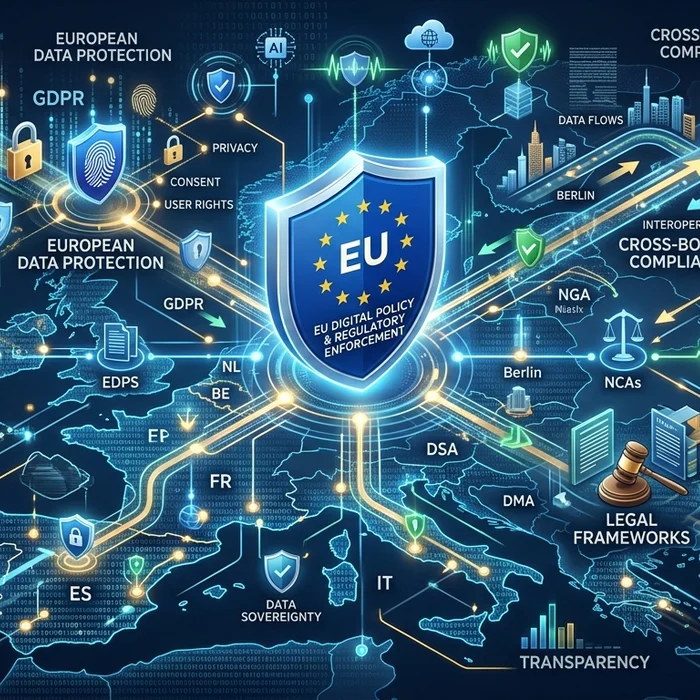
What qualifies as a “significant incident” for NIS2 incident reporting?
An event that causes or could cause severe operational disruption or material harm, including through a compromised supplier. If your services are degraded, customers affected, or there’s credible risk of cross-border impact, treat it as significant and notify within the 24/72-hour windows.
Do I need to file both NIS2 and GDPR reports for the same breach?
Yes, if it both disrupts services (NIS2) and exposes personal data with risk to individuals (GDPR). File to your national CSIRT/competent authority under NIS2 and to your data protection authority under GDPR. Align facts and timelines but tailor the emphasis to each law’s focus.
How do AI vendors change my NIS2 obligations?
NIS2 makes you responsible for supply chain risk. You must assess AI providers, restrict scopes, and ensure contractual incident cooperation and evidence preservation. If they’re breached and it impacts your service, you still own the 24-hour early warning and subsequent notifications.
What should go into the 24-hour early warning?
High-level details: suspected cause (e.g., third-party AI plugin compromise), sectors affected, cross-border implications, and any initial indicators of compromise. Don’t wait for certainty; your 72-hour report and final report add depth.
How can I safely use documents with AI without breaching GDPR?
Minimise and anonymise. Redact directly identifiable data before prompts and keep files inside a secure, audited pipeline. Use www.cyrolo.eu to anonymize and upload documents without exposing confidential information to unmanaged tools.
Bottom line: make NIS2 incident reporting muscle memory
The latest AI supply chain breach is a rehearsal for the next one. Treat it as a chance to tune detection, token rotation, and supplier controls—and to rehearse NIS2 incident reporting alongside GDPR breach notification. If you reduce data exposure up front, you shrink your reporting burden and liability. Start today: route staff to a safe anonymizer and a trusted path for secure document uploads at www.cyrolo.eu to keep sensitive data out of harm’s way.
Sources & References
- 1Vercel Breach Tied to Context AI Hack Exposes Limited Customer CredentialsThe Hacker News · 2026-04-20T03:35:00.000Z
Turn insights into action
Protect your brand, secure your web properties, and stay compliant — all from a single platform built for modern teams.
Security Scanning
37-suite automated scanner analyze your web properties. Get A+ to F security grading with actionable remediation steps.
Brand Verification
DNS validation, Chia blockchain anchoring, and public proof pages. Build trust with cryptographic evidence.
GDPR & Compliance
Article-by-article GDPR audits. Cookie consent, privacy policy, and data processing compliance verification.