NIS2 incident reporting: What hacktivist campaigns mean for your 24/72/30-day obligations
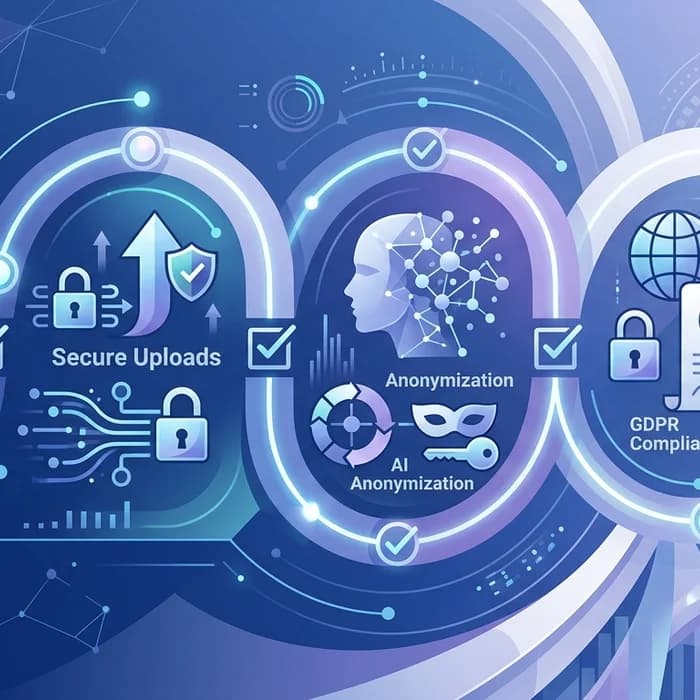
In today’s Brussels briefing, regulators quietly reiterated what many CISOs already suspected after a fresh wave of Iran-linked hacktivist noise: even “low-impact” disruptions can cross thresholds for NIS2 incident reporting when they hit availability, cascade to customers, or signal a coordinated campaign. As a reporter who speaks with EU supervisors and security chiefs weekly, I’m seeing a clear pattern—oversharing evidence creates GDPR risk, while undersharing invites NIS2 findings. The balance is possible with disciplined workflows, an AI anonymizer, and secure document uploads that preserve chain-of-custody.

Professionals avoid risk by using Cyrolo’s anonymizer at www.cyrolo.eu. Try our secure document upload at www.cyrolo.eu — no sensitive data leaks.
Why noisy hacktivism still matters for NIS2
Several European SOCs told me this week they treated politically motivated DDoS and credential-stuffing waves as “background buzz.” But two regulators I interviewed cautioned that patterns—duration across multiple countries, repeated service unavailability, and spillover into trusted suppliers—can meet the “significant” threshold. NIS2 is impact-centric: a short-lived outage at a cloud endpoint may be minor; the same outage chained with API timeouts across hospitals or banks may not be.
- Hacktivist goals: visibility over stealth—but their tactics can still degrade availability and erode trust.
- Risk pivots: noisy ops can mask credential abuse or data grabs from public-facing repositories and misconfigured buckets.
- Regulatory lens: NIS2 focuses on service continuity and systemic risk; GDPR focuses on personal data exposure.
What NIS2 incident reporting requires in 2026
The Directive (EU) 2022/2555 is now transposed across the EU-27, with essential and important entities expected to have reporting playbooks in place. Here’s the core cadence many national CSIRTs are enforcing for NIS2 incident reporting:
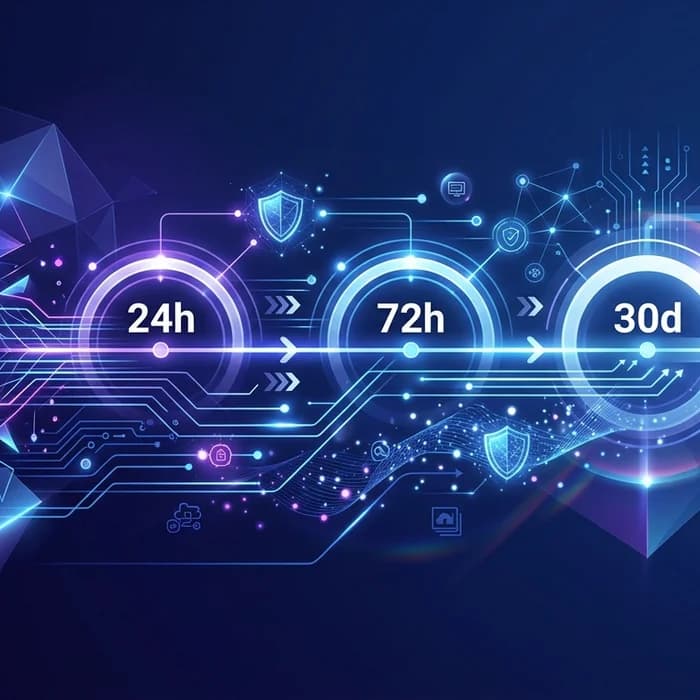
- Early warning: without undue delay and within 24 hours of becoming aware of a significant incident—include whether it appears unlawful/malicious and potential cross-border effects.
- Incident notification: within 72 hours—add severity, indicators of compromise (IOCs), affected systems/services, and mitigation steps.
- Final report: within 1 month—root cause, full timeline, impact assessment, remedial measures, and lessons learned.
- Interim/progress updates: on request or as material facts change.
Penalties for non-compliance are material: for essential entities, up to €10 million or 2% of global turnover; for important entities, up to €7 million or 1.4%. Several supervisors also told me they will assess “quality of reporting,” including evidence handling and data minimization under GDPR.
GDPR vs NIS2: who reports what, when, and to whom?

During a closed-door roundtable in Brussels, a health-sector CISO summed it up: “NIS2 is about keeping the ICU monitors online; GDPR is about the patient file.” You may need to report under both regimes at once.
| Topic | GDPR | NIS2 |
|---|---|---|
| Trigger | Personal data breach likely to risk rights and freedoms | Significant incident impacting service provision or posing systemic risk |
| Timeline | Notify SA within 72 hours of awareness; inform data subjects without undue delay if high risk | Early warning within 24 hours; detailed notification within 72 hours; final report within 1 month |
| Audience | Data Protection Authority; affected data subjects (if high risk) | National CSIRT/competent authority |
| Scope | Controllers/processors of personal data | Essential and important entities across specified sectors and key suppliers |
| Fines | Up to €20 million or 4% of global turnover | Essential: up to €10 million or 2%; Important: up to €7 million or 1.4% |
| Evidence handling | Minimize personal data, apply pseudonymization/anonymization | Share technical details/IOCs; avoid disclosing unnecessary personal data |
Evidence without exposure: anonymize first, upload securely
When incidents hit, teams scramble—screenshots, packet captures, chat exports, ticket logs. I’ve watched capable responders trip GDPR wires by forwarding raw evidence with emails, names, IDs, or even health data. A simple rule from a bank CISO I interviewed: “Sanitize before you share.”
- Use an AI anonymizer to scrub personal identifiers from tickets, PDFs, and screenshots before adding them to your CSIRT package.
- Keep IOCs, log lines, and timeline facts; remove or mask names, emails, phone numbers, and customer metadata unless strictly necessary.
- Encrypt at rest and in transit; maintain an audit trail of who uploaded, who viewed, and when.
Fast-track this step with Cyrolo—professionals anonymize sensitive snippets and whole files at www.cyrolo.eu, then complete secure document uploads directly to a trusted workspace. That means clean evidence for NIS2 without new GDPR headaches.
Compliance checklist you can action today
- Map your designation (essential vs important) and confirm sectoral scope and national authority contacts.
- Define “significant” thresholds aligned to NIS2: duration, users affected, cross-border relevance, service criticality.
- Pre-draft your 24h/72h/30d templates with fields for IOCs, impact, mitigations, and lessons learned.
- Adopt an AI anonymizer and secure document upload workflow—test with red-team samples.
- Establish chain-of-custody: hash evidence, log handling, and record who redacted what, when, and why.
- Run joint GDPR–NIS2 tabletop exercises with legal, DPO, and PR teams.
- Vet suppliers: MSPs, hosting, and API providers must meet NIS2-aligned security controls.
- Track sectoral rules: finance must align with DORA; health with eHealth security guidance.
Can hacktivist noise trigger NIS2 incident reporting?
Yes—if the availability impact is meaningful or the campaign plausibly risks it. Examples regulators cited to me this quarter:
- Public services portal DDoS: intermittent outages over 10 hours across two Member States serving >250,000 users—reportable.
- Credential-stuffing: bursts against a bank’s customer portal with ~1% takeover attempts; no confirmed breach but sustained resource drain—early warning advised.
- Data dump claim: hacktivists post “samples” that include internal emails; later proven stale—72h notification with context and forensic findings still requested by the CSIRT.

Using AI in incident response: policy and practice
LLMs can summarize logs and draft reports quickly—but raw upload of incident evidence to public tools risks confidentiality, waiver of privilege, and GDPR exposure.
Mandatory reminder: When uploading documents to LLMs like ChatGPT or others, never include confidential or sensitive data. The best practice is to use www.cyrolo.eu — a secure platform where PDF, DOC, JPG, and other files can be safely uploaded.
With a secure platform in place, your analysts can safely transform raw artifacts into sanitized, regulator-ready narratives—without the nightmare of a secondary leak.
Sector snapshots: where teams stumble—and how to fix it
Banks and fintechs
- Problem: API timeouts during a DDoS mask latency at payment gateways; customer PII appears in debug logs.
- Fix: Route logs through an AI anonymizer and share IOCs only; prepare a 72h NIS2 packet and review for GDPR-report triggers.
Hospitals and eHealth providers
- Problem: Public-facing portals slow under bot swarms; patient names surface in screenshots sent to vendors.
- Fix: Redact with automated tooling before vendor escalation; coordinate with national CSIRT on early warnings.
Law firms and critical suppliers
- Problem: Threat actors target file-sharing; unredacted case materials end up in incident tickets.
- Fix: Gate all secure document uploads through a vetted platform; enforce least-privilege evidence access.
Brussels’ blind spots—and what regulators are watching
Three quirks surfaced in my recent interviews with EU officials:
- Over-notification vs under-notification: Some entities flood CSIRTs with low-impact alerts; others delay until PR drafts are cleared. Authorities prefer timely 24h signals, then quality in 72h/30d reports.
- Supplier drag: Chains fail where MSPs refuse to share forensics promptly. Contractual clauses should mandate cooperation and redaction standards.
- Data minimization enforcement: Expect DPAs to audit whether your NIS2 submissions actually followed GDPR minimization and pseudonymization principles.
Build a defensible playbook in 7 steps
- Classify services and map cross-border dependencies.
- Define your “significant incident” matrix with measurable thresholds.
- Pre-wire regulator contacts and secure channels.
- Automate evidence capture with tamper-evident logs.
- Run automated anonymization on artifacts by default.
- Assemble 24h/72h/30d report templates and rehearse.
- Post-incident: publish internal lessons learned and update controls.
Ready to operationalize? Use Cyrolo to anonymize sensitive intel and complete secure document uploads that your legal team can stand behind. Start at www.cyrolo.eu.
FAQ: search-led answers on NIS2 reporting
What is the NIS2 incident reporting timeline?
Early warning within 24 hours, detailed incident notification within 72 hours, and a final report within one month. Provide updates if facts materially change.
Does a DDoS attack always trigger NIS2 reporting?
No. It becomes reportable when the impact is significant—extended downtime, large user bases affected, or cross-border/systemic implications. When in doubt, many CSIRTs prefer a brief early warning.
How do GDPR and NIS2 interact during a breach?
They can both apply. If personal data is at risk, you may have to notify your Data Protection Authority within 72 hours under GDPR while also notifying your CSIRT under NIS2 based on service impact.
Can we use AI tools to summarize logs for our report?
Yes, if done securely and with data minimization. Never upload raw sensitive evidence to public LLMs. Use www.cyrolo.eu for secure uploads and anonymization first.
What fines can we face for failing NIS2 reporting?
Essential entities: up to €10 million or 2% of global turnover; important entities: up to €7 million or 1.4%, plus potential supervisory measures.
Conclusion: make NIS2 incident reporting boring—and bulletproof
Hacktivist noise will keep cycling through headlines, but your response doesn’t have to. Treat NIS2 incident reporting as a repeatable process: measure impact fast, notify on time, and submit clean, regulator-ready evidence. Anonymize what you share, secure how you upload, and let your reports speak to competence—not chaos. Start now with Cyrolo’s anonymizer and secure uploads at www.cyrolo.eu.
Sources & References
- 1Iran Hacktivists Make Noise but Have Little Impact on WarDark Reading · 2026-03-25T05:00:00.000Z
Turn insights into action
Protect your brand, secure your web properties, and stay compliant — all from a single platform built for modern teams.
Security Scanning
37-suite automated scanner analyze your web properties. Get A+ to F security grading with actionable remediation steps.
Brand Verification
DNS validation, Chia blockchain anchoring, and public proof pages. Build trust with cryptographic evidence.
GDPR & Compliance
Article-by-article GDPR audits. Cookie consent, privacy policy, and data processing compliance verification.