NIS2 insider threat compliance: Lessons from retail discount abuse and EU enforcement in 2026
Last night, a US retail story made the rounds: a store employee allegedly used a manager override code to apply near-total discounts on premium laptops—an abuse of trust, process, and weak access controls. For EU boards and CISOs, the takeaway is immediate. NIS2 insider threat compliance is no longer optional theater; it’s a measurable set of governance, access, and monitoring duties with real penalties. In today’s Brussels briefing, regulators emphasized that privilege misuse and poor segregation of duties are exactly the systemic weaknesses NIS2 was designed to surface—and fine—if left unaddressed.
What happened—and why it matters to EU boards
I spoke this morning with a payments CISO who has overseen multiple retail investigations. The pattern is familiar: a trusted employee learns (or is casually shown) a manager’s code, approvals happen off-camera or outside process, POS and ERP logs aren’t reviewed in near-real time, and the fraud continues until inventory losses trigger a forensic audit. In the US case widely reported this week, the alleged 99% discount activity is the sort of outlier that any decent rules engine, dual-authorization workflow, or alerting dashboard should have flagged within minutes. In the EU, failures like these can swiftly intersect with data protection, cybersecurity compliance, and reporting duties under GDPR and NIS2.
- Privilege misuse = insider threat. It is not always nation-state activity; it’s often an over-permissioned colleague with weak oversight.
- Retailers with significant online operations may fall into NIS2 as “online marketplaces” or via national designations; others are indirectly pulled in through supply chain obligations.
- POS exceptions can expose personal data (names on receipts, loyalty IDs) and trigger GDPR breach notifications if logs or exports leak.
How NIS2 insider threat compliance raises the bar
NIS2 transformed “best practice” into enforceable obligations for essential and important entities across the EU. Insider threat is explicitly a governance and risk-management problem under the Directive, with boards expected to approve security policies and oversee their implementation.
What regulators expect to see
- Board-level accountability: documented approval of security risk-management measures and oversight of audits.
- Access control discipline: least privilege, role-based access, and multi-person approval for high-risk overrides (e.g., extreme discounts, refunds, or data exports).
- Joiner-mover-leaver rigor: immediate revocation of credentials on role changes and departures; no shared manager codes.
- Logging and monitoring: centralized, immutable logs with alerting on abnormal transactions (e.g., discounts >50%, after-hours approvals).
- Incident reporting: early warning within 24 hours and follow-up reporting within 72 hours and one month for significant incidents.
- Supplier oversight: proof that third-party service providers (including AI and analytics vendors) meet equivalent security and data protection standards.
Practical controls retailers, banks, and hospitals should deploy now
- Replace shared manager PINs with named, MFA-protected approvals; require dual authorization for extreme POS exceptions.
- Implement break-glass procedures with immediate post-event review and automatic temporary suspension of elevated access.
- Set rules-based alerts for discount thresholds, clustered transactions, and impossible travel or off-shift activity.
- Enforce segregation of duties between price-setting, approval, and reconciliation teams.
- Automate anomaly detection on loyalty IDs and refunds to prevent privacy breaches and fraud collusion.
- Redact personal data before sharing logs with external investigators or vendors using an AI anonymizer to reduce GDPR exposure.
GDPR vs NIS2: who owns what, and when do you report?
Many teams still conflate the two regimes. Here’s a quick side-by-side for planning:
| Dimension | GDPR | NIS2 |
|---|---|---|
| Primary focus | Personal data protection and rights | Service continuity and cybersecurity risk management |
| Who is in scope | Controllers and processors handling personal data | Essential/important entities in listed sectors; online marketplaces; nationally designated entities; supply chain impacts |
| Incident reporting timeline | Notify DPA within 72 hours if a personal data breach likely risks rights and freedoms | Early warning within 24 hours; incident notification within 72 hours; final report within 1 month for significant incidents |
| Penalties | Up to €20M or 4% of global annual turnover | At least up to €10M or 2% of global annual turnover (Member States may set higher) |
| Governance | DPO required in many cases; privacy by design | Board-approved security policies; mandatory risk management, auditing, and supplier oversight |
| Scope of data | Personal data | Wider operational and security data, including logs and service metrics |
Sharing evidence safely with vendors and auditors
When fraud or a security incident strikes, you’ll share receipts, POS logs, loyalty exports, and HR records with investigators, eDiscovery teams, or incident response providers. Those files are riddled with personal data—names, emails, addresses, payment tokens. Handing them over “as is” can create secondary GDPR exposure and privacy breaches.
- Problem: Raw evidence leaks personal data, multiplying legal risk during audits and security investigations.
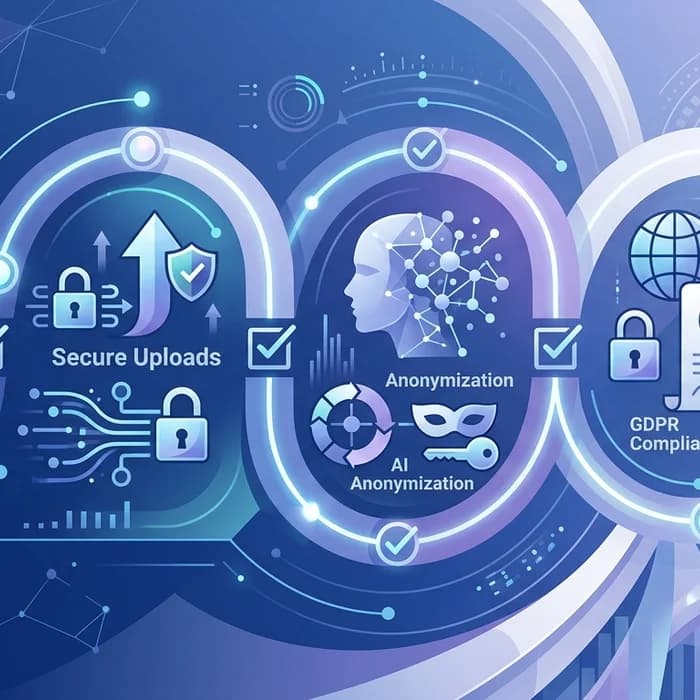
- Solution: Anonymize sensitive elements before sharing, and use a secure channel for document transfers.
Professionals avoid risk by using Cyrolo’s anonymizer at www.cyrolo.eu. You can also try our secure document upload at www.cyrolo.eu — no sensitive data leaks.
Compliance note: When uploading documents to LLMs like ChatGPT or others, never include confidential or sensitive data. The best practice is to use www.cyrolo.eu — a secure platform where PDF, DOC, JPG, and other files can be safely uploaded.
Fast-start checklist for NIS2-aligned insider threat controls
- Map high-risk approvals (discounts, refunds, data exports) and require dual authorization with MFA.
- Eliminate shared manager codes; enforce role-based access and time-bound elevation.
- Enable immutable, centralized logging; alert on threshold breaches and off-hours overrides.
- Run quarterly access recertifications; automate joiner-mover-leaver offboarding.
- Create incident runbooks for POS fraud and data leakage; test with tabletop exercises.
- Classify and pseudonymize personal data in logs; redact before sharing externally using an AI anonymizer.
- Contractually require suppliers to meet GDPR and NIS2-equivalent controls; audit them.
- Train store managers and supervisors on abuse patterns; simulate approvals under observation.
2026 outlook: enforcement, budgets, and blind spots
With NIS2 transposed into national law across the EU, 2025–2026 is the period of real audits and follow-up actions. Supervisory authorities I spoke with in Belgium and Germany are prioritizing:
- Board oversight evidence: minutes, risk registers, and remedial actions after audits.
- Supplier risk management: who processes your logs and how data is protected during transfer.
- Incident reporting hygiene: timely 24/72/30-day submissions with actionable lessons learned.
Blind spots I continue to see:
- POS exception logging that omits the “who/when/why,” making forensic work—and compliance—harder.
- Exporting raw CSVs to external AI tools for analysis without anonymization, creating hidden GDPR liabilities.
- Retail franchises assuming head office controls cover their local overrides and refunds—they often do not.
Budgets are following risk: retail and fintech leadership are funding IAM hardening, anomaly detection, and secure evidence handling. A CISO I interviewed this week warned, “Our biggest fines won’t come from a nation-state—they’ll come from undisciplined internal workflows that leak data while enabling fraud.”
FAQs
What is NIS2 insider threat compliance in practice?
It means board-approved security policies, strict access controls, auditable logging, supplier oversight, and timely incident reporting—applied specifically to risks like privilege misuse, fraudulent approvals, and data leakage.
Does NIS2 apply to retailers?
Many brick-and-mortar retailers are not automatically in scope. However, online marketplaces and nationally designated entities are, and supply chain obligations can still pull retailers into due-diligence and reporting expectations. Regardless, GDPR applies to personal data in POS and loyalty systems.
What are the reporting deadlines for incidents?
Under NIS2, submit an early warning within 24 hours, an intermediate report within 72 hours, and a final report within one month for significant incidents. Under GDPR, notify the data protection authority within 72 hours if a personal data breach risks individuals’ rights and freedoms.
How do we reduce risk when sharing logs and evidence?
Pseudonymize or anonymize personal data before transmission, restrict who can access the files, and use a secure transfer platform. Cyrolo’s anonymizer and secure document upload at www.cyrolo.eu help teams do this quickly and safely.
Is dual authorization really necessary for discounts and refunds?
For high-value or high-percentage exceptions, yes. It is a low-friction control that stops most insider abuse and creates clear accountability, aligning with NIS2’s governance expectations.
Conclusion: Turn a cautionary tale into NIS2 insider threat compliance wins
This week’s retail discount abuse story is a reminder that insider threats thrive where access is shared, logging is weak, and approvals are unchecked. Treat it as a prompt to harden controls now: dual authorization, immutable logs, supplier oversight, and safe evidence handling. If you need a fast, compliant way to sanitize and share files, try Cyrolo’s anonymizer and secure document uploads at www.cyrolo.eu. It’s a practical step toward real NIS2 insider threat compliance—before auditors or attackers test your defenses.
Sources & References
- 1Best Buy worker used manager’s code to get 99% off MacBooks, cops sayArs Technica Policy · 2026-02-16T20:10:54.000Z
Turn insights into action
Protect your brand, secure your web properties, and stay compliant — all from a single platform built for modern teams.
Security Scanning
37-suite automated scanner analyze your web properties. Get A+ to F security grading with actionable remediation steps.
Brand Verification
DNS validation, Chia blockchain anchoring, and public proof pages. Build trust with cryptographic evidence.
GDPR & Compliance
Article-by-article GDPR audits. Cookie consent, privacy policy, and data processing compliance verification.