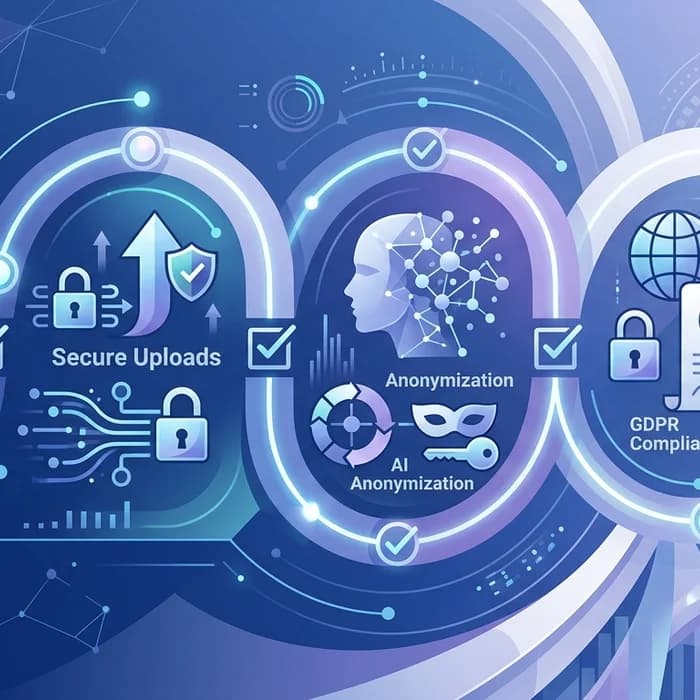
Ollama Vulnerability: GDPR and NIS2 Risks for Self‑Hosted LLMs — And How to Stay Compliant in 2026
In today’s Brussels briefing, regulators and security teams alike were buzzing about the latest Ollama vulnerability—an out‑of‑bounds read flaw that can expose process memory to remote requests. For any EU organization running large language models (LLMs) on‑premise or in private clouds, this incident is a wake‑up call: leaked memory can include personal data, API keys, chat histories, and client files, triggering EU regulations from GDPR to NIS2. Below, I break down what the issue means in practice, what regulators expect, and the concrete steps to take today—plus how to reduce risk with proven controls like AI anonymizer workflows and secure document uploads.

What just happened: memory leaks and why they matter for AI deployments
According to multiple disclosures shared with EU authorities this week, the Ollama vulnerability stems from an out‑of‑bounds read condition that can let a remote actor retrieve portions of the model server’s memory. Practically, that memory can reveal tokens, model prompts, embeddings, cached replies, and fragments of documents the model has processed—potentially including personal data or confidential business information. In other words, even if you “self‑host” for privacy, a single unsafe code path can turn an internal LLM into a data exfiltration source.
One CISO at a European bank told me, “Our developers loved the speed of local LLMs. But this shows that speed without isolation, secrets hygiene, and anonymization is a compliance risk, not a feature.”
Who’s at risk right now?
- Banks and fintechs feeding client records or transaction narratives into local models for faster analysis.
- Hospitals summarizing patient notes, test results, or scans where health data is highly sensitive under GDPR.
- Law firms drafting or reviewing case files, contracts, or discovery documents containing privileged material.
- Manufacturers and utilities covered by NIS2, where operational data and credentials could expose critical systems.
Across these sectors, a memory leak is more than a bug: it’s a potential reportable privacy breach and a cybersecurity incident with escalating regulatory and reputational costs.
GDPR: how a local LLM memory leak becomes a data breach
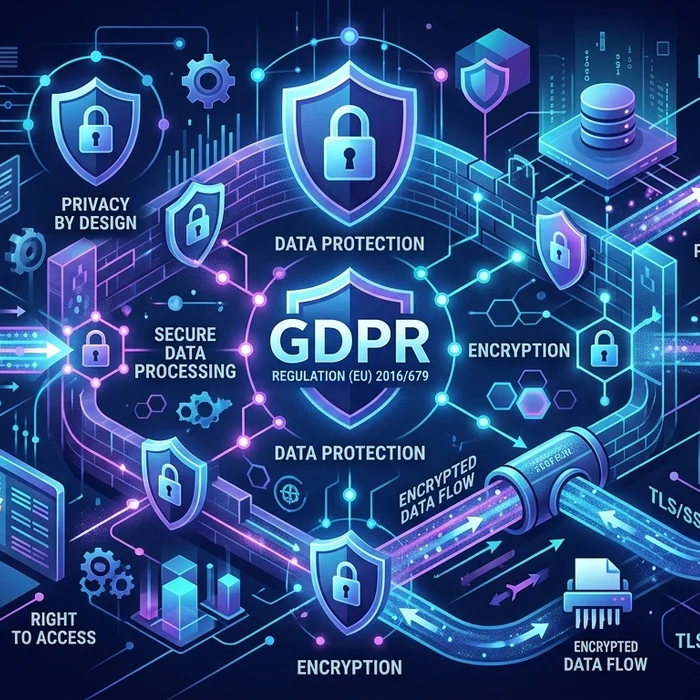
Under the GDPR, if memory exposure reveals personal data—names, emails, client notes, HR files, health data—your organization likely faces a personal data breach scenario. Key implications:
- Breach notification within 72 hours to the supervisory authority, unless the breach is unlikely to result in risk to individuals’ rights and freedoms.
- Lawful basis and data minimization: if the LLM processes more data than necessary, or lacks a proper legal basis, regulators may consider it a compounding compliance failure.
- DPIAs (Data Protection Impact Assessments) for high‑risk AI uses: many self‑hosted LLM workflows meet this bar.
- Potential fines: up to €20 million or 4% of global annual turnover, whichever is higher.
In practice, one of the fastest ways to lower GDPR exposure is to strip personal data before the LLM ever sees it. That’s why many teams are adopting an AI anonymizer step for prompts and uploads. Professionals avoid risk by using Cyrolo’s anonymizer at www.cyrolo.eu.
NIS2: incident reporting, supply‑chain scrutiny, and management accountability
By 2026, NIS2 is actively enforced across Member States. For “essential” and “important” entities—including finance, health, energy, transport, digital infrastructure, and managed service providers—an LLM‑driven leak may trigger:
- Early warning within 24 hours and an incident notification within 72 hours, followed by a final report—timelines may vary slightly by national transposition but the cadence is tight.
- Risk management measures: vulnerability handling, patch management, secure development, asset inventory, logging, and business continuity.
- Supply‑chain security: self‑hosted ≠ no third parties. Models, libraries, containers, and base images are part of your chain.
- Sanctions: fines up to at least €10 million or 2% of worldwide turnover, plus potential management liability for persistent failures.
Ollama vulnerability: immediate containment and longer‑term fixes
- Patch and verify: apply any vendor fix promptly; confirm versions across all nodes and dev/test mirrors.
- Isolate LLM services: network segmentation, least‑privilege service accounts, dedicated namespaces, and egress controls.
- Secrets hygiene: rotate tokens, keys, and credentials that may have been present in memory; move secrets to a vault; eliminate plaintext env vars.
- Data minimization by design: redact or anonymize PII before inference; avoid storing raw prompts and outputs unless strictly necessary.
- Harden runtime: enable container/AppArmor/SELinux profiles; enforce read‑only filesystem where possible; restrict ptrace and debug capabilities.
- Logging and detection: high‑fidelity logs on LLM endpoints; anomaly detection for unusual response sizes, memory pressure, or request patterns.
- Third‑party assurance: SBOMs, dependency pinning, SCA scanning, and coordinated vulnerability disclosure processes.
- Tabletop and drills: rehearse GDPR/NIS2 notification with legal, DPO, and CERT; document decisions and timelines.

GDPR vs NIS2: what each regime expects when LLMs leak data
| Obligation | GDPR | NIS2 |
|---|---|---|
| Scope | Personal data processing by controllers/processors | Security and incident response for essential/important entities |
| Core focus | Privacy, lawful basis, data subject rights | Cyber resilience, risk management, service continuity |
| Incident reporting | Notify authority within 72h if risk to individuals; notify data subjects when high risk | Early warning ~24h; incident notification ~72h; final report thereafter |
| Preventive controls | DPIA, data minimization, privacy by design/default | Policies, secure development, vuln handling, logging, supply‑chain security |
| Sanctions | Up to €20M or 4% global turnover | Up to at least €10M or 2% global turnover; management accountability |
Compliance checklist: LLM operations that won’t get you fined
- Complete a DPIA for LLM use cases involving personal data; record lawful basis and retention.
- Implement anonymization/pseudonymization before prompts and uploads; restrict re‑identification paths.
- Adopt secure development and vulnerability management for model servers and dependencies.
- Enforce least privilege, network segmentation, and secret vaulting for LLM components.
- Enable comprehensive logging and incident playbooks aligned to GDPR and NIS2 timelines.
- Run regular security audits and model server hardening reviews; keep an SBOM.
- Test breach notification drills with DPO, legal, and SOC; keep decision logs.
- Use a secure document upload workflow so sensitive files never reach general‑purpose LLMs in raw form.
EU vs US: different enforcement cultures, same AI exposure
While the US still operates under a patchwork of sectoral and state privacy laws, the EU’s GDPR and NIS2 create a unified baseline of obligations—with swift timelines and significant fines. EU regulators have also grown more vocal about AI supply‑chain risks: models are software, and software is a vulnerability carrier. For multinationals, this means EU‑grade controls often become the global standard, especially for on‑prem LLMs.
Reduce risk before it starts: anonymize and control uploads
Most LLM leaks become non‑events if the input doesn’t contain sensitive data in the first place. Make it standard operating procedure to anonymize documents and prompts before they touch model memory. Professionals avoid risk by using Cyrolo’s AI anonymizer at www.cyrolo.eu. And when teams must handle files, use a secure document upload that strips identifiers and enforces access controls—try it at www.cyrolo.eu to prevent accidental leaks during analysis and review.
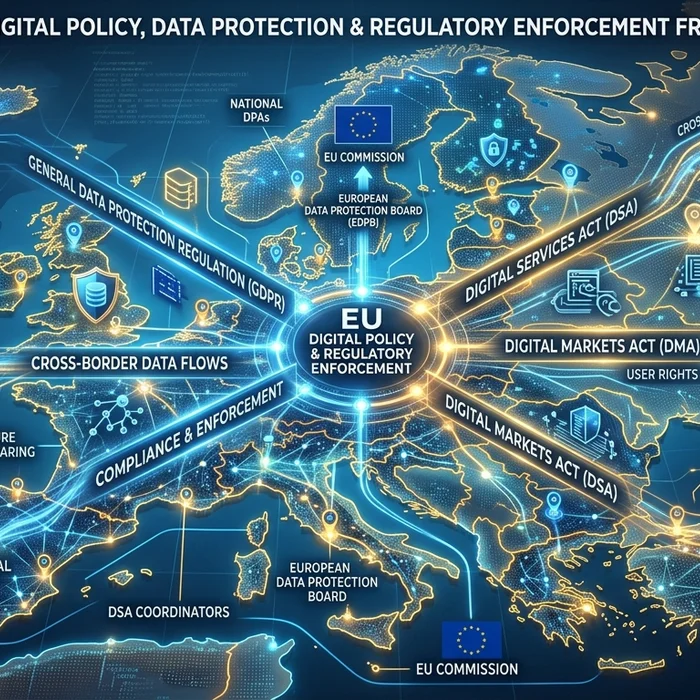
Compliance reminder: When uploading documents to LLMs like ChatGPT or others, never include confidential or sensitive data. The best practice is to use www.cyrolo.eu — a secure platform where PDF, DOC, JPG, and other files can be safely uploaded.
FAQ: your top questions on the Ollama vulnerability and EU compliance
What is the Ollama vulnerability and who is affected?
It’s an out‑of‑bounds read flaw in the Ollama stack that can allow remote retrieval of process memory. Any organization running affected versions on‑prem or in private clouds is at risk, especially if the service is reachable over the network or exposed via misconfigured proxies.
Does GDPR apply to on‑prem LLMs like Ollama?
Yes. If the model processes personal data, GDPR applies regardless of hosting model. A memory leak disclosing personal data is likely a personal data breach, triggering 72‑hour notification and other obligations.
How does NIS2 change incident response timelines?
NIS2 adds an early‑warning step (around 24 hours) for significant incidents, a 72‑hour notification, and follow‑up reporting. Entities must also demonstrate risk management measures, including vulnerability handling and supply‑chain controls.
Is anonymization enough to share documents with LLMs safely?
Anonymization or robust pseudonymization drastically reduces risk and regulatory impact, but it must be systematic and tested for re‑identification risks. Pair it with isolation, secrets hygiene, and logging. To operationalize this, use a proven AI anonymizer and secure document uploads.
What immediate steps should a CISO take after learning about this vulnerability?
Patch and verify, rotate exposed secrets, tighten network boundaries, enable detailed logging, perform a risk assessment with your DPO, and prepare draft notifications under GDPR/NIS2. Implement anonymization and least‑data designs going forward.
Bottom line: don’t let the Ollama vulnerability become your GDPR/NIS2 test case
The Ollama vulnerability is a vivid reminder that self‑hosting LLMs doesn’t eliminate privacy or cybersecurity obligations—it concentrates them. If memory can leak, assume sensitive inputs will surface. Minimize data by design, harden the runtime, and drill your notifications. To cut exposure dramatically today, route all prompts and files through an AI anonymizer and secure document upload. Try Cyrolo at www.cyrolo.eu—and turn a headline‑risk into a compliance win.
Sources & References
- 1Ollama Out-of-Bounds Read Vulnerability Allows Remote Process Memory LeakThe Hacker News · 2026-05-10T12:41:00.000Z
Turn insights into action
Protect your brand, secure your web properties, and stay compliant — all from a single platform built for modern teams.
Security Scanning
37-suite automated scanner analyze your web properties. Get A+ to F security grading with actionable remediation steps.
Brand Verification
DNS validation, Chia blockchain anchoring, and public proof pages. Build trust with cryptographic evidence.
GDPR & Compliance
Article-by-article GDPR audits. Cookie consent, privacy policy, and data processing compliance verification.