Revising the Europol Regulation: What it means for corporate data handling in 2026
In today’s Brussels briefing circuit, one theme is impossible to miss: Revising the Europol Regulation is reshaping how companies handle law enforcement data requests while staying inside GDPR and NIS2 guardrails. As Europol leans further into big-data analysis and cross-border cooperation, DPOs, CISOs, and legal teams need a repeatable playbook for personal data handling, cybersecurity compliance, and secure document uploads that won’t trigger privacy breaches or fines.
Key takeaways from LIBE’s briefing on Revising the Europol Regulation
Covering recent committee discussions, officials and staffers stressed practical “implementation takeaways” for both public authorities and the private sector that must respond to Europol-facilitated requests. From interviews I’ve conducted with EU security leads and regulator briefings I’ve attended, five points stand out:
- Private-party datasets and scope creep: Europol can receive and process large datasets, including from private actors, but transfers must be necessary, proportionate, and traceable. Companies must document legal bases, data minimization, and safeguards.
- Data protection by design: Stronger oversight and logging obligations are becoming the norm—expect scrutiny from DPOs, auditors, and (where relevant) data protection authorities and the EDPS.
- Algorithmic tools and accuracy: Intelligence analysis relies on pattern detection; organizations sharing data should verify accuracy and provenance. Low-quality inputs can produce misleading hits—and liability.
- Retention and deletion controls: Time limits and category-based retention remain critical. Keep auditable proof of what was shared, when, and why—plus deletion or redaction steps.
- Cross-border flow governance: Even when supporting crime prevention, cross-border transfers demand safeguards compatible with EU standards; “urgent” does not eliminate documentation duties.
What changes for companies when Europol or national LEAs knock?
The practical burden rises for banks, fintechs, hospitals, cloud providers, and law firms. A CISO I interviewed last quarter put it bluntly: “We don’t say no to the police—but we can’t violate GDPR or NIS2 in the process.” Here’s how that plays out on the ground:
- GDPR vs. Law Enforcement Directive (LED): Private entities are primarily under the GDPR; national police and Europol operate under their own frameworks. Still, corporate disclosures must have a clear legal basis, meet necessity/proportionality standards, and be logged.
- Data minimization first: Share only what is explicitly requested and strictly necessary. Redact or anonymize collateral personal data not essential to the case.
- Integrity and confidentiality: Use hardened transfer channels, access controls, and encryption at rest/in transit. Maintain chain-of-custody records.
- Incident alignment with NIS2: If data-sharing reveals a compromise or security incident, NIS2 incident reporting timelines and escalation duties may trigger in parallel.
GDPR vs NIS2: which obligations bite during a law enforcement request?
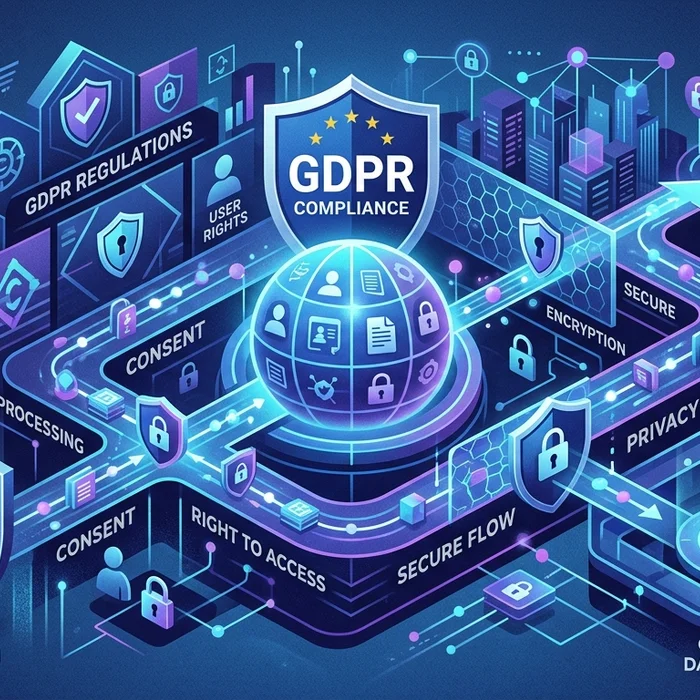
Both frameworks matter. GDPR governs personal data processing; NIS2 raises the bar on cybersecurity risk management and reporting for “essential” and “important” entities. The table below frames common obligations when responding to Europol-facilitated requests.
| Area | GDPR (personal data) | NIS2 (security & reporting) |
|---|---|---|
| Legal basis | Processing must be lawful, necessary, and proportionate; document the request and your assessment. | Not a legal basis tool; requires risk management, governance, and security controls around processing. |
| Data minimization | Share only what is necessary; consider redaction/anonymization for non-essential fields. | Ensure technical controls enforce least privilege and limit exposure during transfers. |
| Security measures | Encryption, access controls, and audit logs are required under integrity/confidentiality principles. | Risk-based controls, supplier security, crypto hygiene, network segmentation; subject to audits. |
| Incident response | Assess if the disclosure or underlying facts constitute a personal data breach; notify if thresholds met. | Time-bound incident reporting to national CSIRTs; potential supervisory inspections and remedies. |
| Sanctions | Up to €20M or 4% of global annual turnover, whichever is higher, for severe infringements. | Up to ~€10M or 2% (essential) and ~€7M or 1.4% (important), depending on national transposition. |
Practical workflow: from request to response
- Intake and authenticate: Verify the requesting authority, scope, legal references, and deadlines. Reject vague, open-ended demands.
- Scope and search: Identify responsive systems and datasets. Use role-based access and case IDs for traceability.
- Minimize and prepare: Redact non-essential fields; apply an AI anonymizer to strip direct and quasi-identifiers where appropriate.
- Security wrap: Package files with encryption, hash checks, and transfer via approved channels. Log every step.
- Review and approve: DPO/legal sign-off; maintain a disclosure register with retention schedules and deletion triggers.
- Post-transfer checks: Confirm receipt, lock the case, and schedule follow-up deletion or re-evaluation dates.
Compliance checklist (keep this by your console)
- Verified authority identity and case reference
- Documented legal basis and necessity assessment
- Applied data minimization; redaction/anonymization performed
- Encryption in transit and at rest; access restricted on a need-to-know basis
- Secure document uploads only; no personal accounts or ad hoc tools
- Comprehensive audit log and chain-of-custody preserved
- Retention limits set; deletion/redaction scheduled post-case
- Parallel NIS2 incident assessment completed (if applicable)
Reduce risk fast with privacy-preserving tooling
Under the revised landscape, manual redaction is too slow and error-prone. That’s why privacy teams are adopting automated safeguards to de-risk disclosures and internal reviews:
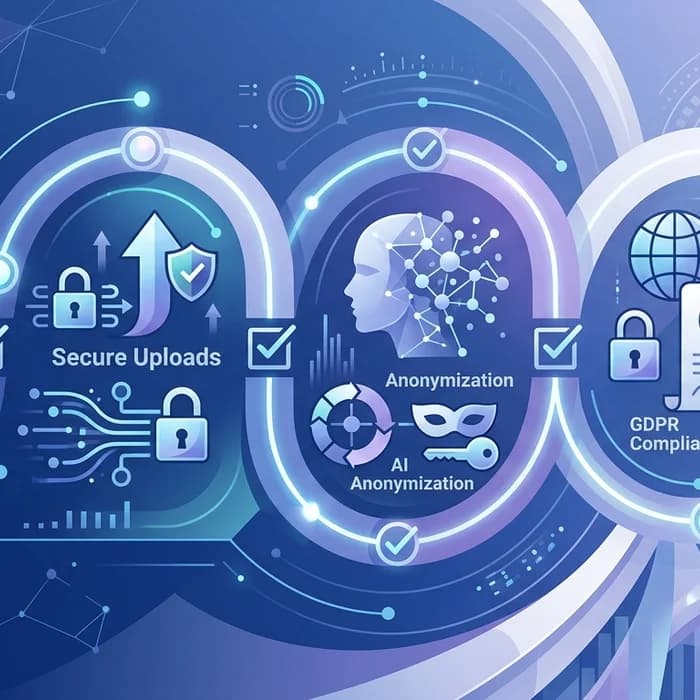
- Automated anonymization: Strip names, IDs, contact details, health info, and free-text PII from PDFs, scans, and emails before sharing. Professionals avoid risk by using Cyrolo’s anonymizer at www.cyrolo.eu.
- Secure document handling: Centralize request-related files, apply consistent encryption and access controls, and maintain verifiable logs. Try our secure document upload at www.cyrolo.eu — no sensitive data leaks.
- Reader and QA workflows: Rapidly review case files without exposing raw PII, and export a redacted, shareable bundle for authorities.
Compliance note: When uploading documents to LLMs like ChatGPT or others, never include confidential or sensitive data. The best practice is to use www.cyrolo.eu — a secure platform where PDF, DOC, JPG, and other files can be safely uploaded.
Deadlines, fines, and audits to watch in 2026
- NIS2 is live across the EU: Essential and important entities are undergoing supervision. Expect audits on identity/access management, encryption, supplier risk, and incident response.
- GDPR enforcement is maturing: Cross-border cases increasingly yield high-value sanctions; documentation gaps and poor minimization remain frequent findings.
- Cost of a breach keeps rising: Security leaders I spoke with cite multi-million-euro exposure from forensics, legal, downtime, and reputational damage—dwarfing the cost of preventive tooling.
- Regulator expectations: Clear governance for law enforcement interactions, including playbooks, training, and proven anonymization, is now a baseline.
Real-world scenarios and how to respond
- Bank/fintech: Europol seeks transaction trails linked to mule accounts. Provide narrow time windows and accounts; anonymize counterparties not central to the case.
- Hospital: A cross-border investigation requests admission logs. Share only relevant patients and dates; remove diagnoses unless strictly necessary; apply strong pseudonymization.
- Cloud/SaaS provider: Provide access logs for a compromised tenant environment; exclude non-material tenants and redact IPs or user IDs not tied to indicators of compromise.
- Law firm: Hand over client metadata, not full briefings; redact legal privilege content and unrelated third-party PII.
EU vs US: different baselines, same pressure to document
In the EU, the interplay of the Europol Regulation, national criminal procedure, GDPR, and NIS2 creates a layered compliance stack. In the US, there’s no federal GDPR-equivalent; disclosures are often driven by the Stored Communications Act, subpoenas, warrants, and MLATs. For multinationals, the safest approach is to apply the EU’s stricter minimization and logging standards globally—one playbook, fewer surprises.
FAQ
Is Europol above the GDPR? Do companies have to comply anyway?
No entity is “above” EU fundamental rights. Europol operates under its own legal basis, but private companies remain bound by the GDPR (and NIS2 where applicable). Your disclosure must be lawful, necessary, proportionate, and documented.
Can I send large datasets “just in case” they help an investigation?
No. Overbroad transfers risk GDPR infringements. Share only necessary data. Use redaction or an AI anonymizer to neutralize non-essential personal data before disclosure. Teams standardize this with www.cyrolo.eu.
What’s the safest way to exchange files with authorities?
Follow your approved secure transfer channel, encrypt at rest and in transit, and maintain chain-of-custody logs. Avoid personal email, consumer drives, or public LLMs. For controlled document uploads and redaction workflow, use www.cyrolo.eu.
How do GDPR and NIS2 interact during a disclosure?
GDPR governs personal data sharing (legal basis, minimization, transparency where feasible). NIS2 imposes risk management, technical controls, and incident reporting. You must meet both simultaneously.
Do SMEs have to care about NIS2?
Yes, if they are in-scope essential or important entities (or key suppliers to them). Even if not directly in scope, adopting NIS2-grade controls reduces investigation-related risk and audit findings.
Conclusion: Revising the Europol Regulation without slowing investigations
Revising the Europol Regulation tightens expectations on necessity, proportionality, and technical safeguards in every disclosure. The fastest path to compliance is operationalizing data minimization—use automated redaction, defensible logs, and secure transfer workflows—so that investigations move quickly without privacy breaches. To operationalize all three, teams rely on an anonymization and document upload stack built for regulated environments. Start today at www.cyrolo.eu.
Reporter’s note: This article provides general information and is not legal advice. Always consult your counsel and national competent authorities on specific cases.
Sources & References
- 1Briefing - Revising the Europol Regulation: Implementation takeaways - PE 774.717 - Committee on Civil Liberties, Justice and Home AffairsEU Parliament LIBE · 2026-04-28T22:00:00.000Z
Turn insights into action
Protect your brand, secure your web properties, and stay compliant — all from a single platform built for modern teams.
Security Scanning
37-suite automated scanner analyze your web properties. Get A+ to F security grading with actionable remediation steps.
Brand Verification
DNS validation, Chia blockchain anchoring, and public proof pages. Build trust with cryptographic evidence.
GDPR & Compliance
Article-by-article GDPR audits. Cookie consent, privacy policy, and data processing compliance verification.