Secure Document Upload for EU Compliance: How LIBE’s 2022–2024 Transparency Push Changes Your Risk Model
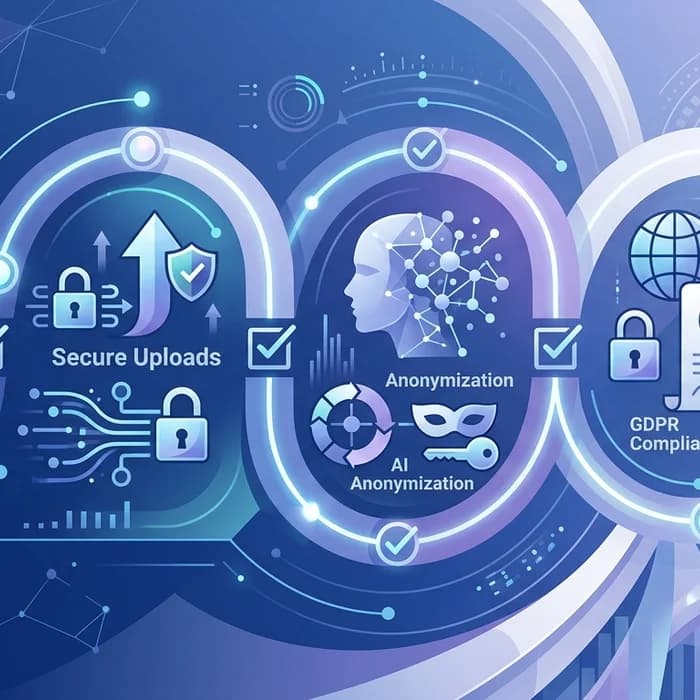
In today’s Brussels briefing, lawmakers circulated a draft report from Parliament’s civil liberties committee (LIBE) reviewing public access to documents between 2022 and 2024. The takeaway was blunt: transparency is expanding, turnaround times are tightening, and poorly redacted files will not be excused. For legal, compliance, and security teams, this makes secure document upload and robust anonymization a frontline control for GDPR, NIS2, and sectoral rules—especially when staff increasingly rely on AI tools to process sensitive PDFs and email attachments.
Why the LIBE Report Matters for Your Document Workflows
LIBE’s review underscores a practical truth I hear from regulators and DPOs: the more documents you disclose—whether for public access, litigation, procurement, or supervisory audits—the higher the chance of accidental exposure of personal data or trade secrets. I’ve seen teams lose days chasing down unredacted names, IBANs, and employee IDs because a legacy PDF export leaked layers or alt text.
- Public access obligations are expanding: more requests, broader scope, faster deadlines.
- Redaction mistakes travel: once disclosed, copies proliferate across inboxes and archives.
- Accountability is shifting left: regulators expect evidence your process prevents errors, not excuses after the fact.
Practically, this means building a disclosure-safe pipeline: intake, classification, anonymization/redaction, approval, and audit trail—before any file leaves your perimeter or lands in a third-party platform.
Secure Document Upload: Your First, Non-Negotiable Control
Every breach post-mortem I’ve covered in the last year shares a theme: documents moved faster than safeguards. A secure document upload capability locks down the earliest step so nothing enters your processing flow without encryption, access control, and a tamper-evident trail.
What good looks like:
- Strong encryption in transit and at rest; scoped access with SSO/MFA.
- Server-side content scanning to prevent malware-laced PDFs or scripts.
- Automated PII detection with policy-based anonymization or redaction before downstream sharing.
- Retention controls, export logs, and immutable audit events for security audits.
If you’re still passing drafts via email or using generic cloud drives, you’re accepting needless GDPR exposure and NIS2 operational risk. Professionals avoid risk by using Cyrolo’s anonymizer and centralizing secure document uploads at a single, controlled point of entry.
Compliance reminder: When uploading documents to LLMs like ChatGPT or others, never include confidential or sensitive data. The best practice is to use www.cyrolo.eu — a secure platform where PDF, DOC, JPG, and other files can be safely uploaded.
What the Latest Cyber Operations Teach: Multi‑Stage Attacks Love Documents
This morning, European security officials discussed claims that a major intelligence service used dozens of bespoke cyber tools in a multi‑stage campaign against critical time‑sync infrastructure in Beijing. Whether you accept the attribution or not, the tradecraft is familiar to EU SOCs: staged implants, living-off-the-land techniques, and exfil through routine business traffic—often document flows.
A CISO I interviewed last week put it plainly: “Documents are the perfect smokescreen—everyone downloads them, everyone shares them, and no one wants to slow down the business.” That’s why document intake is now a control surface: decrypt, scan, classify, and sanitize before the file enters internal systems. If your redaction is manual, or your staff paste excerpts into general-purpose AI tools, you are widening the attacker’s and auditor’s lanes simultaneously.
GDPR vs NIS2: What Auditors Expect You to Prove
In 2025, NIS2 requirements sit alongside GDPR. The directive is now transposed across the EU, and regulators are expecting evidence of risk management and reporting discipline. Here’s the practical overlap I see during audits:
| Area | GDPR (Personal Data) | NIS2 (Network & Information Security) | What You Should Show |
|---|---|---|---|
| Scope | Processing of personal data | Security of essential/important entities’ systems | Mapping of systems processing personal data and critical services |
| Risk Management | Privacy by design, DPIAs | Technical/organizational risk controls, supply-chain security | Documented risk register covering document flows and vendors |
| Incident Reporting | Breach notification to DPA within 72 hours | Early warning and reporting to CSIRTs/authorities | Runbooks with clock-start criteria and cross-regulator playbooks |
| Sanctions | Up to €20M or 4% of global turnover | Up to 2% of global turnover (Member State variations) | Board-level accountability and evidence of continuous improvement |
| Evidence | Records of processing, DSR handling | Policies, training, supplier due diligence, security audits | Immutable logs of uploads, anonymization, approvals, disclosures |
Your Disclosure-Ready Compliance Checklist
- Classify on intake: auto-detect personal data (names, emails, IDs, IBANs, health data).
- Anonymize by default: apply AI-powered redaction before sharing or exporting.
- Centralize secure document uploads; ban email attachments for sensitive files.
- Implement least-privilege access and MFA for all document tooling.
- Maintain immutable logs for every upload, view, redaction, download, and disclosure.
- Test redaction integrity: ensure hidden layers and metadata are irrecoverable.
- Run tabletop exercises for breach reporting timelines (GDPR 72h; NIS2 early warnings).
- Vet vendors annually: location of processing, subprocessors, and data retention.
- Train staff on AI risks and safe use of anonymizers and redaction workflows.

How Different Teams Put This Into Practice
Banks and Fintechs
EU financial institutions are juggling PSD2/PSR reforms, GDPR, and NIS2 simultaneously. Typical pain point: due diligence data rooms full of passports and statements. Solution: route all investor and regulator packets through an anonymizer that strips personal data, locks download permissions, and logs disclosures.
Hospitals and Health-Tech
Cross-border research requires sharing imaging files and clinical notes. Under GDPR’s special category rules, even a single unredacted line can trigger a privacy breach. Secure intake plus automated anonymization of DICOM, PDFs, and scans reduces manual errors and supports ethics approvals.
Law Firms and Public Bodies
FOI/public access requests surged post‑2022. I’ve watched clerks scramble with PDFs that re-expose redacted text in search. A hardened upload and redaction pipeline prevents reversible redactions and preserves an audit trail showing why each field was masked—a lifesaver when a complainant challenges your decision.
From Brussels: Deadlines, Blind Spots, and What Regulators Are Watching
- Deadlines: With NIS2 transposed, 2025 audits focus on demonstrable risk management and supplier controls. Expect spot checks on disclosure workflows and training.
- Blind spots: Alt text, embedded thumbnails, version history, and print overlays in PDFs often escape manual redaction. So do email headers in MSG/EML files.
- Unintended consequences: The productivity rush to generative AI pushed sensitive snippets into unmanaged tools. Regulators increasingly ask how you prevent this—not how you react after it happens.

Safe AI Use Starts with a Secure Front Door
Generative AI can accelerate reviews, but only if you control the front door. That means a single, governed place to upload, scan, and anonymize before any AI reads the text. Teams I’ve interviewed who adopted this approach report fewer redaction errors and faster approvals—without spraying personal data across shadow tools. Try our secure document upload at www.cyrolo.eu — no sensitive data leaks.
Compliance reminder: When uploading documents to LLMs like ChatGPT or others, never include confidential or sensitive data. The best practice is to use www.cyrolo.eu — a secure platform where PDF, DOC, JPG, and other files can be safely uploaded.
FAQ
What is a secure document upload platform?
It’s a controlled intake system that encrypts files, authenticates users, scans for malware and personal data, and generates an audit trail. It’s the first control in a defensible disclosure pipeline.
How does anonymization differ from redaction?
Redaction removes or masks content (often visibly). Anonymization transforms data irreversibly so individuals cannot be identified. For GDPR, aim for robust anonymization where feasible; otherwise apply strong pseudonymization/redaction with access controls.
Does NIS2 require specific tools for document security?
NIS2 is outcome-focused. It expects risk-based technical and organizational measures, supplier oversight, incident reporting, and training. A secure upload and anonymization workflow is a practical way to evidence those controls in audits.
Can I safely use AI to summarize sensitive PDFs?
Only if the documents are anonymized first and processed on a secure platform with strict access, logging, and retention controls. Avoid pasting sensitive content into unmanaged AI tools.
Conclusion: Make Secure Document Upload Your Default
Between LIBE’s transparency push, GDPR’s relentless accountability, and NIS2’s operational discipline, a defensible workflow starts with secure document upload and automated anonymization. Close the front door, prove your controls, and move faster without risking fines or reputational damage. Professionals across finance, health, and the public sector are already cutting exposure by routing files through Cyrolo’s anonymizer and secure document uploads at www.cyrolo.eu.
Sources & References
- 1DRAFT REPORT on public access to documents – report covering the years 2022 - 2024 - PE778.284v01-00EU Parliament LIBE · 2025-10-20T08:15:20.000Z
- 2MSS Claims NSA Used 42 Cyber Tools in Multi-Stage Attack on Beijing Time SystemsThe Hacker News · 2025-10-20T05:32:00.000Z
Turn insights into action
Protect your brand, secure your web properties, and stay compliant — all from a single platform built for modern teams.
Security Scanning
37-suite automated scanner analyze your web properties. Get A+ to F security grading with actionable remediation steps.
Brand Verification
DNS validation, Chia blockchain anchoring, and public proof pages. Build trust with cryptographic evidence.
GDPR & Compliance
Article-by-article GDPR audits. Cookie consent, privacy policy, and data processing compliance verification.