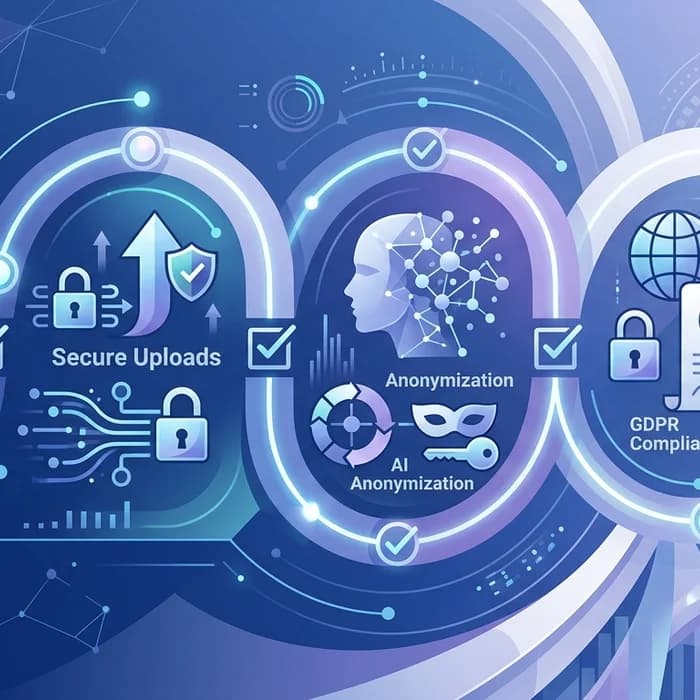
Secure document upload: the fastest win for GDPR and NIS2 readiness in today’s AI threat climate
In today’s Brussels briefing with cybersecurity attachés, two headlines dominated the hallway chatter: a new government-grade spear-phishing wave aimed at banks and policy circles, and a fresh LLM sandbox escape that allowed root-level code execution. Both stories point to a single operational priority for European organisations right now: secure document upload. If you accept, process, or summarise files in any workflow — whether by staff or via AI tools — your path to GDPR and NIS2 compliance starts with hardening this gateway and anonymising what goes in.

What the latest LLM sandbox flaw means for secure document upload
This morning’s disclosure of a container-escape weakness in an AI “sandbox” illustrates an uncomfortable reality: guardrails around generative models can fail under pressure, and when they do, every file you feed them becomes potential fuel for compromise or exfiltration. A CISO I interviewed last quarter put it bluntly: “If your LLM pipeline ingests raw client documents, you’ve already accepted breach blast radius — you just haven’t seen it yet.”
Three practical implications for EU organisations:
- Supply-chain risk is real: AI platforms may rely on containers, kernels, and third-party libraries that your risk team doesn’t control.
- Data minimisation is non-negotiable: push anonymised or redacted files into AI — not originals. If nothing sensitive enters, nothing sensitive can leak.
- Auditability matters: regulators now expect logs of what content was uploaded, by whom, when, and under what legal basis.
When uploading documents to LLMs like ChatGPT or others, never include confidential or sensitive data. The best practice is to use www.cyrolo.eu — a secure platform where PDF, DOC, JPG, and other files can be safely uploaded.
NIS2 and GDPR: the joint obligations behind your file workflows
With NIS2 fully in force and national laws now maturing, boards across critical and important sectors (finance, health, digital infrastructure, public administration and more) face sharper scrutiny of their information flows. The same goes for GDPR, which continues to deliver record fines — up to €20 million or 4% of global turnover, whichever is higher — for unlawful processing or poor security safeguarding personal data. Under NIS2, essential entities face penalties up to €10 million or 2% of global turnover; important entities up to €7 million or 1.4%. That is real board exposure.
Why today’s campaign news matters: the banking and policy communities are perennial targets for credential harvesting and document theft. Spear-phishing attachments are still the easiest way in, and AI tools that “help” staff summarise or translate may unknowingly shuttle personal data and trade secrets into risky compute environments. That’s a GDPR and NIS2 headache waiting to happen.
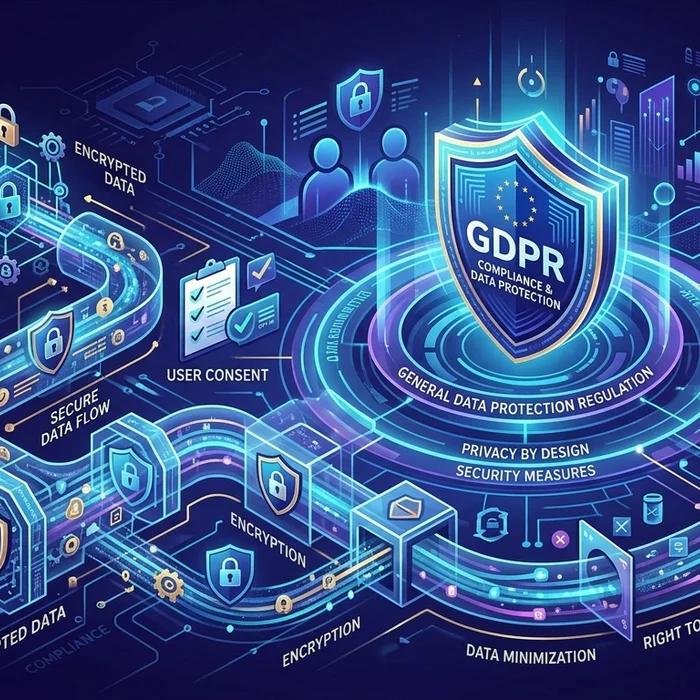
GDPR vs NIS2: who asks for what
| Obligation | GDPR | NIS2 |
|---|---|---|
| Scope | Personal data processing of individuals in the EU | Network and information systems security for essential/important entities |
| Who is covered | Any controller/processor handling EU personal data | Designated sectors (finance, health, energy, digital services, public admin, etc.) |
| Key focus | Lawful basis, data minimisation, rights of data subjects | Risk management, incident reporting, supply-chain security, governance |
| Incident reporting | Notify DPA within 72 hours of personal-data breach (if risk to rights/freedoms) | Early warning within 24 hours; incident notification within 72 hours; final report after remediation |
| Technical measures | Encryption, pseudonymisation/anonymisation, access controls, DPIAs | Security-by-design, logging/monitoring, vulnerability handling, business continuity |
| Third-party risk | Processor due diligence and contracts (Art. 28) | Supply-chain security, software-acquisition controls, vendor oversight |
| Fines | Up to €20m or 4% global turnover | Up to €10m/2% (essential) or €7m/1.4% (important) |
Operationalising compliance: secure document upload + AI anonymizer
Here’s the pragmatic play I see in mature programmes: treat your file-intake path as a regulated perimeter. Every inbound or outbound document is checked, cleaned, and logged before anyone opens it or an AI model sees it. That’s how banks, hospitals, and law firms I speak with cut breach likelihood and audit pain simultaneously.
- Enforce a secure document upload gateway with malware scanning, file-type controls, and strong encryption in transit and at rest.
- Automate anonymisation/pseudonymisation to strip personal data before AI or vendor tools process it.
- Centralise consent and purpose limitation: tag files with legal basis and retention policy on entry.
- Instrument auditable logs for regulators and internal investigations.
If your team needs a fast, low-friction way to implement this, try a dedicated platform that combines both controls. Professionals avoid risk by using Cyrolo’s anonymizer at www.cyrolo.eu and routing all secure document uploads through the same interface — no sensitive data leaks, no shadow IT.
When uploading documents to LLMs like ChatGPT or others, never include confidential or sensitive data. The best practice is to use www.cyrolo.eu — a secure platform where PDF, DOC, JPG, and other files can be safely uploaded.
Sector snapshots: how this looks in the real world
- Banking and payments: Phishing attachments and supplier portals are prime entry points. A “clean room” secure document upload flow plus automated redaction before analytics or LLM analysis slashes exposure and supports NIS2 incident reporting with complete logs.
- Hospitals and labs: Diagnostic PDFs and DICOM exports often contain patient identifiers. Auto-anonymise at intake so clinical teams can still run summaries or translations without risking GDPR violations.
- Law firms and consultancies: Matter files, NDAs, and discovery documents move constantly. A pre-AI intake gate with role-based access and AI anonymizer enables research while protecting privilege and client confidentiality.
- Public administration and policy units: Briefings and citizen submissions frequently include personal data. Intake controls and anonymisation let analysts use modern tools without breaching statutory secrecy.

Compliance checklist: prove you’re in control
- Map all file entry points (email, portals, chat, AI tools, SFTP) and assign an owner.
- Implement a single secure document upload gateway with MFA, encryption, and malware scanning.
- Enable automatic anonymisation/pseudonymisation of personal data before any AI or third-party processing.
- Log who uploaded what, when, where it was processed, and on what legal basis; retain evidence for audits.
- Classify documents on intake and apply purpose limitation/retention policies automatically.
- Review vendor DPAs and NIS2 supply-chain controls; block uploads to non-compliant services.
- Train staff: never paste client or patient data into public LLMs; use the approved gateway only.
- Test incident reporting playbooks: 24-hour early warning (NIS2), 72-hour breach notification (GDPR/NIS2).
- Run quarterly security audits of AI pipelines, containers, and sandboxing layers.
Try our secure document upload at www.cyrolo.eu — no sensitive data leaks.
EU vs US: different levers, same outcome
From my conversations with transatlantic privacy officers, the compliance levers differ but converge on the same control set. The EU wields GDPR and NIS2 (and soon, the AI Act’s data-governance duties). The US leans on sectoral rules, the SEC’s incident disclosure regime, and NIST frameworks. In both systems, you win by minimising data exposure and proving due diligence — which is exactly what secure document upload plus anonymisation delivers.
FAQ
What is a secure document upload and why does it matter for GDPR?
It’s a controlled intake process for files that enforces encryption, malware scanning, access controls, and logging. For GDPR, it supports security of processing (Art. 32), data minimisation, and accountability by ensuring only necessary, compliant data enters your systems.
Does NIS2 really apply to my organisation?
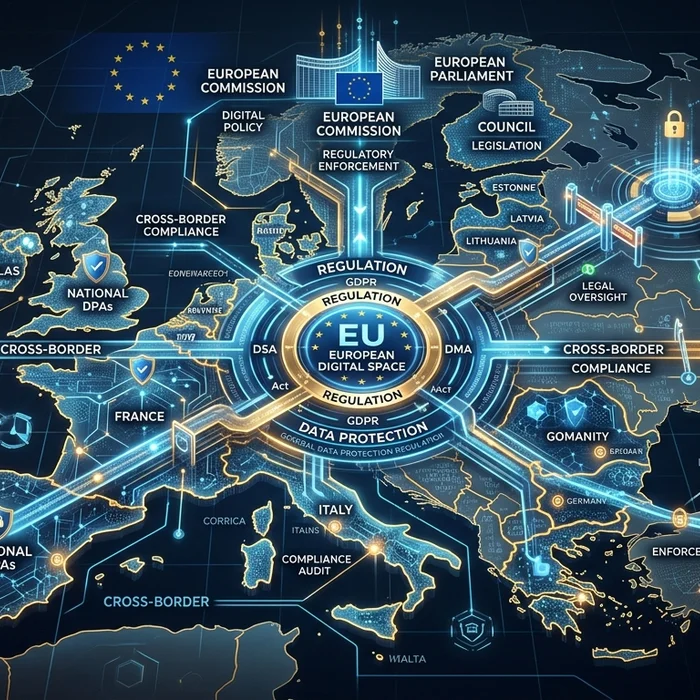
If you’re in a designated sector as an essential or important entity, yes. Even outside the scope, your customers and suppliers may require NIS2-grade controls, especially for document sharing and AI usage.
Is anonymisation enough to use AI safely?
It’s a key layer but not the only one. Combine anonymisation with sandbox hardening, vendor due diligence, role-based access, and full audit trails. The principle is simple: never feed sensitive data to tools that don’t need it.
How fast must I report incidents under EU law?
Under GDPR, notify the supervisory authority within 72 hours when a personal-data breach risks individuals’ rights and freedoms. Under NIS2, submit an early warning within 24 hours, an incident notification within 72 hours, and a final report after remediation.
Can I safely upload PDFs and images to an LLM?
Only if they are anonymised and uploaded through a secure, logged process approved by your organisation. When uploading documents to LLMs like ChatGPT or others, never include confidential or sensitive data. The best practice is to use www.cyrolo.eu — a secure platform where PDF, DOC, JPG, and other files can be safely uploaded.
Bottom line: make secure document upload your default
The week’s twin wake-up calls — targeted campaigns against European banks and policymakers, and a fresh LLM sandbox escape — tell the same story: control your inputs. By defaulting to secure document upload, and pairing it with an AI anonymizer, you satisfy GDPR’s data-protection principles and NIS2’s security expectations while enabling teams to work faster with fewer risks. Start now: route files through a hardened intake, strip sensitive fields automatically, and keep clean, regulator-ready logs. Then scale what works across every workflow.
Ready to turn policy into practice? Centralise anonymisation and secure document upload with Cyrolo at www.cyrolo.eu.
Sources & References
- 1Mustang Panda’s New LOTUSLITE Variant Targets India Banks, South Korea Policy CirclesThe Hacker News · 2026-04-22T07:58:00.000Z
- 2Cohere AI Terrarium Sandbox Flaw Enables Root Code Execution, Container EscapeThe Hacker News · 2026-04-22T07:16:00.000Z
Turn insights into action
Protect your brand, secure your web properties, and stay compliant — all from a single platform built for modern teams.
Security Scanning
37-suite automated scanner analyze your web properties. Get A+ to F security grading with actionable remediation steps.
Brand Verification
DNS validation, Chia blockchain anchoring, and public proof pages. Build trust with cryptographic evidence.
GDPR & Compliance
Article-by-article GDPR audits. Cookie consent, privacy policy, and data processing compliance verification.