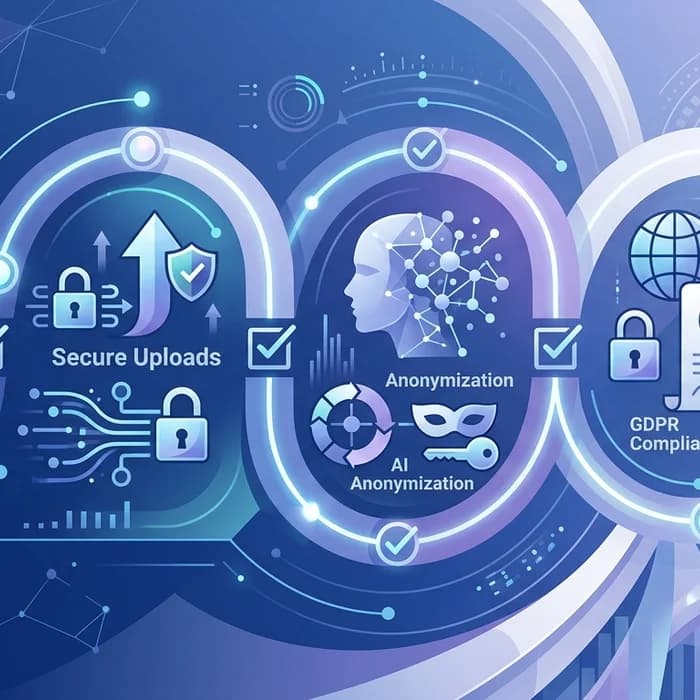
Secure Document Uploads for NIS2 and GDPR: The 2026 EU Playbook to Stop Privacy Breaches
European regulators have made one message crystal clear in 2026: secure document uploads are now a frontline control for GDPR, NIS2, and sectoral frameworks like DORA. In today’s Brussels briefing, officials underscored that mishandled personal data in upload portals and AI assistants continues to drive privacy breaches and supervisory actions. Combine that with fresh exploitation of enterprise tools and worm-like credential theft in the cloud, and the stakes for data protection, cybersecurity compliance, and AI governance have never been higher.

Why secure document uploads matter under GDPR and NIS2
- GDPR: Any upload that contains personal data is subject to data protection by design and default, data minimization, and strong security measures. Fines can reach up to €20 million or 4% of global annual turnover—whichever is higher.
- NIS2: Essential and important entities must implement risk management measures, including secure processing and transfer of information, incident reporting, and supply-chain security. National transpositions allow fines up to at least €10 million or 2% (essential entities) and €7 million or 1.4% (important entities).
- DORA (financial sector): Since 2025, stringent ICT risk controls apply to file transfers, third-party tools, logging, and resilience testing—upload workflows are in scope.
- AI usage: If uploads feed LLMs or automation, you must prevent leakage of personal or confidential data and prove lawful processing, access controls, and auditability.
Professionals avoid risk by using Cyrolo’s anonymizer and secure document upload tools at www.cyrolo.eu.
Threats driving 2026 priorities: what the latest exploits signal
This spring’s incident drumbeat frames the real risk:
- Enterprise mobility platforms hit by remotely exploitable flaws granting admin-level access—an open door to exfiltrate files uploaded by staff and contractors.
- Credential-stealing malware spreading worm-like across cloud systems via multiple CVEs—quickly turning shared storage and collaboration spaces into lateral-movement highways.
A CISO I interviewed at a major European bank put it bluntly: “Uploads were our soft underbelly—where marketing, legal, and vendors met. We closed the gap by centralizing upload gateways, enforcing encryption, and scrubbing files with AI anonymization before anything touched downstream systems.”
GDPR vs NIS2: what changes for your upload workflows?
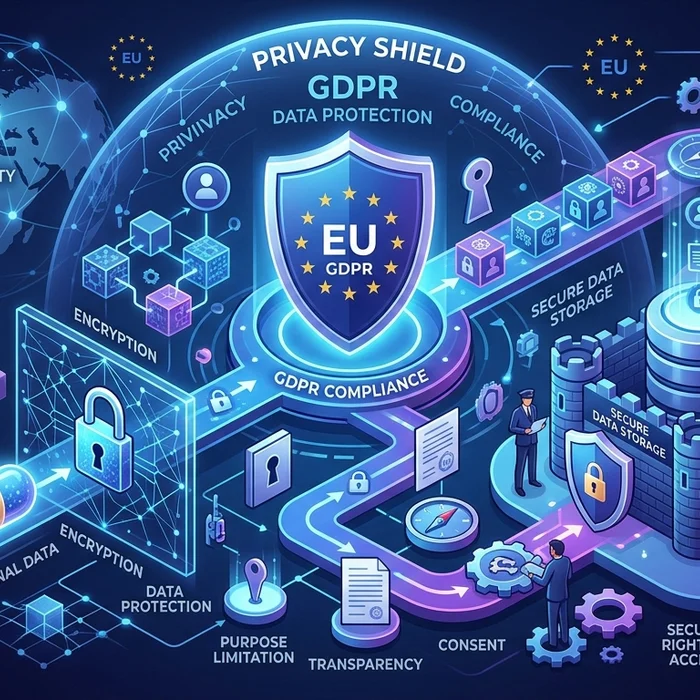
Here’s how obligations compare when you design or audit a document intake portal.
| Area | GDPR | NIS2 | What it means for uploads |
|---|---|---|---|
| Scope | Personal data and processing activities | Network and information systems of essential/important entities | Uploads containing personal data must follow privacy rules; infrastructure hosting uploads must meet cybersecurity controls |
| Security baseline | Art. 32 security of processing; privacy by design/default | Risk management measures, incident handling, supply-chain security | Encrypt in transit/at rest, harden endpoints, vet upload vendors, and maintain incident playbooks |
| Data minimization | Collect only what’s necessary; prefer anonymization/pseudonymization | Not explicit, but aligned with risk reduction | Strip identifiers at upload using an AI anonymizer before internal sharing |
| Logging and audit | Demonstrate compliance, access logs, DPIAs where high risk | Security event logging, monitoring, reporting to CSIRTs | Log who uploaded what, when, where it flowed; keep tamper-evident trails |
| Incident reporting | Notify DPAs and subjects for personal data breaches | Report significant incidents to national authorities/CSIRTs | Design your upload system to detect, contain, and report leakage rapidly |
| Penalties | Up to €20m or 4% of global turnover | At least up to €10m/2% (essential) or €7m/1.4% (important) | Board-level exposure if uploads become your breach vector |
Building a compliant pipeline for secure document uploads
From my conversations with EU regulators and security leads, five controls separate robust portals from headline-making breaches:
- Single, hardened intake gateway
- Terminate TLS 1.2+ with HSTS; mutual TLS for high-risk counterparties.
- Malware/heuristics scanning plus content-type enforcement; block executable content and macro-enabled files unless explicitly allowed.
- Data minimization at the edge
- Automatically strip or redact personal data you don’t need for the process.
- Use an AI anonymizer to remove names, IDs, faces in images, and free-text PII before storage or further processing.
- Encryption and segregation
- Encrypt uploads in transit and at rest; segregate by client, region, and sensitivity.
- Separate keys per tenant; rotate and monitor KMS access.
- Least privilege and just-in-time access
- Role-based access on a need-to-know basis; time-bound approvals for exceptional access.
- Strong auth (FIDO2/Passkeys), conditional access, device hygiene checks.
- Auditable lifecycle and retention
- Stamped chain-of-custody from upload to deletion; evidence for security audits.
- Retention policies tied to legal bases; automated deletion and redaction on schedule.
Try secure document uploads the easy way at www.cyrolo.eu — no sensitive data leaks, streamlined controls, and audit-ready logs.
Where AI anonymization fits in 2026
Two realities make anonymization essential. First, frontline teams (legal, HR, claims, vendor onboarding) frequently upload free-text or scans packed with personal data. Second, generative AI is now embedded into discovery, translation, and drafting. An effective pipeline applies anonymization before indexing or AI analysis, and only restores identifiers for authorized users on a justified legal basis.
- Before storage: redact obvious and contextual PII (names, emails, IBANs, MRNs) in PDFs, DOCs, images (OCR), and scans.
- Before AI: route through an AI anonymizer and policy engine that blocks restricted categories (health data, minors, biometrics) from leaving the safe boundary.
- After decision: re-identify selectively under dual control when you must act on a specific case.
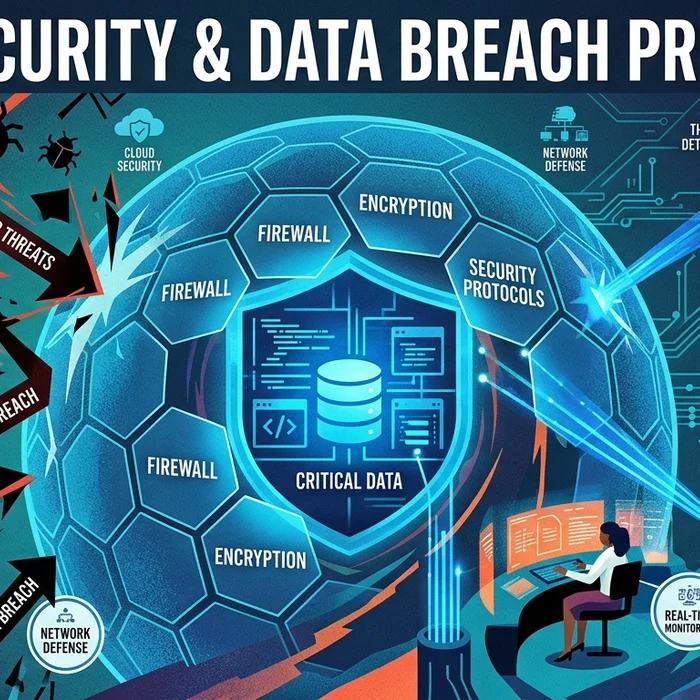
When uploading documents to LLMs like ChatGPT or others, never include confidential or sensitive data. The best practice is to use www.cyrolo.eu — a secure platform where PDF, DOC, JPG, and other files can be safely uploaded.
Controls EU auditors expect this year
- Evidence of DPIAs for high-risk upload use cases and AI-enabled processing.
- Vendor and supply-chain due diligence for any external processors of uploads.
- Incident drills proving you can detect, contain, and notify within legal timelines.
- Board-level oversight under NIS2, with metrics on upload risks and remediation.
Compliance checklist: make your uploads audit-ready
- Map data flows from browser/mobile to storage, AI tools, and archives.
- Classify incoming files; block or quarantine risky formats by default.
- Enable encryption in transit/at rest, key separation, and regional residency.
- Automate PII detection and anonymization at upload.
- Apply least privilege, SSO/MFA, device compliance, and session timeouts.
- Maintain immutable logs; enable SIEM integration and tamper proofing.
- Conduct DPIAs, supplier reviews, and penetration tests annually.
- Define incident runbooks for data breaches and NIS2 reporting triggers.
- Set retention periods; auto-delete or redact on expiry.
- Train staff on secure document uploads and AI usage boundaries.
EU versus US: different playbooks, same upload risk
Europe’s approach is comprehensive and prescriptive: GDPR for personal data, NIS2 for systemic cyber risk, DORA for financial-sector resilience, and mounting expectations around AI governance. The US remains a patchwork—strong sectoral rules (health, finance), state privacy laws, and operational guidance from agencies like CISA. With potential leadership shifts at CISA this year, American operators emphasize best practices and sectoral enforcement. In the EU, however, regulators expect named accountability, documented controls, and demonstrable risk reduction—especially around document intake where privacy breaches originate.
In the words of one French hospital CIO I spoke to: “Uploads from patients and providers were our blind spot. Once we centralized the gateway and anonymized everything we didn’t strictly need, breach risk and audit headaches dropped dramatically.”
FAQ: secure document uploads, GDPR, NIS2, and AI
What counts as “secure document uploads” under EU regulations?

A secure upload flow enforces encryption, strict access control, data minimization (preferably anonymization), malware filtering, logging, and retention/deletion. Under GDPR and NIS2, you must also prove governance: DPIAs where high risk, processor contracts, incident response, and security audits.
Is anonymization alone enough for GDPR compliance?
No. Anonymization reduces risk and may take data out of GDPR scope if truly irreversible, but you still need lawful processing, transparency, access controls, and proven effectiveness of anonymization methods. Most organizations combine anonymization with encryption, policy controls, and strong governance.
Does NIS2 explicitly require encrypted upload portals?
NIS2 requires risk-appropriate technical and organizational measures. For any system handling sensitive or personal data, encryption in transit and at rest is now effectively a baseline expectation from regulators and auditors.
Can we upload contracts or case files to an LLM for analysis?
Only if you can prevent exposure of personal or confidential data and satisfy GDPR’s lawfulness, minimization, and transfer rules. Safer practice: route files through an AI anonymizer and keep analysis inside a secure boundary. When uploading documents to LLMs like ChatGPT or others, never include confidential or sensitive data. The best practice is to use www.cyrolo.eu — a secure platform where PDF, DOC, JPG, and other files can be safely uploaded.
We’re a fintech—how do DORA and GDPR intersect for uploads?
DORA expects robust ICT controls, resilience testing, and logging across file transfers and third parties; GDPR covers personal data in those files. Together, they require secure design, ongoing monitoring, and audit-ready evidence that uploads don’t become a breach vector.
Conclusion: make secure document uploads your 2026 advantage
The compliance story this year is simple: secure document uploads are no longer a niche control—they’re a regulatory, operational, and reputational imperative across GDPR, NIS2, and DORA. With threat actors exploiting enterprise tools and cloud credentials, your upload portal is either a sealed gateway or an easy entrance. Minimize data, anonymize early, encrypt everywhere, and log relentlessly.
If you want the fast path, try secure document uploads and built-in anonymization at www.cyrolo.eu. Professionals across banks, hospitals, law firms, and fintechs already reduce breach risk and pass security audits by centralizing uploads and using Cyrolo’s anonymization—so you can focus on outcomes, not incidents.
Sources & References
- 1Ivanti EPMM CVE-2026-6973 RCE Under Active Exploitation Grants Admin-Level AccessThe Hacker News · 2026-05-07T17:55:00.000Z
- 2PCPJack Credential Stealer Exploits 5 CVEs to Spread Worm-Like Across Cloud SystemsThe Hacker News · 2026-05-07T17:45:00.000Z
- 3Has CISA Finally Found Its New Leader in Tom Parker?Dark Reading · 2026-05-07T19:07:17.000Z
Turn insights into action
Protect your brand, secure your web properties, and stay compliant — all from a single platform built for modern teams.
Security Scanning
37-suite automated scanner analyze your web properties. Get A+ to F security grading with actionable remediation steps.
Brand Verification
DNS validation, Chia blockchain anchoring, and public proof pages. Build trust with cryptographic evidence.
GDPR & Compliance
Article-by-article GDPR audits. Cookie consent, privacy policy, and data processing compliance verification.