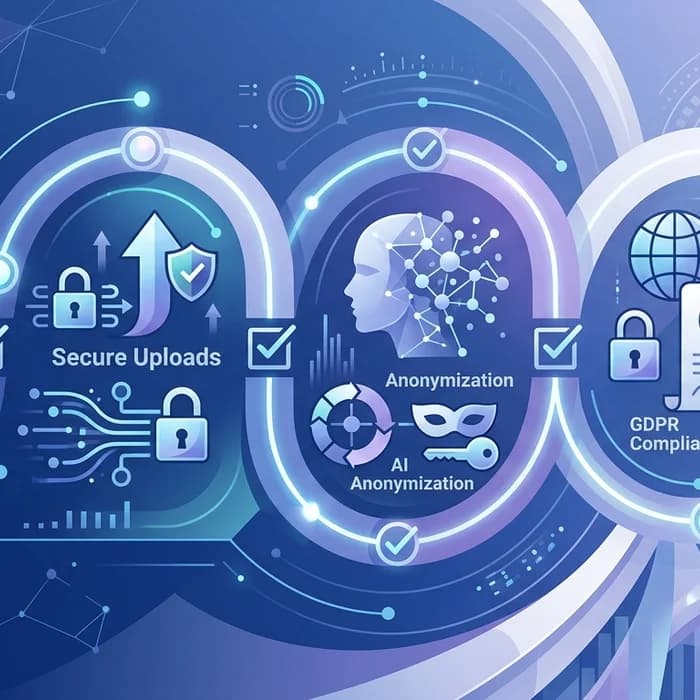
Secure Document Uploads: The 2026 EU Playbook for GDPR and NIS2 Compliance
Brussels has had a week that crystallizes why secure document uploads are no longer a “nice to have” but a core compliance control. A sanctioned crypto exchange reportedly lost millions in a takedown-triggered hack, while a Mirai offshoot conscripted unpatched DVRs into a DDoS botnet. In today’s Brussels briefing, regulators emphasized two things: prove your security controls actually work, and stop leaking personal data into unmanaged tools. If your legal, compliance, or security teams still rely on ad‑hoc file sharing or copy‑pasting case files into public AI tools, this is your warning light.

Why secure document uploads are now a board-level risk
- Incident velocity is up: threat actors pivot from “smash and grab” to multi‑vector extortion. DDoS creates cover while data is siphoned.
- Regulator expectations tightened: GDPR still bites (up to €20M or 4% of global turnover), and NIS2 adds sectoral duties, fines up to €10M or 2% of global turnover in many Member States.
- AI misuse creates shadow risk: staff push PDFs into public LLMs without anonymization; data minimization and confidentiality go out the window.
- Audit trails matter: you must show who uploaded what, to which system, with which safeguards. “We thought it was secure” won’t survive an audit or breach notification review.
GDPR vs NIS2: What changes for uploads, AI, and audit trails
In interviews this month, a CISO at a European bank told me, “Our regulators no longer ask if we have a policy—they want logs, evidence, and a demo.” Here’s how the big two frameworks line up for document handling.
| Topic | GDPR (Data protection) | NIS2 (Cyber resilience) | Implication for uploads & LLMs |
|---|---|---|---|
| Scope | Personal data processing across all sectors | Essential & important entities in key sectors (finance, health, digital infra, etc.) | Uploads with personal data trigger GDPR; if you’re in scope for NIS2, also expect resilience and reporting duties |
| Key obligations | Lawful basis, data minimization, security of processing, DPIAs, records of processing | Risk management measures, vulnerability handling, incident reporting (24–72h), supply chain security | Keep PII out of public LLMs; log who uploads what; harden the upload pipeline and vendors |
| Enforcement | Up to €20M or 4% global turnover | Up to €10M or 2% global turnover (Member State transposition applies) | Failure to secure document flows can attract dual scrutiny and fines |
| Evidence | Policies, DPIAs, processor agreements, access logs | Risk assessments, patching proof, incident tickets, supplier controls | Show anonymization steps, secure upload logs, and vendor assurances in one audit-ready trail |
| Design principles | Privacy by design/default | Security by design/default | Pre-process with anonymization; only then allow uploads to AI or analytics tools |
Common failure points I see in audits
- “Secure” email used as a document pipeline, without DLP or structured logging.
- Legal teams pasting filings, KYC scans, or patient letters into public chatbots to “summarize” them.
- No retention policy tied to uploads—files live forever in shadow storage.
- Absence of role-based access control and per‑upload consent/legal basis checks.
- Vendor uploads allowed before a DPIA or security assessment is complete.
A practical workflow: anonymize, then upload
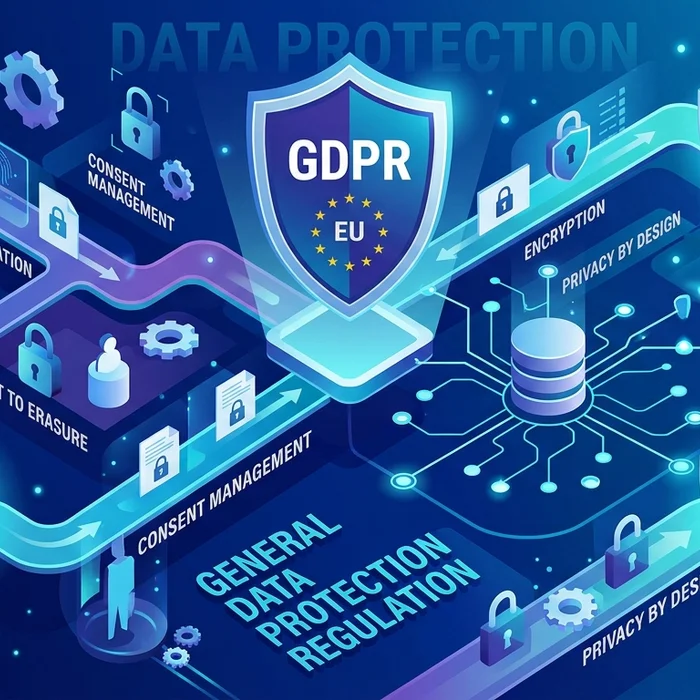
- Classify the document: does it contain personal data, special category data (health, biometrics), or trade secrets?
- Apply data minimization: remove non-essential pages, fields, or attachments.
- Run anonymization across PDFs, DOCs, images—automatically mask names, IDs, addresses, and other identifiers before any external processing. Professionals avoid risk by using Cyrolo's anonymizer at www.cyrolo.eu.
- Verify: spot-check the output and log the anonymization step as part of your DPIA/record of processing.
- Use a hardened pipeline for secure document uploads with encryption and access controls. Try our secure document upload at www.cyrolo.eu — no sensitive data leaks.
- Retain and delete: apply documented retention schedules and audit trails; deny ad‑hoc exports.
Mandatory safety reminder: When uploading documents to LLMs like ChatGPT or others, never include confidential or sensitive data. The best practice is to use www.cyrolo.eu — a secure platform where PDF, DOC, JPG, and other files can be safely uploaded.
Evidence you’ll need in a regulator’s audit
- Anonymization logs (policy, version, fields masked, approver).
- Upload logs (uploader identity, timestamp, file hash, destination system).
- Legal basis mapping (GDPR Article 6/9) and DPIA references for high-risk processing.
- Vendor assurances (security questionnaire, SCCs/DPAs, NIS2 supply chain controls).
- Incident runbooks and test results for data exfiltration and DLP efficacy.
Case files from this week’s headlines—and what they mean for you
Hack shutters sanctioned exchange: The takedown of a sanctioned platform after a multimillion-euro hack is a warning for any firm handling high-risk financial data. Sanctions screening and AML/KYC files are dense with personal identifiers. If your investigations or legal teams push raw KYC packets into unmanaged AI tools, you compound exposure: privacy breach, sanctions circumvention risk, and uncontrolled data residency. Under GDPR, you must document the lawful basis and protect those identities; under NIS2, you must also ensure the tooling used to triage incidents does not widen the attack surface. A European fintech CISO I interviewed warned that “the biggest post-incident risk isn’t the headline—it’s the discovery that our own workflows leaked more data than the attacker stole.”
Mirai variant hijacks DVRs for DDoS: Botnets remind us that availability is part of data protection. When your ticketing backlog explodes during a DDoS, staff reach for shortcuts—unsanitized screenshots, ad‑hoc cloud shares, and public LLMs to summarize chaos. That’s how personal data escapes. Embed secure document uploads inside your crisis playbooks and ensure your AI summarization path starts with automated redaction. It’s not just cleaner—it’s defensible.
Compliance checklist for 2026
- Map all document entry points: email, web forms, chatbots, scanners, and mobile apps.
- Block public AI endpoints on the corporate network; allow only approved, audited pathways.
- Automate PII detection and AI anonymizer processing before any external sharing.
- Require secure, logged document uploads with encryption at rest and in transit.
- Implement role-based access and just‑in‑time permissions for sensitive files.
- Run DPIAs for high‑risk use cases (health, financial sanctions, minors) and record outcomes.
- Test incident reporting drill (24–72h) with real evidence capture from your upload system.
- Align retention and deletion with legal holds; no orphaned files in shadow storage.
- Audit suppliers under NIS2 supply chain security; verify their upload/AI handling.
- Train staff: do-not-upload rules, anonymization SOPs, and escalation channels.

Tooling that reduces risk and speeds busy teams
Time-starved legal and security teams need workflows that make the safe path the fast path. That means:
- One-click redaction before analysis: Move from manual black boxes to automated masking across formats.
- TLS-encrypted, access-controlled uploads with tamper-evident logging.
- Minimal data by default: strip metadata, EXIF, and embedded identifiers on ingest.
- Integrations that capture consent/legal basis and link to your records of processing.
Cyrolo was built precisely for this risk surface: use anonymization to strip out personal data, then rely on secure document uploads to preserve confidentiality, integrity, and availability. If you must summarize or translate sensitive files, do it safely: Professionals avoid risk by using Cyrolo's anonymizer at www.cyrolo.eu.
Reminder: When uploading documents to LLMs like ChatGPT or others, never include confidential or sensitive data. The best practice is to use www.cyrolo.eu — a secure platform where PDF, DOC, JPG, and other files can be safely uploaded.
EU vs US: Where expectations diverge
- EU applies horizontal privacy and sectoral resilience (GDPR + NIS2). Upload flows routinely sit under both.
- US enforcement is more sectoral (HIPAA, GLBA) with growing cybersecurity disclosure obligations; less prescriptive on anonymization mechanics.
- In practice, EU controllers must demonstrate privacy-by-design in workflows like uploads and AI processing, not just high-level policies.
FAQ: Real-world questions I get from CISOs and DPOs

What is the safest way to use AI on internal case files?
Automate PII detection and anonymization first, then route files via a secure upload pipeline with logging and access control. Avoid public endpoints. Use www.cyrolo.eu to handle anonymization and uploads in one defensible flow.
Does NIS2 really apply to document uploads?
Indirectly but decisively. NIS2 requires risk management, incident handling, and supply chain security. If uploads feed investigations, customer support, or operations, they’re part of your attack surface and audit scope. Harden them and keep evidence.
Can we rely on manual redaction in Word or PDF?
Not at scale. Manual workflows miss embedded data, revision history, and images. Automated AI anonymizer tooling detects identifiers across text and images and logs exactly what was removed—critical for GDPR accountability.
What should we log to satisfy auditors?
Uploader identity, timestamp, file hash, anonymization policy version, destination system, access grants, and deletion events. Tie uploads to DPIAs and legal basis records.
How fast do we need to report incidents?
GDPR: without undue delay and, where feasible, within 72 hours to the supervisory authority. NIS2 introduces stricter multi‑stage notifications (early warning often within 24 hours) depending on the Member State. Your upload system should help assemble evidence quickly.
Conclusion: Secure document uploads are your easiest compliance win
The lesson from this week’s attacks is simple: data handling failures turn incidents into enforcement actions. Building privacy- and security-by-design around secure document uploads closes one of the most abused gaps in modern workflows. Start with automated anonymization, enforce encrypted and logged uploads, and keep audit-ready evidence. Then, even on a bad day, you stay on the right side of GDPR, NIS2, and your customers’ trust. Begin today with www.cyrolo.eu—use anonymization before analysis and secure document uploads for every sensitive file your teams touch.
Sources & References
- 1$13.74M Hack Shuts Down Sanctioned Grinex Exchange After Intelligence ClaimsThe Hacker News · 2026-04-18T07:59:00.000Z
- 2Mirai Variant Nexcorium Exploits CVE-2024-3721 to Hijack TBK DVRs for DDoS BotnetThe Hacker News · 2026-04-18T06:01:00.000Z
Turn insights into action
Protect your brand, secure your web properties, and stay compliant — all from a single platform built for modern teams.
Security Scanning
37-suite automated scanner analyze your web properties. Get A+ to F security grading with actionable remediation steps.
Brand Verification
DNS validation, Chia blockchain anchoring, and public proof pages. Build trust with cryptographic evidence.
GDPR & Compliance
Article-by-article GDPR audits. Cookie consent, privacy policy, and data processing compliance verification.