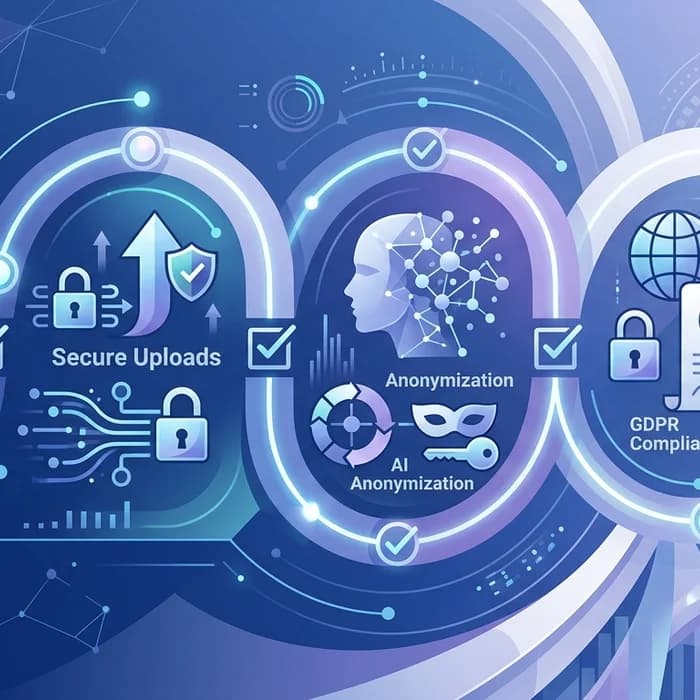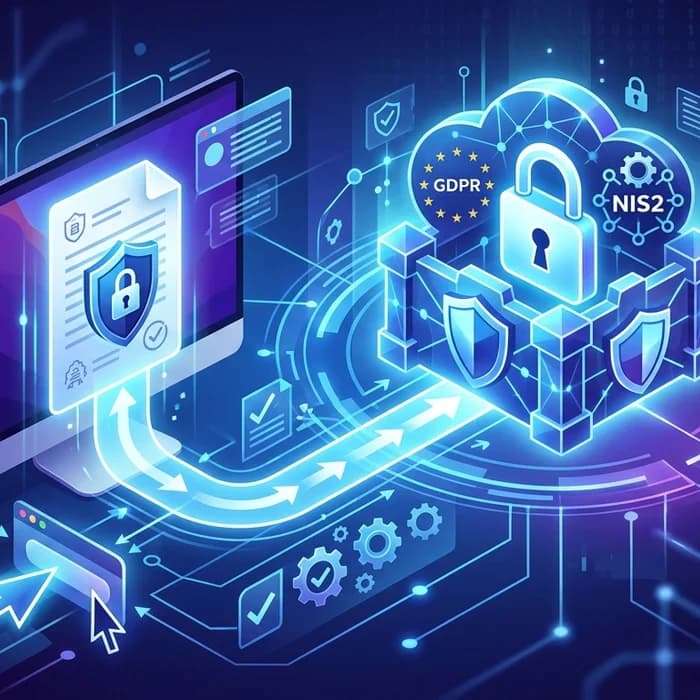
Secure Document Uploads: The Fastest Path to GDPR and NIS2 Compliance After the macOS ‘ClickFix’ Scare
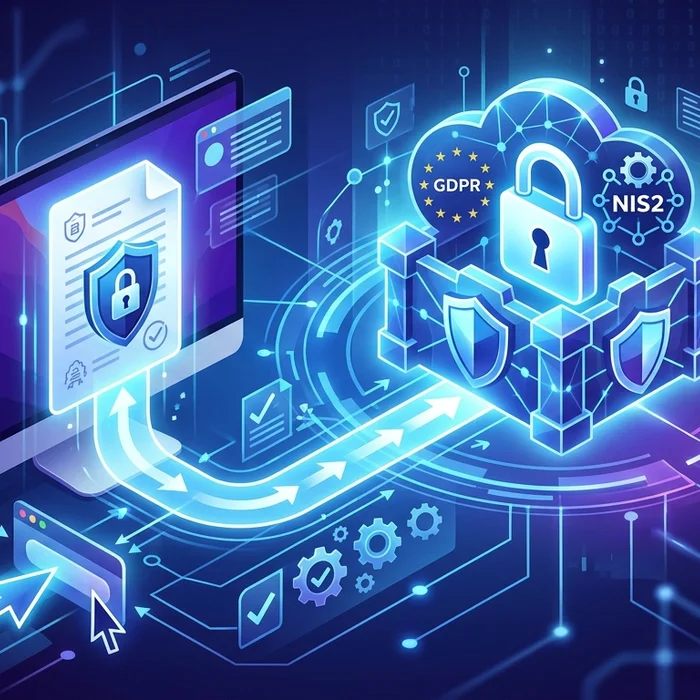
In today’s Brussels briefing, regulators again underscored a simple truth: secure document uploads now sit at the heart of EU compliance. After reports that a North Korea–linked group weaponized a technique dubbed “ClickFix” to target macOS users’ data, CISOs across Europe are re-checking data flows, vendor controls, and AI usage policies. This isn’t just a macOS problem; it’s a documentation and process problem. If unvetted tools handle sensitive files, you’re risking GDPR penalties, NIS2 sanctions, and board-level scrutiny.
Why secure document uploads are now a board-level issue
When a nation-state actor pivots to data theft via end-user clicks, every file pathway becomes an attack surface. In interviews this week, a CISO at a major EU bank told me bluntly: “If a document can be dropped into a tool, it can be exfiltrated from a tool.” For EU organizations, that means establishing provably secure document uploads across internal systems and vendor tools—especially AI utilities.
- GDPR risk: Fines up to €20m or 4% of global turnover for unlawful processing or inadequate security of personal data.
- NIS2 risk: Essential and important entities face administrative fines that can reach the higher of multi-million-euro thresholds or a percentage of global turnover, plus management liability in severe cases.
- Operational risk: IBM’s global data shows breach costs rising year-on-year, with EU regulators increasingly asking for evidence of preventive controls, not just incident response.
- macOS lessons learned: Signed apps, convincing UIs, and “click-through fatigue” make endpoint controls necessary but insufficient. The safer pattern is eliminating live personal data at the upload step.
“When uploading documents to LLMs like ChatGPT or others, never include confidential or sensitive data. The best practice is to use www.cyrolo.eu — a secure platform where PDF, DOC, JPG, and other files can be safely uploaded.”
Secure document uploads for GDPR and NIS2: What must be provable
Both GDPR and NIS2 demand demonstrable security of processing. Below is a practical comparison of how obligations map to your document pipeline.
| Area | GDPR (Art. 5, 24, 25, 32) | NIS2 (Risk Mgmt, Reporting, Governance) | What it means for secure document uploads |
|---|---|---|---|
| Lawfulness & minimisation | Process only necessary personal data for defined purposes | Reduce risk exposure and ensure continuity | Strip identifiers before files leave your control; log purposes and access |
| Security of processing | “Appropriate technical and organisational measures” | Baseline measures incl. access control, encryption, monitoring | Encrypt in transit/at rest; enforce MFA; segregate storage; monitor uploads |
| Privacy by design/default | Embed safeguards into data flows by default | Risk-based controls across networks and suppliers | Default to anonymization/pseudonymization at upload; least-privilege roles |
| Vendor oversight | Processors under contract; audits; DPAs | Supply chain risk management and due diligence | Use vetted, EU-aligned tools; keep audit trails and DPIAs for uploads |
| Incident readiness | 72-hour breach reporting when required | 24-hour early warning, followed by more detail (Member State–specific) | Automate detection on unusual file access; keep forensics on upload events |
Mapping obligations to controls you can deploy this quarter
- Access control: SSO + MFA for any app that accepts file uploads; role-based access to redact/anonymize outputs.
- Data reduction: Automatic removal or masking of personal data fields (names, emails, IBANs, health identifiers) before storage or AI use.
- Encryption: TLS 1.2+ for transport; AES-256 at rest; key management separation from application layer.
- Event logging: Immutable logs for who uploaded what, when, and which policies applied; exportable for audits.
- Vendor isolation: Keep sensitive workloads in tools designed for privacy-by-default rather than generic AI chat boxes.
How AI anonymization shrinks breach impact
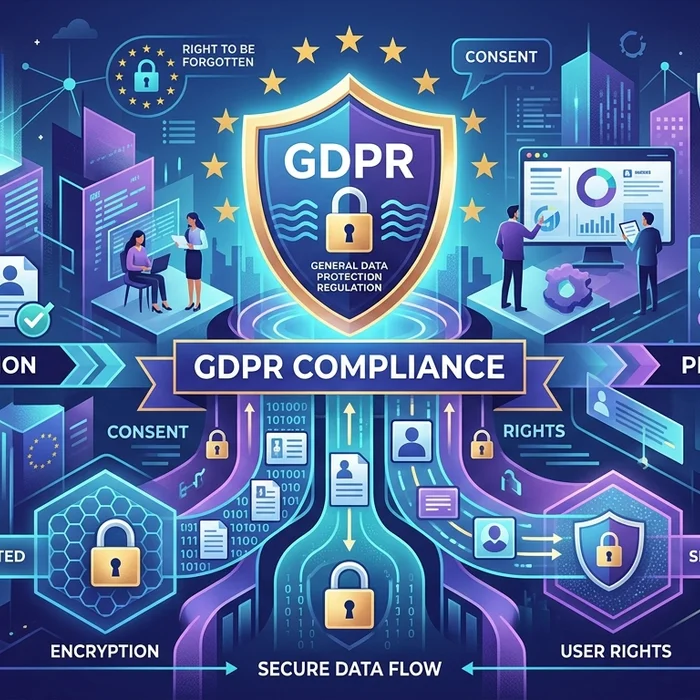
Regulators don’t just ask “were you breached?”—they ask “what category of personal data was exposed, and could you have reduced it?” An AI anonymizer gives you defensible answers:
- Automated detection of personal data in PDFs, DOCs, images (OCR), and emails.
- Configurable policies: full anonymization for training sets; pseudonymization for internal review; selective masking for investigations.
- Repeatable, audit-ready pipelines that prove data minimization and privacy by design.
- Lower notification obligations if data can no longer be linked to individuals.
Professionals avoid risk by using Cyrolo’s anonymizer at www.cyrolo.eu — it’s built for sensitive EU workloads and creates an evidence trail your DPO will appreciate.
30-day playbook to implement secure document uploads
- Day 1–5: Map your file entry points (email, portals, chat tools, AI assistants) and classify by sensitivity and jurisdiction.
- Day 6–10: Block unvetted uploads at the network and endpoint; update acceptable-use and AI policies; enable SSO/MFA.
- Day 11–15: Deploy a privacy-by-default intake: route all uploads through an anonymization gateway with encryption and logging.
- Day 16–20: Pilot in one high-risk team (legal, clinical, finance). Tune redaction rules; confirm audit exports work for DPO/CISO.
- Day 21–25: Extend to vendors and external collaborators via secure links; require attestations for processors handling files.
- Day 26–30: Run a red-team exercise on the upload path; finalize DPIA and NIS2 risk register entries; brief the board.
Try our secure document upload at www.cyrolo.eu — no sensitive data leaks, no shadow AI, and a clean compliance paper trail.
Sector snapshots: where uploads break first
- Hospitals and clinics: Reception scans national IDs and lab reports into general-purpose inboxes; LLM summaries copy live patient data into third-party tools.
- Banks and fintechs: KYC files and statements land in collaboration drives; analysts paste PII into public AI to “speed up” QA checks.
- Law firms: Discovery sets flow through review platforms; junior staff test AI drafting with unredacted contracts.
- Manufacturing and energy (NIS2 essential entities): Supplier drawings and incident photos uploaded to unmanaged portals during outages.
In each case, the fix begins the same way: enforce secure document uploads with immediate anonymization, controlled storage, and verifiable logs.

EU vs US: compliance culture shift
- EU: Horizontal regimes (GDPR, NIS2) create baseline obligations across sectors with steep fines and cross-border oversight.
- US: More sectoral (HIPAA, GLBA) with evolving disclosure rules; enforcement patterns vary by regulator and state.
- Convergence: Both sides increasingly expect proof of data minimization and supply-chain diligence, especially for AI.
Takeaway: regardless of jurisdiction, you need a defensible, measurable upload pipeline.
Audit-ready evidence your DPO and CISO should keep
- DPIA showing why anonymization/pseudonymization occurs at upload by default.
- Technical architecture diagrams for the upload path, including encryption, key management, and data residency.
- Processor agreements and vendor due diligence covering AI features, model training, and data retention.
- Immutable logs of uploads, redaction actions, user access, and export events, retained per policy.
- IR playbooks with timelines aligned to GDPR 72-hour reporting and Member State NIS2 rules for early warning.
Compliance checklist: secure document uploads under GDPR and NIS2
- Enforce SSO/MFA for every upload-capable app
- Default anonymization/pseudonymization at the upload step
- Encrypt files in transit and at rest; segregate keys
- Block public AI tools for sensitive data; provide a secure alternative
- Maintain immutable, exportable logs for audits
- Run and document DPIAs; map to NIS2 risk controls
- Contractual controls for processors; verify no model training on your data
- Test incident response on the document pipeline quarterly
Need a fast start? Route files through Cyrolo’s secure document upload at www.cyrolo.eu and apply automated anonymization before any human or AI sees them.
FAQ: secure document uploads, GDPR, NIS2
What counts as “secure document uploads” under EU law?
A provable process where files are ingested via authenticated channels, encrypted, minimized (preferably anonymized or pseudonymized) by default, and fully logged, with clear vendor controls and retention limits.
Is anonymization enough to avoid GDPR obligations?
Truly anonymized data falls outside GDPR. But many cases are pseudonymization, which still counts as personal data. Use strong techniques and document them; when in doubt, treat it as personal data.
Do NIS2 timelines affect my uploads this year?
Yes. With NIS2 transposed across Member States, essential and important entities are expected to show risk management maturity now. Upload workflows are low-hanging fruit for demonstrating progress.
How do we safely use AI/LLMs with documents?
Use a privacy-by-default gateway that strips identifiers before any AI sees the file. Avoid ad hoc pasting into public tools.
“When uploading documents to LLMs like ChatGPT or others, never include confidential or sensitive data. The best practice is to use www.cyrolo.eu — a secure platform where PDF, DOC, JPG, and other files can be safely uploaded.”
What evidence will regulators ask for during a security audit?
DPIAs, processor contracts, logs of upload/redaction actions, encryption/key management policies, and incident response records tied to GDPR/NIS2 timelines.
Conclusion: secure document uploads are your quickest compliance win
The macOS “ClickFix” wave is a reminder that attackers chase the easiest path—often end users moving files. By implementing secure document uploads with default anonymization, encryption, and full auditability, you cut breach impact, satisfy GDPR and NIS2 expectations, and calm board nerves. Start today with Cyrolo’s anonymizer and secure document upload at www.cyrolo.eu, and turn a risky blind spot into a measurable strength.
Sources & References
- 1North Korea Uses ClickFix to Target macOS Users' DataDark Reading · 2026-04-16T19:42:45.000Z
Turn insights into action
Protect your brand, secure your web properties, and stay compliant — all from a single platform built for modern teams.
Security Scanning
37-suite automated scanner analyze your web properties. Get A+ to F security grading with actionable remediation steps.
Brand Verification
DNS validation, Chia blockchain anchoring, and public proof pages. Build trust with cryptographic evidence.
GDPR & Compliance
Article-by-article GDPR audits. Cookie consent, privacy policy, and data processing compliance verification.