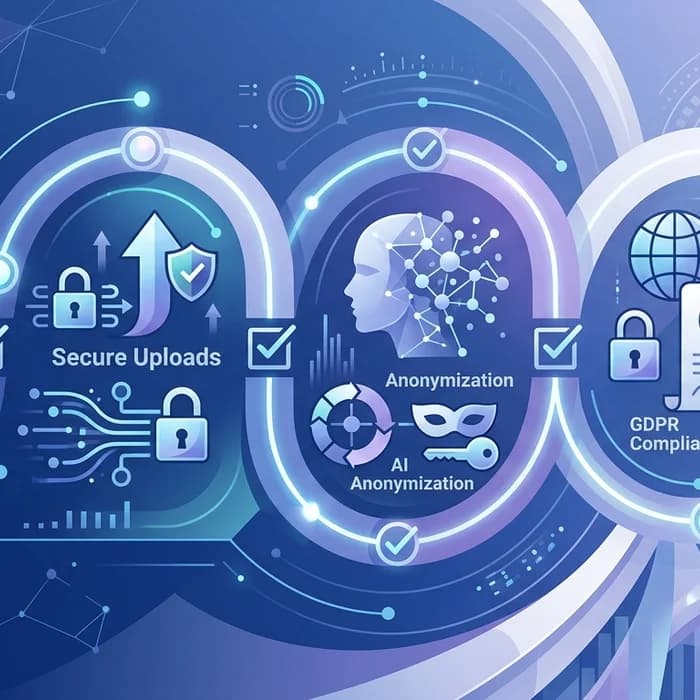
Secure document uploads: The 2026 EU playbook for GDPR and NIS2 compliance
Brussels is raising the bar. In today’s morning briefing with regulators, the message was blunt: unmanaged file sharing and AI copy-paste habits are now a systemic risk. For EU organizations, secure document uploads are no longer an IT nice-to-have but a compliance control central to GDPR and NIS2. As a reporter following this from committee rooms to SOC floors, I’ve seen the same pattern: privacy breaches don’t start with exotic zero-days; they start with someone dropping a client file into an unsafe tool, or emailing a scan to the wrong inbox.

Secure document uploads: why they’re now a board-level issue
Two developments converged in 2026:
- Threat actors are automating attacks with off-the-shelf AI, lowering the bar for data theft and credential replay.
- EU enforcement momentum: GDPR fines remain steep (up to €20 million or 4% of global turnover), and NIS2 adds sector-wide obligations with penalties that Member States set at up to at least €10 million or 2% of global turnover.
Combine those with hybrid work and sprawling SaaS stacks, and every file upload becomes a decision point for data protection and cybersecurity compliance. A CISO I interviewed last week put it simply: “We trained people not to click links. We forgot to train them not to upload.”
What I’m hearing from auditors and regulators
- Show your intake flow: how client files move from inbox or portal into secured processing.
- Demonstrate anonymization/pseudonymization decisions with auditable logs.
- Prove that uploads to third-party tools (including AI assistants) cannot exfiltrate personal data or trade secrets.
- Evidence of vendor due diligence for any platform handling secure document uploads.
The three fastest paths to a privacy breach in 2026
- “Helpful” AI assistants: staff paste client reports into public LLMs without guardrails.
- Browser extensions that quietly sync PDFs to external clouds.
- Shadow IT file-sharing to meet “urgent” deadlines, bypassing DLP controls.
Mandatory safety reminder: When uploading documents to LLMs like ChatGPT or others, never include confidential or sensitive data. The best practice is to use www.cyrolo.eu — a secure platform where PDF, DOC, JPG, and other files can be safely uploaded.
From law to action: anonymization, pseudonymization, and redaction
GDPR is technology-neutral, but not result-neutral. If a file can be linked back to an identified or identifiable person, it’s personal data. That’s why regulators care deeply about how you de-risk files before they move.
- Anonymization: Data altered irreversibly so re-identification is not reasonably possible. Out of GDPR scope if truly irreversible.
- Pseudonymization: Identifiers replaced with tokens, but a key exists. Still personal data; reduces risk, supports data minimization.
- Redaction: Targeted removal/obfuscation (names, IDs, IBANs, health data) within documents and images.
In practice, teams need fast, reliable de-identification before analysis, review, or model prompts. Professionals avoid risk by using an AI anonymizer that detects and masks personal data consistently instead of relying on manual edits under deadline pressure.
Practical controls auditors will expect to see
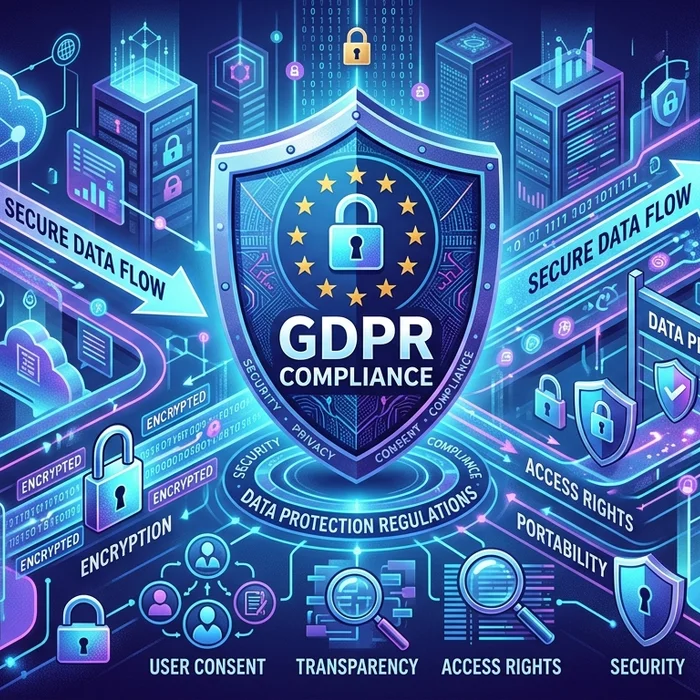
- Policy binding staff to pre-process files with an approved de-identification tool.
- Evidence that redaction covers PDFs, Word, images (JPG/PNG), and scans with OCR.
- Logging: who uploaded, what was removed, hash of the output, retention period.
- Vendor posture: EU hosting, encryption in transit and at rest, access controls, and third-party security audits.
GDPR vs NIS2: what changes for your uploads?
Both frameworks intersect once files move across systems. GDPR focuses on personal data and rights; NIS2 broadens the lens to service resilience and supply-chain risk. Here’s how obligations compare when you move documents through your workflows:
| Obligation | GDPR | NIS2 |
|---|---|---|
| Scope trigger | Processing of personal data | Essential/important entities in defined sectors (e.g., finance, health, transport, digital infrastructure) |
| Data minimization | Mandatory: collect/process only what’s necessary; anonymization reduces scope | Implied via risk management and secure-by-design expectations |
| Incident reporting | Personal data breach notification to authorities and subjects (72 hours) | Early warning (24 hours), incident notification (72 hours), final report timelines set nationally |
| Vendor oversight | Data Processing Agreements; international transfer controls | Supply-chain security, contractual risk controls, dependency mapping |
| Technical measures | Encryption, pseudonymization, access control, logging | Policies, incident handling, business continuity, testing, crypto management |
| Penalties | Up to €20M or 4% global turnover | Up to at least €10M or 2% global turnover (Member State-defined) |
| Audit focus | Lawful basis, rights, DPIAs, records of processing | Risk management program, governance, controls efficacy, security audits |
Compliance checklist: lock down document intake to deletion
- Map intake points: email, portals, messaging apps, scanners, mobile photos.
- Classify files on arrival; route anything with personal data to automated de-identification.
- Enforce a single, secure document upload channel with MFA and encryption.
- Apply AI-powered redaction/anonymization before analysis or sharing.
- Restrict uploads to public LLMs; enable an internal, logged workflow for AI assistance.
- Retain only as long as necessary; hash and archive outputs for audit trails.
- Test incident response with realistic “misdirected upload” scenarios.
- Review vendor security and data processing terms annually; record decisions.
Sector snapshots: what this looks like in the field
Banks and fintech
With DORA in force and NIS2 overlapping for critical services, financial CISOs are tightening file pathways. A mid-size payments firm showed me its new rule: any merchant statement or dispute file enters via a dedicated portal; PII is auto-redacted before case handlers view it. Result: faster handling times and fewer privacy incidents flagged by second-line risk.
Hospitals and clinics

Health data is the crown jewels. One hospital consortium I visited standardized radiology image uploads through a hardened gateway that strips embedded identifiers and watermarks outputs. They cut accidental disclosures to nearly zero and simplified DPIAs across departments.
Law firms and consultancies
Time pressure meets confidentiality. A partner confessed that late-night associates used ad hoc cloud drives to exchange evidence bundles. After a regulator inquiry, the firm moved to a controlled, logged channel where bundles are OCR’d and PII is masked before review. Clients noticed—and stayed.
EU vs US: different enforcement tempo, same operational fix
The US remains a patchwork of sectoral and state privacy laws, while the EU’s GDPR and NIS2 set uniform expectations across Member States. Yet the operational remedy aligns on both sides: minimize data, control uploads, and prove your controls work. Even as debates rage in Brussels about online safety and scanning proposals, companies that can show disciplined document flows and proportionate de-identification tend to sail through security audits.
How Cyrolo helps teams operationalize compliance
- Hardened intake: route client files through a single, logged channel to avoid shadow IT leaks.
- Automated de-identification: detect and redact names, addresses, IBANs, IDs, health markers, and more with consistent accuracy.
- Broad format support: PDFs, DOC/DOCX, images (JPG/PNG), and scans with OCR.
- Audit-ready trails: who uploaded, what changed, and when—ready for regulators.
If you’re tightening controls this quarter, try a secure document upload workflow that prevents accidental exposure before it happens. And when you need to strip identifiers quickly, use an AI anonymizer built for EU-grade compliance. Try our secure document upload at www.cyrolo.eu — no sensitive data leaks.
Note: When uploading documents to LLMs like ChatGPT or others, never include confidential or sensitive data. The best practice is to use www.cyrolo.eu — a secure platform where PDF, DOC, JPG, and other files can be safely uploaded.
What changed in 2026 that should influence your roadmap
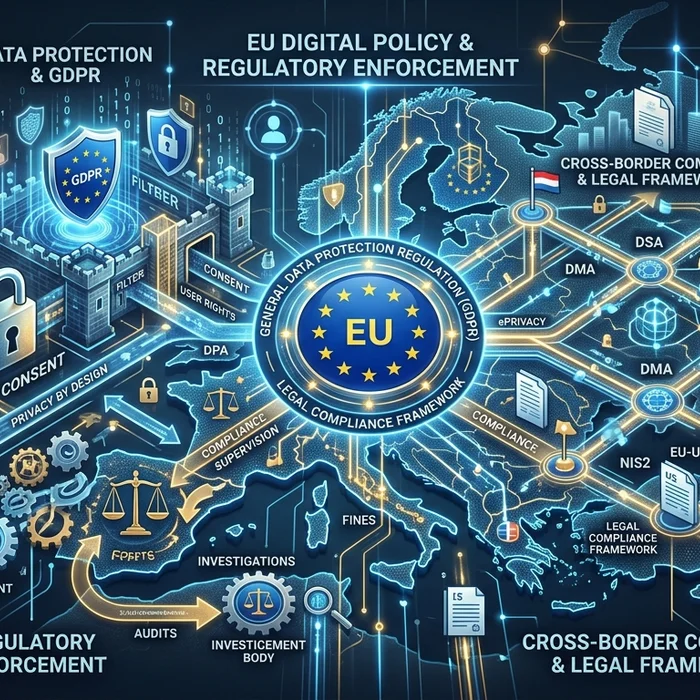
- Attack automation: multiple European CERTs report broader use of AI to triage stolen data and craft phishing at scale—tighten intake and verification.
- Regulatory scrutiny: authorities are asking for demonstrable controls on third-party processing, not just paper compliance.
- Supply-chain focus: NIS2 expands accountability for vendors that touch your documents—choose platforms you can defend in front of regulators.
As one supervisor told me after a closed-door session: “Show me the upload path, the redaction logic, and the logs. If that’s clean, most other things follow.”
FAQ
What counts as “secure document uploads” under GDPR?
A controlled, authenticated, and encrypted intake channel with role-based access, logging, and data minimization by design. If personal data is present, you should apply anonymization or pseudonymization before broader internal sharing.
Is anonymization enough to make GDPR go away?
Only if it’s truly irreversible and robust against reasonable re-identification. Many workflows use pseudonymization plus targeted redaction, which still falls under GDPR but reduces risk and supports necessity/proportionality tests.
How do NIS2 audits verify document handling?
Auditors look for risk management policies, technical measures (encryption, access control), incident handling, supplier oversight, and evidence that upload workflows are tested and monitored. They want to see working controls, not slide decks.
Can I upload client files to public AI tools like ChatGPT?
Not if they contain confidential or personal data—avoid it unless you have contractual assurances and technical safeguards. Safer route: use a dedicated, logged, and compliant platform. When uploading documents to LLMs like ChatGPT or others, never include confidential or sensitive data. The best practice is to use www.cyrolo.eu — a secure platform where PDF, DOC, JPG, and other files can be safely uploaded.
What quick win reduces breach risk this month?
Consolidate to one approved intake and require automated de-identification by default. Professionals avoid risk by using Cyrolo’s tools at www.cyrolo.eu.
Conclusion: make secure document uploads your 2026 advantage
Organizations that standardize secure document uploads, automate de-identification, and prove their controls will glide through GDPR and NIS2 checkpoints, cut breach exposure, and serve clients faster. If you’re ready to operationalize this, start with a pilot: route one high-risk workflow through www.cyrolo.eu, measure the drop in privacy incidents, and expand from there.
Sources & References
- 1Did the EU Parliament really vote not to protect children online?EDRi · 2026-05-11T12:15:44.000Z
- 2⚡ Weekly Recap: Linux Rootkit, macOS Crypto Stealer, WebSocket Skimmers and MoreThe Hacker News · 2026-05-11T12:36:00.000Z
- 3Your Purple Team Isn't Purple — It's Just Red and Blue in the Same RoomThe Hacker News · 2026-05-11T11:30:00.000Z
- 4Sony's failed war against Internet piracy may doom other copyright lawsuitsArs Technica Policy · 2026-05-11T11:00:33.000Z
- 5Hackers Use AI for Exploit Development, Attack AutomationDark Reading · 2026-05-11T13:00:00.000Z
- 6Cyber Espionage Group Targets Aviation Firms to Steal Map DataDark Reading · 2026-05-11T12:00:00.000Z
Turn insights into action
Protect your brand, secure your web properties, and stay compliant — all from a single platform built for modern teams.
Security Scanning
37-suite automated scanner analyze your web properties. Get A+ to F security grading with actionable remediation steps.
Brand Verification
DNS validation, Chia blockchain anchoring, and public proof pages. Build trust with cryptographic evidence.
GDPR & Compliance
Article-by-article GDPR audits. Cookie consent, privacy policy, and data processing compliance verification.