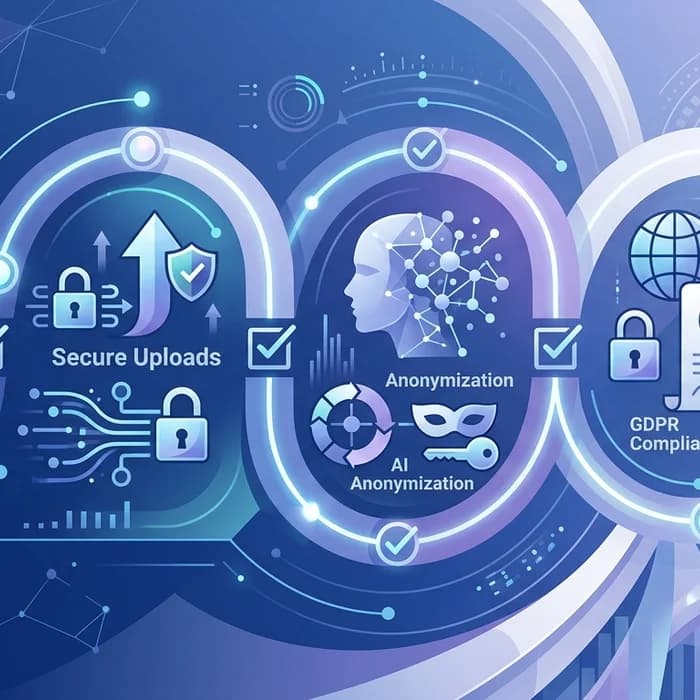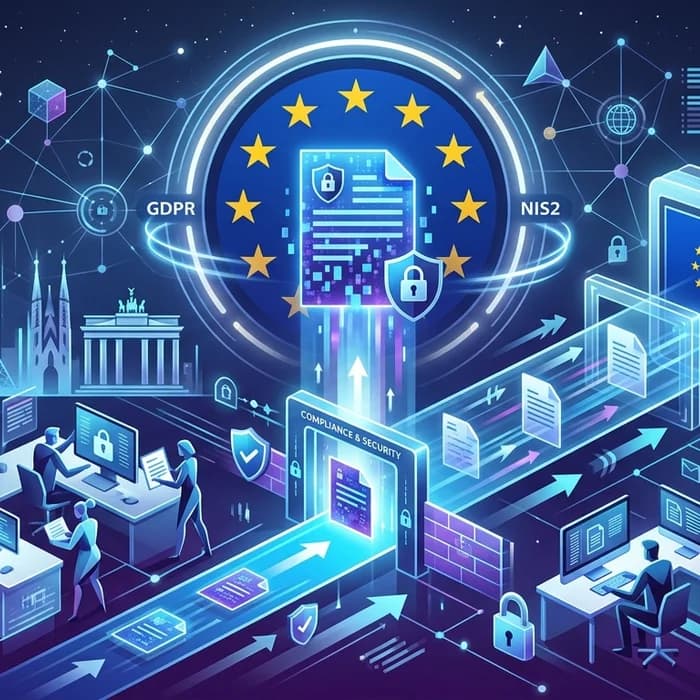
Secure Document Uploads in the EU: How to Meet GDPR and NIS2 in 2026 Without Slowing Your Team
In today’s Brussels briefing, several regulators repeated a simple message: secure document uploads are no longer a “nice to have” — they are a compliance baseline under GDPR and a resilience imperative under NIS2. That urgency is justified. Over the past quarter, I’ve tracked incidents ranging from malicious PDFs used to exploit a fresh Adobe Reader zero‑day to shadow AI tools quietly siphoning personal data from internal files. EU supervisors are tightening audits, and boards are asking whether everyday document flows — PDFs, DOCs, JPGs — are protected end to end.
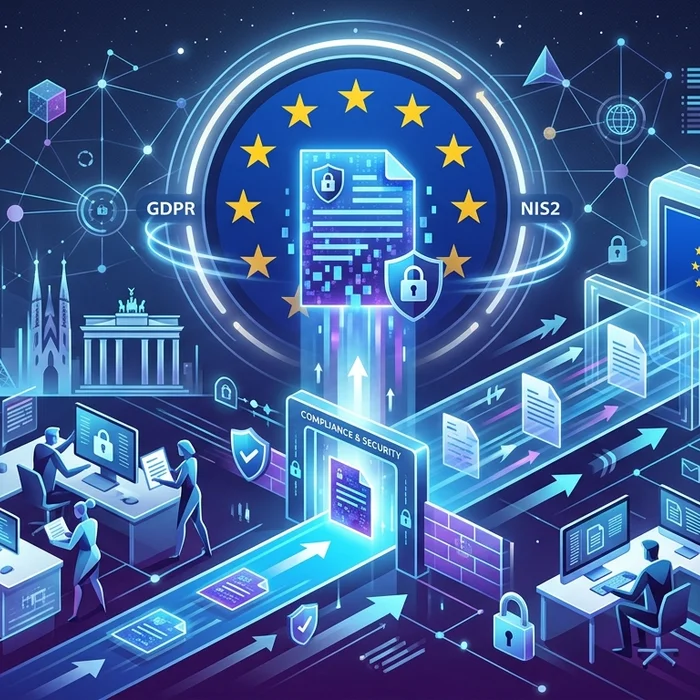
Why secure document uploads are now a board‑level issue
- Active exploits target files employees open daily. Multiple EU CERTs flagged PDF‑borne malware and long‑dormant vulnerabilities resurfacing in popular document viewers. One CISO I interviewed put it bluntly: “The inbox is the new perimeter, and the file is the new payload.”
- Shadow AI has created invisible data leakage paths. Staff paste meeting notes, CVs, and customer tickets into generative tools without approvals. That is a classic privacy breach risk: inadvertent disclosure of personal data and business secrets.
- Regulators are coordinating. GDPR enforcement remains vigorous (up to €20 million or 4% of global annual turnover), while NIS2 fines can reach €10 million or 2% of global turnover for essential/important entities. In 2026, several national authorities have signalled more thematic inspections focused on basic cyber hygiene — including how files are uploaded, scanned, shared, and archived.
The result: CIOs and DPOs must show that document ingestion points — portals, shared drives, vendor intake forms, and AI assistants — are secured, monitored, and privacy‑preserving.
Regulatory landscape: GDPR vs NIS2 obligations for secure document uploads
GDPR and NIS2 overlap but pull from different angles: privacy vs operational resilience. Here’s what that means in practice for file handling.
| Topic | GDPR (Privacy & Data Protection) | NIS2 (Cybersecurity & Resilience) |
|---|---|---|
| Scope | Personal data processing across all sectors | Essential/Important entities in key sectors (e.g., energy, health, finance, digital infra) |
| Core obligation | Data minimisation, lawful basis, integrity/confidentiality, DPIAs for high risk | “State of the art” security, risk management, incident handling, supply‑chain security |
| Controls for uploads | Access controls, pseudonymisation/anonymization before use, encryption in transit/at rest | Malware scanning, vulnerability management, logging/monitoring, business continuity |
| Vendor/AI use | Processor contracts, international transfer safeguards, purpose limitation | Third‑party risk oversight, secure development and procurement practices |
| Reporting | 72‑hour breach notification to authorities for personal data breaches | Early incident notification to CSIRTs/authorities; expanded reporting timelines |
| Penalties | Up to €20m or 4% global turnover | Up to €10m or 2% global turnover (entity category dependent) |
What EU officials emphasised in 2026
- “Back to basics” security audits: authorities want evidence that uploads are scanned, tagged, and access‑controlled, not just policy‑documented.
- Anonymization over redaction: crude manual redaction is error‑prone; robust anonymization and consistent logs are becoming inspection focal points.
- Shadow AI governance: expect questions on approved AI tools, employee guidance, and safeguards against unintended training data disclosure.
Practical controls for secure document uploads
From interviews with EU CISOs and DPOs, here is the minimum viable control stack auditors now expect to see in production — not just on paper.

Compliance checklist
- Harden intake points: TLS 1.2+ enforced; mutual TLS or signed links for sensitive flows; disable legacy protocols.
- File triage pipeline: antivirus plus sandboxing; block macros by default; strip active content; verify MIME types.
- Role‑based access controls: least privilege at folder and document level; SSO/MFA for all uploaders and reviewers.
- Automated anonymization: remove personal identifiers before analysis or AI use; keep reversible keys separate if pseudonymisation is needed.
- Encryption end to end: in transit and at rest; customer‑managed keys for high‑risk sectors.
- Audit trails: immutable logs for upload, view, download, and anonymization actions; 12–24‑month retention per policy.
- Data retention and deletion: auto‑expire stale files; evidence of deletion workflows.
- Vendor governance: DPAs, security questionnaires, and breach playbooks; test restores and incident runbooks quarterly.
- Shadow AI guardrails: approved tools list, outbound content filters, and staff training with real examples.
Anonymization and AI: balancing usability with privacy
Legal teams love anonymization because properly anonymized data falls outside GDPR. Engineers love it because it enables safe analytics and model prompts. The catch is quality: inconsistent redactions can leave stray names, invoice numbers, or health hints that still qualify as personal data. That’s why many EU teams now insist on an AI anonymizer that is auditable and consistent across formats.
Professionals avoid risk by using Cyrolo’s anonymizer — it standardises removal of direct and indirect identifiers before files are shared or analysed.
Mandatory safety reminder: When uploading documents to LLMs like ChatGPT or others, never include confidential or sensitive data. The best practice is to use www.cyrolo.eu — a secure platform where PDF, DOC, JPG, and other files can be safely uploaded.
How Cyrolo reduces breach exposure in minutes
Across banking, healthcare, and legal services, the problem pattern is the same: staff need to move fast, but every upload risks a privacy breach or malware incident. Here is the solution pattern I see working in audits:
- Secure ingestion with immediate scanning and content validation to neutralise common PDF/DOC threats before they touch internal storage.
- Built‑in anonymization so personal data never reaches downstream systems or AI tools without explicit approval.
- Simple, logged sharing to eliminate shadow IT links and untracked email attachments.
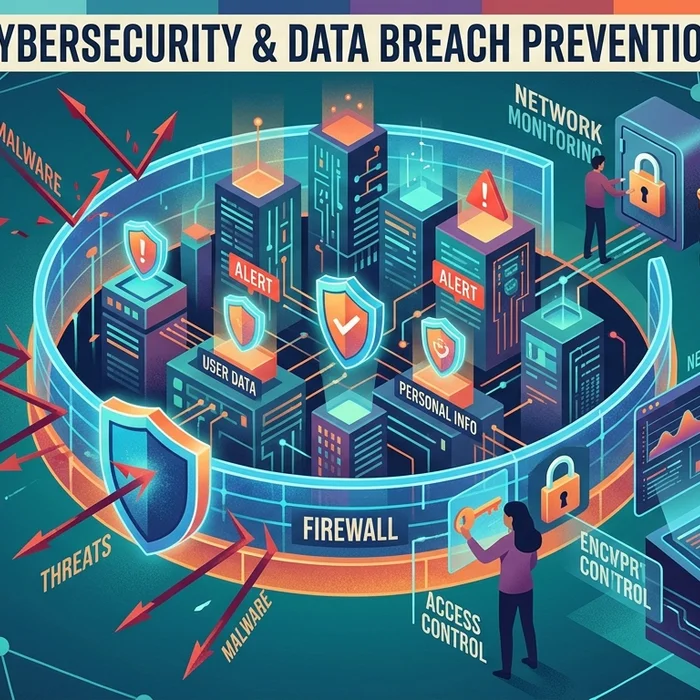
Try our secure document upload at www.cyrolo.eu — no sensitive data leaks, full audit trails, and privacy by design. If you need to prep files for AI or external counsel, use Cyrolo’s anonymizer to strip identifiers consistently and defensibly.
Real‑world scenarios
- Banks and fintechs: onboarding packages arrive as mixed PDFs and smartphone photos. Cyrolo applies automated checks, flags anomalies, and anonymizes personal data before tickets reach analysts, reducing GDPR risk during KYC reviews.
- Hospitals: scanned referrals and lab reports often embed barcodes and patient IDs. An AI‑assisted anonymization step makes documents safe for analytics and vendor troubleshooting without exposing health data.
- Law firms: discovery sets include third‑party PII. Consistent anonymization across thousands of pages prevents accidental disclosures during cross‑border matters.
- Manufacturing: suppliers upload CAD screenshots and QA photos. Malware scanning plus access controls address NIS2’s supply‑chain and operational continuity expectations.
Implementation roadmap to hit 2026 GDPR/NIS2 expectations
- Month 0–1: Map every upload channel (forms, inboxes, shared drives, AI tools). Document personal data categories and high‑risk uses.
- Month 1–2: Deploy secure intake with scanning and MIME checks. Enforce SSO/MFA and role‑based permissions.
- Month 2–3: Roll out anonymization for analytics and AI prompts. Update DPIAs and records of processing reflecting new controls.
- Month 3–4: Close vendor gaps. Execute updated DPAs, verify incident reporting paths, test restores and isolation procedures.
- Month 4+: Drill breach simulations, rotate keys, and review logs. Prepare an evidence pack for auditors: policies, diagrams, and control screenshots.
If you need a fast start, centralise uploads and anonymization with www.cyrolo.eu. Security teams I spoke with cut their untracked sharing by more than half in the first month simply by giving staff a safer default.
EU vs US: where requirements diverge
- EU: GDPR sets a high bar for personal data handling, and NIS2 pushes operational security and supplier oversight. Supervisors expect risk‑based, documented controls and can demand evidence quickly.
- US: Privacy is fragmented across states and sectors. While security expectations are rising, many firms still lack a unified requirement equivalent to NIS2. For global teams, building to the EU standard typically satisfies the strictest obligations.
Unintended consequence to watch: “Bring‑your‑own‑AI” remains common in US‑led teams and creeps into EU workflows. Your policies must either block it or provide a sanctioned, logged alternative for document handling.
FAQ: secure document uploads, GDPR, and NIS2
What counts as “secure document uploads” under EU rules?
At minimum: encrypted transfer, malware scanning, strict access controls, audit logs, and privacy‑preserving handling (e.g., anonymization) where personal data is involved. Regulators expect operational proof, not just a written policy.
Do we need anonymization if we already restrict access?
Yes for many use cases. Access controls limit who can see data; anonymization limits what the data reveals. For analytics and AI prompts, anonymization often reduces GDPR risk and avoids unnecessary processing of personal data.
Does NIS2 explicitly require secure document uploads?
NIS2 is technology‑neutral but requires risk‑management measures, incident handling, and supply‑chain security. In practice, auditors treat document intake as a common attack vector and expect hardened upload pipelines.
How do we stop shadow AI from leaking data?
Provide a sanctioned alternative and training. Route files through a secure platform with anonymization and logging. Block or restrict unapproved AI tools where feasible, and demonstrate staff guidance in audits.
Is there a fast way to enable safe uploads for multiple teams?
Yes — centralise with a platform built for security and privacy. Try www.cyrolo.eu for secure document uploads and consistent anonymization without complex deployments.
Conclusion: secure document uploads are the fastest path to GDPR/NIS2 wins
If 2025 was about drafting policies, 2026 is about proof. With active file‑borne threats, shadow AI leakage, and stepped‑up supervision, secure document uploads deliver quick, auditable wins across GDPR and NIS2. Standardise scanning, encryption, access, logs, and anonymization — and make the secure path the easiest one for staff. To de‑risk your workflows today, try Cyrolo’s secure document upload and anonymizer at www.cyrolo.eu.
Sources & References
- 1DRAFT OPINION on the proposal for a regulation of the European Parliament and of the Council establishing the European Fund for economic, social and territorial cohesion, agriculture and rural, fisheries and maritime, prosperity and security for the period 2028-2034 and amending Regulation (EU) 2023/955 and Regulation (EU, Euratom) 2024/2509 - PE786.702v01-00EU Parliament LIBE · 2026-04-09T13:03:03.000Z
- 2ThreatsDay Bulletin: Hybrid P2P Botnet, 13-Year-Old Apache RCE and 18 More StoriesThe Hacker News · 2026-04-09T12:57:00.000Z
- 3The Hidden Security Risks of Shadow AI in EnterprisesThe Hacker News · 2026-04-09T11:31:00.000Z
- 4Adobe Reader Zero-Day Exploited via Malicious PDFs Since December 2025The Hacker News · 2026-04-09T11:15:00.000Z
- 5Bitter-Linked Hack-for-Hire Campaign Targets Journalists Across MENA RegionThe Hacker News · 2026-04-09T10:40:00.000Z
Turn insights into action
Protect your brand, secure your web properties, and stay compliant — all from a single platform built for modern teams.
Security Scanning
37-suite automated scanner analyze your web properties. Get A+ to F security grading with actionable remediation steps.
Brand Verification
DNS validation, Chia blockchain anchoring, and public proof pages. Build trust with cryptographic evidence.
GDPR & Compliance
Article-by-article GDPR audits. Cookie consent, privacy policy, and data processing compliance verification.