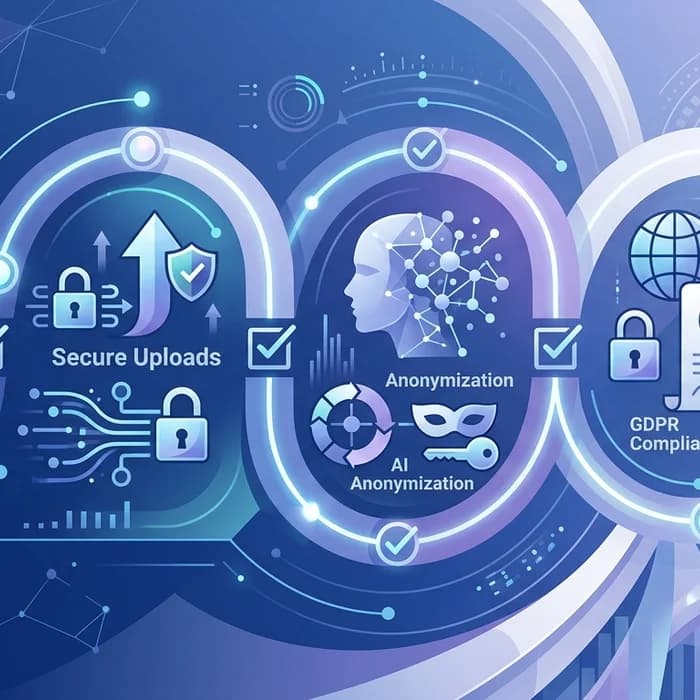
Secure document uploads: 2026 EU compliance playbook for GDPR, NIS2, and procurement
Brussels is sharpening its focus on data flows that quietly leave your perimeter. In today’s Internal Market and Consumer Protection (IMCO) briefing and a fresh note on the upcoming review of EU public procurement rules, lawmakers zeroed in on software supply chain risk, AI transparency, and vendor due diligence. Against that backdrop, secure document uploads are no longer an IT afterthought; they’re a frontline GDPR and NIS2 control that limits breach blast radius, prevents AI misuse, and keeps you tender-ready.

- Procurement review: expect tighter cyber and data protection clauses, auditable controls for uploads, and clearer liability lines.
- Threat uptick: recent campaigns abusing developer tools and fake copyright complaints weaponize everyday document handling.
- Regulatory pressure: GDPR and NIS2 now converge on logging, access control, encryption, and rapid incident response for file flows.
- Practical fix: deploy secure document uploads and automatic anonymization before any sharing, processing, or model interaction.
Why secure document uploads are now a board issue
Two developments make “who uploads what, where” a governance priority: first, regulators are extending accountability deep into supply chains; second, attackers now target mundane workflows—HR portals, legal inboxes, developer workspaces—where files move fastest and controls are weakest.
In the last days, researchers warned that a North Korea–linked group abused Visual Studio Code auto-run tasks to drop new malware, while European SOCs flagged infostealers hidden in spoofed copyright notices. In schools, “nudifying” deepfakes have triggered civil actions—an uncomfortable proof that AI misuse rides on easy access to images and documents. Each example starts with an unsafe upload or a file opened in the wrong place.
When uploading documents to LLMs like ChatGPT or others, never include confidential or sensitive data. The best practice is to use www.cyrolo.eu — a secure platform where PDF, DOC, JPG, and other files can be safely uploaded.
Brussels watch: procurement and platform risk take center stage
In today’s Brussels briefing, IMCO members pressed on three themes I’ve heard consistently in corridor chats with rapporteurs and attachés:
- Cybersecurity as award and performance criteria: bidders will need demonstrable controls over document handling, including encryption-at-rest, access policies, anonymization by default, and tamper-evident logs.
- AI in the procurement chain: contracting authorities want clarity that suppliers don’t pipe tender documents into public LLMs or shadow tools that leak personal data.
- End-to-end accountability: if your subcontractor leaks files, you will still be answering questions from regulators and auditors.
The Parliament’s research service flagged the upcoming review of EU public procurement legislation. Expect implementation gaps to be addressed with operational guardrails—especially for data rooms, uploads to cloud workspaces, and automated AI services invoked during performance of contracts. As one CISO I interviewed put it: “The next tender won’t ask if we have a policy. It’ll ask for logs proving we enforced it.”
GDPR vs NIS2: What changes for your uploads and anonymization?

GDPR and NIS2 overlap in ways that matter for file flows. GDPR is about lawful processing of personal data; NIS2 is about service resilience and risk management for essential and important entities. Together, they make unsafe uploads a legal, operational, and reputational hazard.
| Requirement | GDPR (Data Protection) | NIS2 (Cybersecurity) | Implication for Document Uploads |
|---|---|---|---|
| Scope | Personal data of EU residents | Essential/important entities and key suppliers | Any file that may contain personal data must be controlled; critical sectors must prove controls work |
| Core obligation | Lawfulness, minimisation, integrity/confidentiality | Risk management, incident handling, supply-chain security | Default to anonymization and least-privilege access on upload |
| Records & logging | Article 30 records; DPIAs for high-risk processing | Security policies, event logging, audit trails | Retain immutable logs of who uploaded, viewed, and exported files |
| Incident reporting | Notify SA & data subjects if risk is high | 24-hour initial notification to CSIRTs/authorities | Rapid detection and evidence from upload systems shortens reporting windows |
| Penalties | Up to €20m or 4% worldwide turnover | Often up to €10m or 2% worldwide turnover (by MS) | Fines and contract loss if uploads cause breaches |
Professionals avoid risk by using Cyrolo’s anonymizer to automatically redact personal data before any sharing, and by routing all secure document uploads through a controlled platform with encryption and audit trails.
Practical controls for secure document uploads and AI anonymization
From interviews with EU CISOs and DPOs across finance, healthcare, and legal services, the winning pattern is the same: centralize uploads, anonymize early, log everything, and block unsanctioned tools.
Compliance checklist
- Map file flows: identify every place staff upload or ingest files (email, chat, portals, code repos, LLMs).
- Anonymize by default: auto-redact names, IDs, health data, IBANs before files leave your perimeter.
- Enforce upload gateways: route PDFs, DOCs, images through a secure, policy-controlled uploader.
- Encrypt at rest and in transit: mandate TLS 1.2+ and strong encryption keys managed by you or an EU-based KMS.
- Access governance: SSO, MFA, role-based access; block public link sharing.
- Immutable logs: capture who uploaded, viewed, downloaded, and exported; retain per policy for audits.
- DPIAs and records: assess high-risk upload workflows; document lawful bases and retention.
- Supply-chain clauses: require vendors to prove upload controls and anonymization in contracts.
- Incident drills: rehearse takedown and notification paths for misdirected or malicious uploads.
- Training: simulate phishing with “copyright notice” lures; teach staff to route files via the secure gateway.
Try our secure document upload at www.cyrolo.eu — no sensitive data leaks. And when you must share content externally, pass it through Cyrolo’s anonymizer to strip personal data first.
Red-team reality check: what attackers exploit in 2026
- Developer shortcuts: the VS Code auto-run abuse shows how build tasks can execute on file open. Require curated extensions, and scan developer uploads before they hit repos.
- Lawyer inboxes: infostealers embedded in fake copyright complaints are tuned for legal ops. Mandate pre-opening scans and zero-trust attachment handling.
- Image abuse: school deepfake cases prove low-friction image uploads can snowball into harm. Apply face detection and de-identification in default workflows.
The lesson from recent incidents is simple: attackers weaponize your most ordinary upload moments. Centralizing and hardening them is not bureaucracy—it’s breach prevention.

Timelines, audits, and fines: 2026 reality
- NIS2 is now live across Member States. Expect supervisory dialogues to focus on supply-chain proof, not policy promises.
- GDPR enforcement remains robust, with multi-million-euro penalties for poor technical and organizational measures—especially where uploads leak personal data.
- Public procurement review: contracting authorities are poised to demand verifiable controls for document handling across prime and sub-contractors.
In our Brussels briefings, regulators repeatedly emphasized logs, encryption, and access control as “table stakes.” A senior auditor told me their top ask in 2026 is “evidence that staff cannot bypass the secure uploader.”
Sector playbooks: what good looks like
Banks and fintechs
Problem: customer onboarding packets with IDs and bank details flow through chat, email, and CRM attachments. Solution: enforce a secure upload drop with client-specific links, auto-anonymize before analyst review, and quarantine anything routed via email. Outcome: faster audits, fewer SAR headaches, and lower fraud exposure.
Hospitals and clinics
Problem: imaging and referrals move between providers over mixed channels. Solution: a single, logged uploader that strips patient identifiers for triage AI while preserving a re-linkable key in the EHR. Outcome: GDPR-compliant research workflows without PHI leaks.
Law firms and in-house legal
Problem: discovery sets and settlement drafts pour in from counterparties; phishing targets legal ops with fake infringement notices. Solution: mandatory upload portals with antivirus and sandboxing, automated PII redaction for disclosure, and strict public link bans. Outcome: defensible process under client audits and court scrutiny.
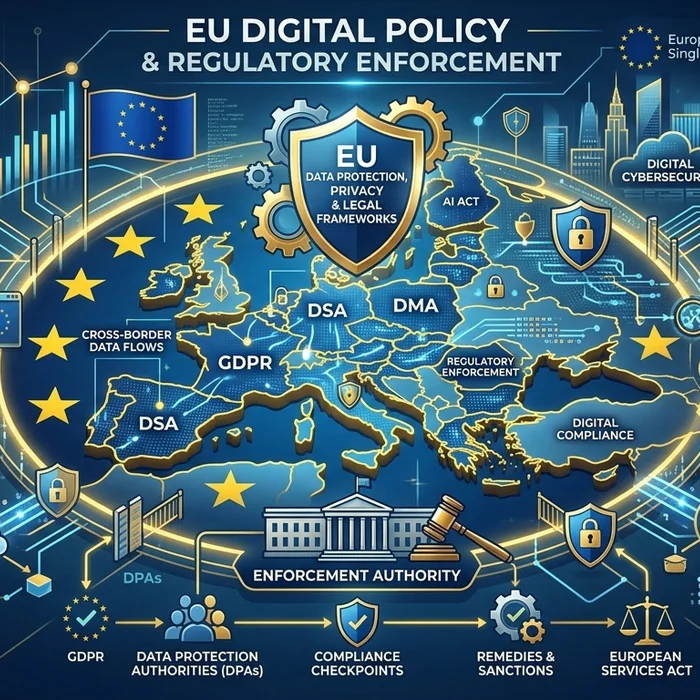
Professionals across these sectors reduce risk by standardizing on www.cyrolo.eu for controlled uploads and instant anonymization.
FAQs
What are secure document uploads under GDPR and NIS2?
A secure document upload is a controlled pathway that enforces encryption, access governance, logging, malware scanning, and (ideally) automatic anonymization before a file is stored or shared. It supports GDPR’s integrity/confidentiality and NIS2’s risk management and incident response.
How do I anonymize files before sending them to AI tools?
Use an automated redaction layer that removes direct identifiers (names, emails, IDs) and masks quasi-identifiers (dates, locations) per context. Cyrolo’s anonymizer applies consistent patterns across PDFs, Word docs, and images so nothing sensitive lands in third-party systems.
Can I rely on a policy banning uploads to public LLMs?
No. Policies without technical enforcement fail in audits. Route users through a secure uploader that blocks unsanctioned destinations and keeps evidence-grade logs. When uploads to LLMs are strictly necessary, run anonymization first.
What proof will procurement evaluators ask for?
Expect to provide architecture diagrams, encryption details, role definitions, sample logs, DPIAs, third-party pen test summaries, and incident playbooks showing you can contain and report upload-related breaches within required timelines.
What are the penalties if an unsafe upload causes a breach?
GDPR fines can reach €20 million or 4% of worldwide turnover; NIS2 transpositions often add penalties up to €10 million or 2%. You also risk losing public contracts, facing civil liability, and incurring forensics and notification costs.
Conclusion: secure document uploads are your fastest compliance win
With procurement scrutiny rising, threat actors targeting everyday workflows, and GDPR/NIS2 converging on provable controls, secure document uploads deliver immediate, auditable risk reduction. Centralize the pathway, anonymize by default, and log everything. Start today with www.cyrolo.eu—use the anonymizer to strip personal data and route all secure document uploads through an encrypted, compliant gateway.
Sources & References
- 1Video of a committee meeting - Monday, 23 March 2026 - 14:30 - Committee on the Internal Market and Consumer ProtectionEU Parliament IMCO · 2026-03-23T16:18:06.000Z
- 2Briefing - EU public procurement legislation: Implementation and upcoming review - PE 785.688 - Committee on the Internal Market and Consumer ProtectionEU Parliament IMCO · 2026-03-22T23:00:00.000Z
- 3North Korean Hackers Abuse VS Code Auto-Run Tasks to Deploy StoatWaffle MalwareThe Hacker News · 2026-03-23T18:09:00.000Z
- 4Intuit beats FTC in court, ending restrictions on "free" TurboTax adsArs Technica Policy · 2026-03-23T19:05:58.000Z
- 5As teens await sentencing for nudifying girls, parents aim to sue schoolArs Technica Policy · 2026-03-23T17:19:49.000Z
- 6Attackers Hide Infostealer in Copyright Infringement NoticesDark Reading · 2026-03-23T15:11:01.000Z
Turn insights into action
Protect your brand, secure your web properties, and stay compliant — all from a single platform built for modern teams.
Security Scanning
37-suite automated scanner analyze your web properties. Get A+ to F security grading with actionable remediation steps.
Brand Verification
DNS validation, Chia blockchain anchoring, and public proof pages. Build trust with cryptographic evidence.
GDPR & Compliance
Article-by-article GDPR audits. Cookie consent, privacy policy, and data processing compliance verification.