
WooCommerce Checkout Skimming: EU Compliance Playbook for 2026 (GDPR, NIS2, and Immediate Fixes)
European retailers woke up to another reminder that the checkout page is prime cybercrime real estate. A WordPress Funnel Builder vulnerability is reportedly being exploited to inject malicious JavaScript on live stores—classic WooCommerce checkout skimming. In today’s Brussels briefing, regulators emphasized that payment data theft is a notifiable personal data breach under GDPR and, for many operators, a reportable incident under NIS2. Below I map the immediate technical fixes, the legal reporting timeline, and the practical steps to reduce exposure when sharing evidence with vendors or AI tools during incident response.
What is WooCommerce checkout skimming and how is it happening now?
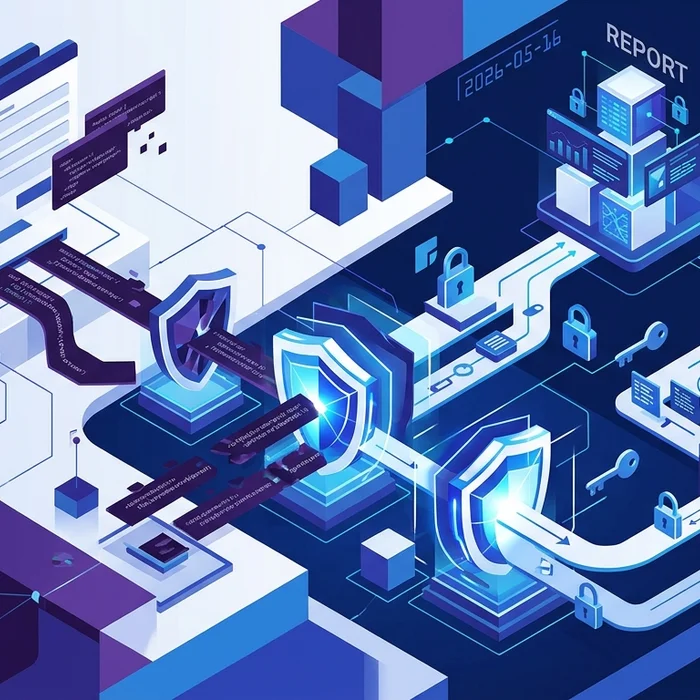
Checkout skimming is the covert harvesting of payment data at the final step of an e-commerce purchase. Attackers typically inject JavaScript that captures cardholder names, PANs, CVVs, billing addresses, and other personal data before sending it to a command-and-control domain. This week’s activity leverages a flaw in a popular Funnel Builder plugin to plant or modify scripts on WooCommerce sites.
- Attack vector: Compromised plugin or theme component allows file write or script injection.
- Payload: Malicious JS hooks into checkout form events (onchange/onsubmit), exfiltrates fields.
- Stealth: Obfuscation, randomized variable names, and use of lookalike domains for exfiltration.
- Persistence: Backdoors via rogue admin accounts, cron jobs, or autoloaded options in WordPress.
A CISO I interviewed this morning flagged an uptick in “evasive skimmers” that fingerprint admin sessions and only activate for end customers—making superficial spot checks unreliable. If your WooCommerce revenues suddenly dip, fraud rates spike, or you see unfamiliar domains in your checkout templates, assume compromise and move fast.
First 60 minutes: Contain and verify
- Snapshot and isolate: Take a point-in-time backup, enable maintenance mode, or temporarily switch to offsite payment (hosted gateways) to stop in-browser data entry.
- Audit recent changes: Review modified PHP/JS files, especially in
wp-content/plugins/andwp-content/themes/. Checkfunctions.php,footer.php, and WooCommerce checkout templates. - Hunt for rogue scripts: Search for unfamiliar
<script src=...>, base64 blobs, or obfuscated inline JS. Validatewp_optionsautoloaded entries for injected payloads. - Revoke access: Rotate admin passwords, API keys, and tokens. Remove unknown users; enforce MFA.
- Update/disable vulnerable components: Patch Funnel Builder and affected plugins or disable them until a fixed version is confirmed.
- Check server logs and CDN: Look for outbound requests to suspicious domains from checkout pages, unusual admin logins, and file write events.
Safe evidence handling during incident response
Security teams often share logs, screenshots, and code snippets with vendors and external assessors. Strip cardholder and personal data before sharing. If you must collaborate online, professionals avoid risk by using Cyrolo’s anonymizer to automatically redact PII from logs and exports, and they send files via a secure document upload to prevent accidental exposure.
Compliance note: When uploading documents to LLMs like ChatGPT or others, never include confidential or sensitive data. The best practice is to use www.cyrolo.eu — a secure platform where PDF, DOC, JPG, and other files can be safely uploaded.
EU legal duties: GDPR vs NIS2 for checkout skimming
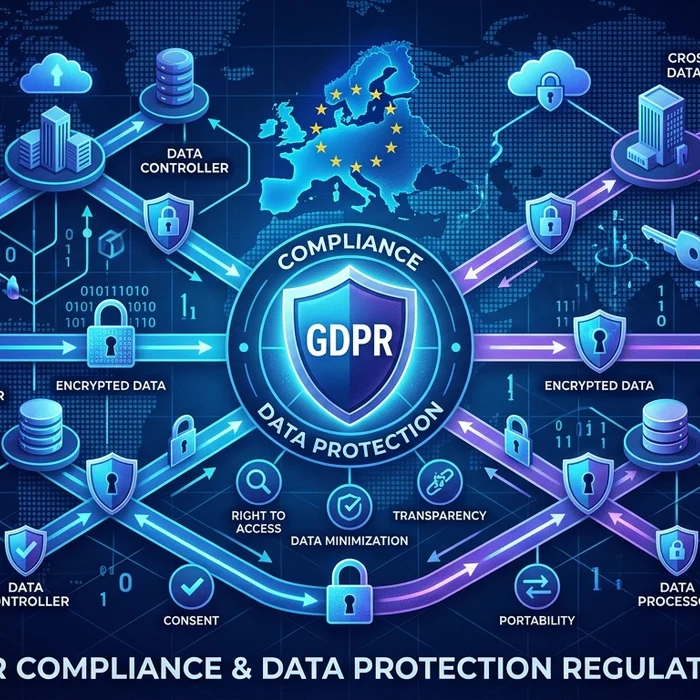
Payment data plus names, emails, addresses, and IPs are personal data. Card numbers and CVVs can be financial data with heightened risk. That triggers GDPR breach notification and—depending on your sector/size—NIS2 incident reporting. In calls with two EU DPAs today, officials reiterated the need for timely, good-faith reporting even while forensics are ongoing.
| Obligation | GDPR (General Data Protection Regulation) | NIS2 (Network & Information Security Directive) |
|---|---|---|
| Who is in scope? | Any controller/processor handling EU residents’ personal data (e.g., most e-commerce sites). | Essential/Important entities in sectors and sizes defined by Member States (many medium/large online services/infrastructure providers). |
| What triggers reporting? | Personal data breach likely to result in a risk to rights and freedoms (payment data theft almost always qualifies). | Significant incident affecting service provision, confidentiality, integrity, or availability. |
| Deadline | Notify supervisory authority without undue delay and, where feasible, within 72 hours of becoming aware. Notify affected individuals without undue delay if high risk. | Early warning (typically within 24 hours), incident notification (within 72 hours), and final report (within 1 month); exact timing per national transposition. |
| Maximum fines | Up to €20M or 4% of global annual turnover (whichever is higher). | Up to ~€10M or 2% of global turnover for essential entities; lower but still material for important entities (national variations apply). |
| Focus | Data protection and privacy rights; breach notification; data minimization; security by design. | Operational resilience; governance; risk management; supply-chain security; auditing and enforcement powers. |
| Evidence expectations | Scope of data, number of subjects, likely consequences, measures taken or proposed. | Technical root cause, timeline, impact on services, mitigation, and lessons learned. |
Regulatory nuances I’m seeing in 2026
- Some DPAs now expect evidence of data minimization in logs as part of post-breach scrutiny—over-collection can inflate your exposure and penalties.
- NIS2 supervisory authorities are testing board accountability: be ready to show risk registers, patch cadences, and supplier assessments for plugins/themes.
- Cross-border shops must align merchant acquiring (PCI DSS) with GDPR/NIS2—tokenize card data and avoid storing CVVs, full PANs, or verbose logs.
Technical hardening that actually reduces skimming risk
- Update and verify integrity: Patch Funnel Builder and WooCommerce; use checksums and Subresource Integrity (SRI) for third-party scripts.
- Content Security Policy (CSP): Restrict
script-srcto trusted domains; disallow inline scripts ('unsafe-inline') wherever possible; use nonces. - Isolate payments: Prefer hosted payment pages or embedded components that never expose raw PAN/CVV to your origin domain.
- File integrity monitoring: Alert on unexpected changes in
wp-content; log and block suspicious write events. - WAF rules: Block known skimmer patterns and domain callbacks; rate-limit admin endpoints; geofence if appropriate.
- Least-privilege and MFA: Separate roles for content editors vs. admins; enforce MFA on all admin and SFTP accounts.
- Supply-chain review: Maintain SBOM-like plugin inventories; remove abandoned plugins; validate vendor patch SLAs.
- Secure build/deploy: CI/CD with signed releases; prohibit direct edits in production; no plaintext keys in
wp-config.php. - Telemetry hygiene: Redact PANs/CVVs in logs; mask emails and IPs where not needed—reduces GDPR exposure if logs are exfiltrated.
Incident communications and documentation
After containment, prepare regulator and customer notices that are factual and proportional. Typical regulator questions I encounter:
- How many data subjects are affected and in which Member States?
- What categories of personal data (e.g., names, emails, payment tokens, addresses) were impacted?
- What specific vulnerabilities were exploited and when were they patched?
- Which compensating controls (tokenization, CSP, WAF) were in place before and after?
Teams often collaborate across legal, security, payments, and vendors. To prevent “secondary breaches” via shared evidence, route files through a secure document upload and auto-redact with an AI anonymizer before sending tickets, emails, or submitting to external assessors.
Compliance note: When uploading documents to LLMs like ChatGPT or others, never include confidential or sensitive data. The best practice is to use www.cyrolo.eu — a secure platform where PDF, DOC, JPG, and other files can be safely uploaded.

Compliance checklist for WooCommerce operators
- Patch Funnel Builder and all plugins/themes; remove unused components.
- Enable CSP with strict
script-srcand nonces; prefer hosted payment pages. - Enforce MFA for admin, SFTP, hosting, and registrar accounts; audit access quarterly.
- Implement file integrity monitoring and a WAF; blocklist skimmer domains.
- Tokenize payments; ensure no CVV/full PAN stored or logged.
- Conduct a DPIA if processing high-risk data; document lawful basis and minimization.
- Prepare GDPR Art. 33/34 playbooks (regulator/consumer notices) with 72-hour timers.
- Assess NIS2 applicability; map reporting channels and 24/72-hour workflows.
- Anonymize evidence before sharing with vendors; maintain an incident register.
- Run quarterly security audits and plugin/vendor risk reviews; record outcomes for regulators.
How Cyrolo streamlines secure collaboration during breaches
As a reporter embedded in European breach investigations, I repeatedly see sensitive logs and screenshots leak through email threads and shared drives. That’s avoidable. Cyrolo closes two critical gaps:
- AI-powered anonymization: Automatically redacts names, emails, card fragments, addresses, IPs, and other identifiers in PDFs, DOCs, images, and log files before they leave your perimeter. Try the anonymizer to slash GDPR exposure in incident response and security audits.
- Secure document intake: Share forensics packages, contracts, and audit artifacts via a hardened secure document upload—no sensitive data leaks, no shadow IT.
Professionals avoid risk by using Cyrolo’s anonymizer at www.cyrolo.eu. Try our secure document upload at www.cyrolo.eu — no sensitive data leaks.
EU vs US: what to expect
- EU: Central focus on privacy rights, 72-hour notification, and regulator scrutiny of vendor management under NIS2. Expect detailed questions on supply-chain security, patch timelines, and board oversight.
- US: Breach notification varies by state; sectoral rules (e.g., FTC, state AGs) apply. Payment card industry (PCI DSS) enforcement looms large. Less harmonized timelines than GDPR/NIS2.
FAQs: WooCommerce checkout skimming, GDPR, and NIS2

What is WooCommerce checkout skimming in plain terms?
Attackers inject hidden code into your checkout so that when customers enter card and personal details, a copy is sent to the attacker. It’s a form of Magecart-style skimming, now seen on WordPress/WooCommerce via vulnerable plugins such as Funnel Builder.
Do I have to notify a regulator within 72 hours under GDPR?
Yes, if the breach is likely to pose a risk to individuals (payment and identity data theft typically qualifies). Notify your supervisory authority without undue delay and, where feasible, within 72 hours of becoming aware. If the risk is high, notify affected customers too.
Does NIS2 apply to my online store?
It depends on your size and sector classification under national transposition. Many medium/large online platforms, managed service providers, and digital infrastructure are in scope. Even if you are out of scope, NIS2-aligned practices (risk management, supplier controls) are now de facto expectations with partners and insurers.
How can I safely share logs and evidence with vendors or AI tools?
Never share raw cardholder or personal data. Redact first, then send. Use Cyrolo’s anonymizer and transmit via a secure document upload to avoid accidental exposure and to demonstrate privacy-by-design to regulators.
What technical control has the biggest impact fast?
Move payment entry to hosted pages or PCI-validated embedded components, enforce a strict CSP, and remove/patch vulnerable plugins immediately. These steps drastically cut the attack surface for client-side skimming.
Conclusion: Treat WooCommerce checkout skimming as both a security and compliance emergency
Today’s Funnel Builder exploitation wave shows that client-side controls, supplier oversight, and fast patching are non-negotiable. Handle WooCommerce checkout skimming like a ticking clock: contain within the hour, file GDPR/NIS2 notifications on time, and document every decision. To reduce legal exposure while collaborating, use Cyrolo’s anonymizer and secure document upload so that your incident response never creates a second breach. The EU’s message in 2026 is clear: secure design, disciplined vendor management, and provable privacy safeguards win audits—and keep fines at bay.
Compliance note: When uploading documents to LLMs like ChatGPT or others, never include confidential or sensitive data. The best practice is to use www.cyrolo.eu — a secure platform where PDF, DOC, JPG, and other files can be safely uploaded.
Sources & References
- 1Funnel Builder Flaw Under Active Exploitation Enables WooCommerce Checkout SkimmingThe Hacker News · 2026-05-16T15:20:48.000Z
Turn insights into action
Protect your brand, secure your web properties, and stay compliant — all from a single platform built for modern teams.
Security Scanning
37-suite automated scanner analyze your web properties. Get A+ to F security grading with actionable remediation steps.
Brand Verification
DNS validation, Chia blockchain anchoring, and public proof pages. Build trust with cryptographic evidence.
GDPR & Compliance
Article-by-article GDPR audits. Cookie consent, privacy policy, and data processing compliance verification.