ZionSiphon OT Attacks Put Europe’s Utilities on Alert: NIS2 Compliance Playbook for 2025
Researchers today reported a new malware family—“ZionSiphon”—probing water and desalination operational technology (OT) environments. In Brussels briefings I attended this morning, regulators quietly pointed to the same lesson: incidents abroad have a way of arriving in Europe fast. For operators of essential and important entities, this is the year to turn headlines into actionable NIS2 compliance. If your risk management, incident reporting, and supplier controls aren’t NIS2-ready, you’re gambling with outages, fines, and public trust.

What ZionSiphon Means for NIS2 Compliance in Critical Sectors
The reported targeting of water and desalination OT systems is a wake-up call for utilities, energy, health, transport, and public administration. Under NIS2, cyber-physical attacks that disrupt essential services are precisely what lawmakers aimed to prevent. In recent interviews, a CISO from a Southern European water operator told me, “We’re past the phase of ‘could it happen here?’ Our board asks only two things: prove resilience, and prove reportability.”
- Adversaries are pivoting to OT: Modern malware blends IT footholds with engineering workstation discovery, field device enumeration, and lateral movement across segmented networks.
- Attack visibility is often weakest in legacy ICS: Many plants rely on aging PLCs, minimal logging, and vendor-managed components—tough terrain for incident timelines and evidence.
- Regulators expect speed and signal: NIS2 requires early warnings and structured follow-ups that translate logs, forensics, and business impact into regulator-ready narratives.
NIS2 Notification Timelines You Must Operationalize
- Within 24 hours: Early warning to the competent CSIRT/authority for any “significant incident.”
- Within 72 hours: Incident notification with initial indicators of compromise, severity, and mitigation status.
- Within 1 month: Final report covering root cause, response, and cross-border implications.
Practical consequence: if you can’t rapidly extract, redact, and share evidence without leaking personal data or supplier secrets, you’ll miss the window. I’ve seen teams delay regulator updates because screenshots and logs contained credentials, customer records, or staff PII. That’s a fixable process gap.
GDPR vs NIS2: What’s Actually Different?
Both regimes expect “appropriate technical and organizational measures,” but they’re aimed at different risks. Below is a concise view I use with boards and audit committees.
| Topic | GDPR | NIS2 |
|---|---|---|
| Scope | Personal data processing by controllers/processors | Cybersecurity risk management for essential/important entities across critical sectors |
| Primary Objective | Protect individuals’ personal data and privacy | Ensure resilience and continuity of essential services |
| Incident Reporting | Notify DPA within 72 hours of personal data breach (if risk to rights/freedoms) | Early warning within 24 hours; incident notification at 72 hours; final report at 1 month for significant incidents |
| Security Measures | Risk-based measures; pseudonymization, encryption, access control | Risk management program including policies, incident handling, supply-chain security, encryption, MFA, patching, logging, business continuity |
| Supervision | Data Protection Authorities | National competent authorities and CSIRTs |
| Penalties | Up to €20M or 4% global turnover | Up to €10M or 2% global turnover (plus managerial liability in some cases) |
| Data Minimization | Core design principle | Relevant when evidence includes personal data; dovetails with GDPR |
Your NIS2-Ready OT Playbook

From my field notes across utilities, hospitals, and transport hubs, here’s the pragmatic path to survive the next regulator drill or real incident:
Compliance Checklist: OT-Focused Essentials
- Map assets and critical functions: Maintain a live inventory of IT and OT components, network zones, and dependencies.
- Harden access: Enforce MFA for remote access, vendor maintenance portals, and engineering workstations. Rotate credentials on vendor departure.
- Segment like you mean it: Define and test conduits between corporate IT, DMZ, and control networks. Block unused services; monitor inter-zone flows.
- Patch pragmatically: For OT that can’t be frequently patched, layer compensating controls—allowlisting, strict change control, and backup/restore drills.
- Log where it matters: Centralize high-fidelity logs from historians, HMIs, domain controllers, and remote access gateways. Time-sync all systems.
- Supplier assurance: Contractually require secure development, timely advisories, and incident cooperation from OEMs and integrators.
- Incident runbooks: Pre-write regulator templates for the 24h/72h/30d reports. Practice evidence capture and redaction.
- Data protection alignment: Ensure evidence sharing respects GDPR—pseudonymize or anonymize staff and customer data in tickets and artifacts.
- Crisis communications: Agree on public statements, regulator liaisons, and cross-border coordination.
- Board oversight: Document cybersecurity governance and management accountability to match NIS2 expectations.
Secure Evidence Sharing Without Data Leaks
Most breach delays I observe stem from “Can we actually send this?”—screenshots with names, PDFs of maintenance reports, or vendor logs that expose personal data or secrets. Two fast mitigations:
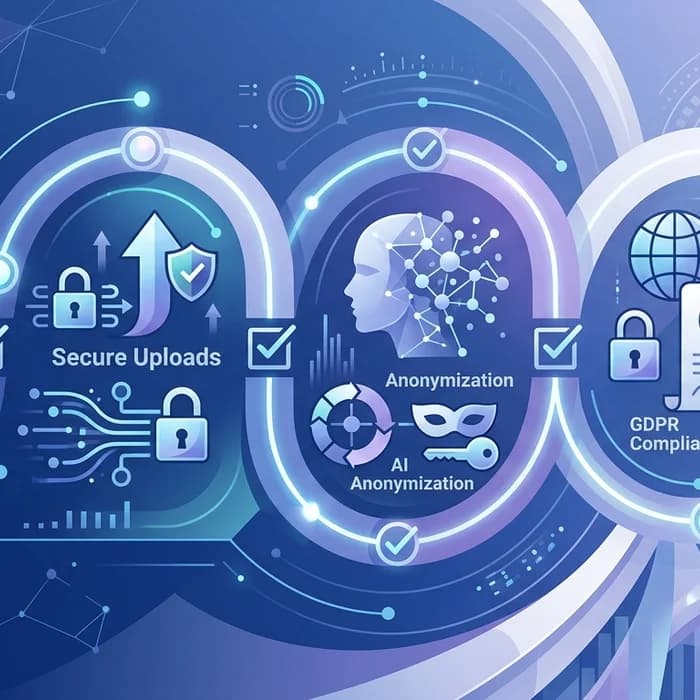
- Automate redaction: Use an AI anonymizer to strip PII and sensitive markers from tickets, logs, and screenshots before you mail them to suppliers or attach them to regulator notices.
- Use vetted channels: Centralize secure document uploads so teams aren’t sharing evidence via untrusted links or personal drives.
Professionals avoid risk by using Cyrolo’s anonymizer at www.cyrolo.eu. Try our secure document upload at www.cyrolo.eu — no sensitive data leaks.
Compliance reminder: When uploading documents to LLMs like ChatGPT or others, never include confidential or sensitive data. The best practice is to use www.cyrolo.eu — a secure platform where PDF, DOC, JPG, and other files can be safely uploaded.
Incident Response: The First 72 Hours Under the Microscope
In a tabletop I ran with a Central European hospital this quarter, the winning factor wasn’t fancy tooling; it was muscle memory. Here’s the rhythm that works:
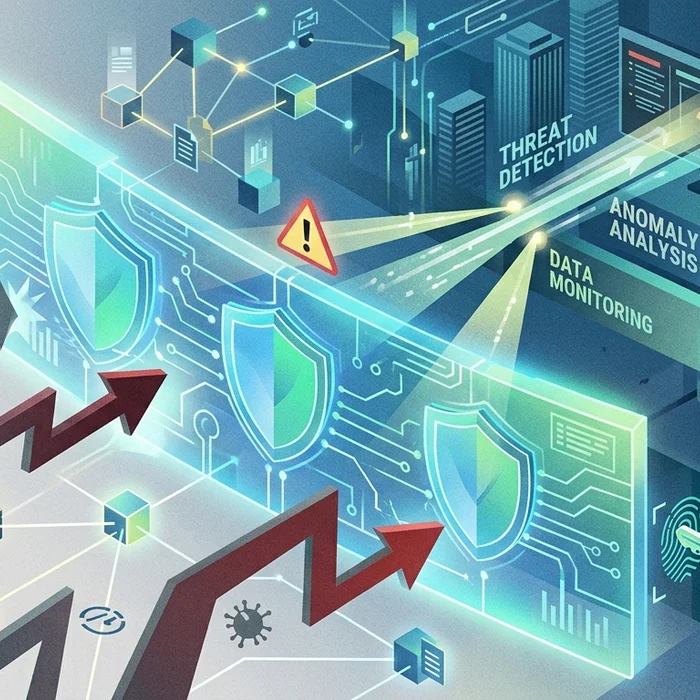
- Hour 0–6: Contain and stabilize. Lock down remote access, freeze changes, snapshot volatile data, and preserve logs.
- Hour 6–18: Assess significance. Determine service impact, cross-border relevance, and potential safety implications.
- By Hour 24: Issue early warning. Keep it factual and scoped—artifacts can follow.
- Hour 24–72: Expand forensics, iterate containment, coordinate with suppliers, and draft the formal 72-hour notification.
- Post-72h to Day 30: Root cause, eradication, recovery, and final report. Embed lessons into controls and supplier SLAs.
EU vs US Trajectories: Converging on Critical Infrastructure Resilience
While the EU’s NIS2 is directive-led with national transpositions (deadline: 17 October 2024), US agencies emphasize sectoral guidance and voluntary frameworks, with tightening expectations for water and energy. Europe’s model leans into enforceable incident reporting and board accountability—useful leverage if you need budget for segmentation, monitoring, and supplier assurance. Expect European regulators to intensify audits through 2025, especially after high-profile OT incidents abroad.
Real-World Blind Spots I’m Seeing
- OT labs that aren’t realistic: Teams test patches on lab rigs nothing like production—then balk at deployment.
- Forgotten remote tunnels: Old vendor VPNs or jump hosts left active “just in case.”
- Evidence trapped in email: Crucial logs live in mail threads instead of a controlled evidence repository.
- Redaction by screenshot: Manual blurring that’s inconsistent and error-prone; regulators can’t rely on it.
Preparing for Audits and Security Audits Under NIS2
Auditors (and, after an incident, regulators) will look for proof, not promises. Be ready to show:
- Risk register tied to critical functions and OT assets.
- Network architecture diagrams with enforced segmentation and monitored conduits.
- Supplier inventory with cybersecurity clauses and attestation cadence.
- IR playbooks mapping to 24h/72h/30d deliverables, plus past exercise reports.
- Evidence-handling SOPs with anonymization steps and controlled repositories.
To make this frictionless, run your artifacts through an AI anonymizer and centralize secure document uploads so every audit packet is compliant by design.

FAQ
What does NIS2 require from water utilities after an OT malware alert?
Conduct a rapid significance assessment, contain threats, and notify your competent authority within 24 hours if the incident is significant. Prepare the 72-hour notification with initial IOCs, service impact, and mitigation steps, followed by a one-month final report. Ensure evidence sharing respects GDPR via redaction or anonymization.
How is NIS2 different from GDPR for cybersecurity incidents?
GDPR focuses on personal data and privacy risks; NIS2 focuses on service resilience across critical sectors. You may need to notify under both regimes if an incident impacts essential services and exposes personal data. Timelines and authorities differ—plan for both tracks.
What are common NIS2 penalties and who is liable?
Member States set penalties up to €10 million or 2% of global turnover for essential/important entities. NIS2 also sharpens management accountability, so boards and executives should oversee cybersecurity governance and resource allocation.
How can we share logs and screenshots with vendors without leaking PII?
Adopt an AI anonymizer to automatically strip names, emails, IDs, and secrets from artifacts, and use secure document uploads to route materials through controlled channels instead of ad-hoc email or public links.
Do we have to meet NIS2 by a fixed EU-wide date?
Member States had to transpose NIS2 by 17 October 2024, and national laws define application timelines and sector scopes. Most regulators expect tangible progress and audit-ready evidence through 2025—treat this as your operational deadline.
Key Takeaways
- ZionSiphon’s OT targeting is a timely stress test for Europe’s critical infrastructure.
- NIS2 compliance hinges on fast, evidence-backed reporting and supplier coordination.
- Automated anonymization and secure evidence routing reduce breach-response delays and GDPR risk.
- Boards should demand segmented architectures, supplier assurance, and regulator-ready playbooks now.
Conclusion: Turn Headlines into NIS2 Compliance Wins
ZionSiphon is a reminder that OT-targeted malware is no longer theoretical. By institutionalizing NIS2 compliance—clear runbooks, hardened access, realistic segmentation, and disciplined evidence handling—you shorten outages, satisfy regulators, and protect the public. Make redaction and sharing a non-issue: professionals rely on www.cyrolo.eu for anonymization and secure uploads that respect GDPR and operational secrecy. The next 12 months will separate organizations that treat compliance as paperwork from those that use it to build real resilience.
Sources & References
- 1Researchers Detect ZionSiphon Malware Targeting Israeli Water, Desalination OT SystemsThe Hacker News · 2026-04-20T07:34:00.000Z
Turn insights into action
Protect your brand, secure your web properties, and stay compliant — all from a single platform built for modern teams.
Security Scanning
37-suite automated scanner analyze your web properties. Get A+ to F security grading with actionable remediation steps.
Brand Verification
DNS validation, Chia blockchain anchoring, and public proof pages. Build trust with cryptographic evidence.
GDPR & Compliance
Article-by-article GDPR audits. Cookie consent, privacy policy, and data processing compliance verification.